 By admin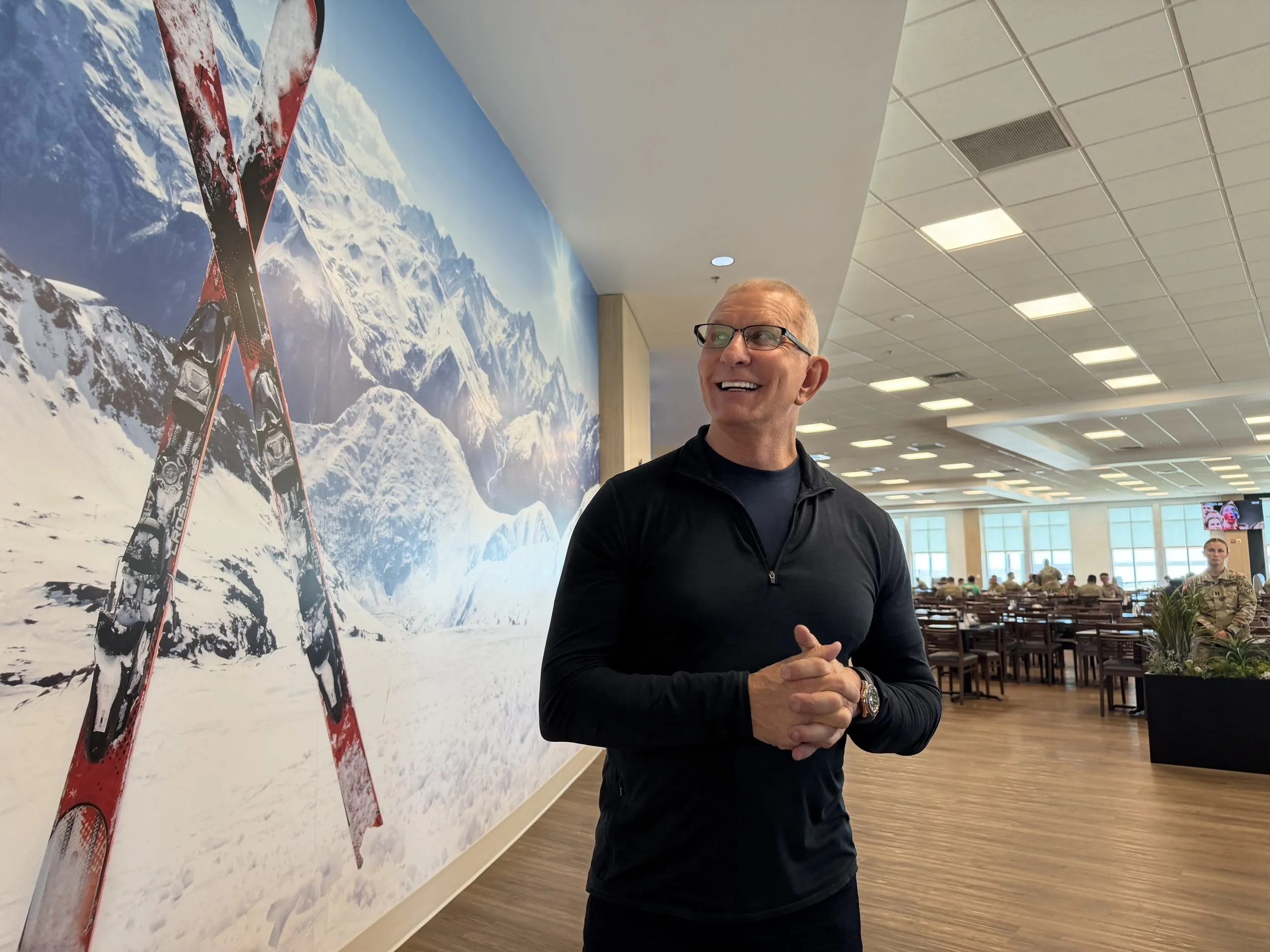
FORT CARSON — Celebrity chef Robert Irvine eats eight meals per day, one every two and a half hours until he goes to sleep. He portions out a piece of protein the size of a deck of cards and pairs it with a carbohydrate the size of a computer mouse.
Read more Colorado helium reserves got a bounce when war with Iran cut off 30% of the world’s supply
“That’s the way the body is designed,” he said.
Irvine has a regimented attention and has built brands out of being hardcore. He founded a line of protein bars and powders called FitCrunch and runs the only full-service restaurant inside the Pentagon. He has written five books that blend his background as a merchant marine and chef for the Royal Navy with healthy recipes and fitness advice. He became a TV personality on the Food Network’s “Dinner: Impossible” and “Restaurant: Impossible,” where he helped failing restaurant owners turn their fates around with recipe advice, hospitality training and the occasional humiliation in front of staff or patrons.
Which makes him a great fit for his latest client: the U.S. Army, which tapped him a couple of years ago to help remake their dining options.
“What tends to happen is we start off with a big bang and then it all implodes when nobody is watching,” said Irvine, who emphasized that he makes no money from this gig. “Well guess what? I’m watching. I’m the guy with the baseball bat with nails in it that’s going to hit you if you don’t do your job.”
Last week, Irvine visited Stack House Bistro at Fort Carson, the second of five military mess overhauls modeled after university dining halls. Fort Hood in Texas opened Bistro 42 in February. Stack House at Fort Carson opened in April, and new dining halls at Fort Drum in New York, Fort Bragg in North Carolina and Fort Stewart in Georgia are slated for later this year. Irvine’s goal is to open a campus-style dining hall at all 176 Army dining facilities, and stock each with an executive chef and on-site dietician.
During his tour at the Fort Carson facility, Irvine visited each food station, pointing at items, lobbing questions at packs of chefs and gesturing around the room.
Morgan Lerro, Stack House Bistro’s retail manager, presented Irvine with a Pink Cadillac smoothie, a blend of dragon fruit, pineapple, orange juice, acai and vanilla protein powder. Lerro rattled off the ingredients while she walked the bright pink smoothie toward him. “With 25-35 grams of protein,” she added proudly, ending the spiel.
Irvine took one sip, grinned, and sent it back for another scoop of protein.
“It’s more of a sweeter, fruity, fun shake,” Lerro told The Colorado Sun. “RFK Jr. really liked that shake, that was his favorite.” (Health and Human Services Secretary Robert F. Kennedy Jr. visited Stack House Bistro on June 11 to assess the Army’s new food strategy.)
Lerro brought a new shake out, The Perfect 10, a blend of blueberries, bananas, peanut butter and protein powder. She used low-fat milk and added extra scoops of protein, bumping the total up to 55-60 grams, she said.
Toast, lima beans and milk
A few years ago, the Army acknowledged for the first time in decades a severe lack of healthy and appealing food options for soldiers living on bases — the key word there being “appealing.” While official dining facilities adhered to strict nutritional standards, the food was often so bland that soldiers preferred to spend their money at the nearest pizza joint. Another issue was the operating hours of dining facilities, which often pushed soldiers to buy lunch from grab-and-go kiosks on the weekends and during odd breaks in the day.
Around the same time, the U.S. Government Accountability Office reported that the Department of Defense had not established a formal process for making food decisions, and wasn’t adequately tracking its food-related costs, making any kind of reform nearly impossible to begin.
By that time, troops at Fort Carson had reportedly been dealing with months of insufficient meals and limited hours, according to Military.com. Troops were encouraged to document the shortages and the kiosks stocked with sugary snacks.
A June report by the Yelp-style site Hots & Cots, where troops can review barracks and dining facilities, noted that Fort Carson averaged about 3.56 stars out of 5, and was the most widely reviewed base out of the 123 installations covered by the website.
The troops at Fort Carson reported “running out of food by 5:30 p.m., undercooked and small portions, ‘leather-like pork chop and rubbery pasta,’ and overcrowding from rotating closures,” the report states. In one photo, a cafeteria tray holding a piece of toast, a pile of lima beans and a glass of milk made the rounds as an example of the state of food at Fort Carson.
Unsurprisingly, Fort Carson also had one of the lowest rates of soldiers using their meal plans, which are automatically deducted from their paychecks. Soldiers at Fort Carson were, on average, spending only about 23% of the $22.1 million collected for food plans, or almost $4,000 per soldier deducted each year for food that was never redeemed.
Quinoa cake and fat-free cream cheese frosting
One idea that came out of the rash of reports and media attention was converting dining facilities from one-size-fits-all cafeterias into campus-style dining halls, with different counters offering a variety of foods, including full meals, smoothies and snacks.
So, the Army called in Irvine. Or, maybe, Irvine called them. According to The New York Times, Irvine heard the Army was interested in remaking their food systems and “asked to play a major role.” His background in the Royal Navy and ongoing support of the U.S. military — including a public charity he founded in 2004 — along with a dash of star power positioned him well for the job.
The Stack House has various counters serving pizza, tacos, burgers and a rotating selection of “global cuisines” surrounding a large salad bar. Soldiers can order up to $39 worth of food each day using their meal cards. Family members, veterans and visiting civilians can also dine at the new hall, paying for items a la carte.
Digital menus at each food station rate items according to a stoplight colored system: green means eat often, yellow means eat occasionally, and red means eat rarely. There are small symbols to signify “alerts” like high amounts of sodium or sugar, and the nutritional content is displayed next to every item.
As Irvine wrapped up his tour of the food stations and made his way into the bright dining room, hungry, young troops flushed into the hall and formed lines at the counters. Right now, the bistro is serving around 3,000 meals per day, according to Jason Hays, vice president of operations for Compass, the hospitality company contracted to open the first five dining halls.
The troops piled their trays with falafel wraps and warm jerk chicken bowls and red velvet cupcakes made with quinoa and fat-free cream cheese. They made their way swiftly through checkout lines and spilled into the dining room, where they sat in clusters at long tables.
“We give them the best boats, the best ships, the best submarines, the best uniforms, the best rifles,” Irvine said. “How about the best nutrition?“
Since opening in April, Stack House Bistro has collected five reviews from troops on Hots & Cots, all of them 4 or 5 stars. “What was once the worst (dining facility) on Fort Carson may now be the best one I’ve been to since joining the Army,” one reviewer wrote. “Let’s hope it stays good.”
Read more Ready for your next steak? These ranchers are battling drought to bring your way.