 By admin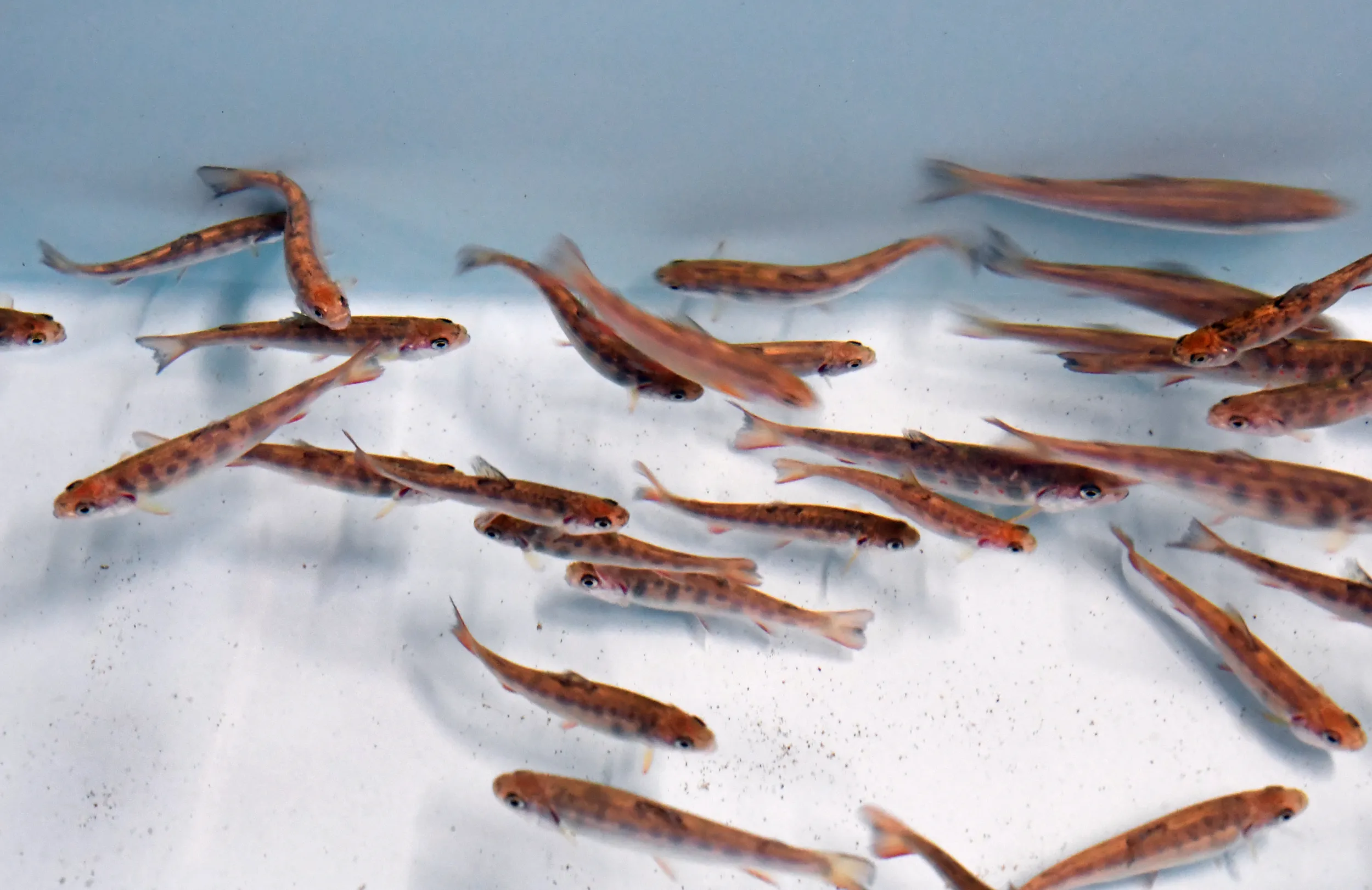
JONES PASS
Deep in the quiet eddies of Bobtail Creek, over the dancing cascades, or under a fallen Engelmann spruce branch wedged into a sharp bend, hundreds of male brook trout will be wandering through a very confusing and lonely summer.
Read more What’s Working: Why hamburgers cost more today
They will be keeping a fish eye out for any sign of a promising female partner. As the languor of late August succumbs to the signaling chill of September, the male brookies will be watching for a female sweeping her tail in the creek sand to make a safe nest for eggs.
Unfortunately for the species, the boys won’t do much hooking up.
And even if they do, every egg they fertilize in the ancient ritual of trout spawning will turn out to be males, and males only. The brook trout of Bobtail Creek, by design, are doomed.
If not this year, then next, only male brook trout will survive here at 10,000 feet, and a year or two after that, evidence of any brookies at all will be but a memory whispering through the pines.
For the past two years on Bobtail Creek, a few miles down the west side of Jones Pass between Grand and Clear Creek counties, Colorado Parks and Wildlife biologists have been hauling a scientifically complex genetic answer to the brookie problem in a few simple backpacks.
What nature wants — and Colorado state government as nature’s local agent — is a revived population of native cutthroat trout. What has stood in the way for decades is a voracious and growing population of invasive brook trout.
Brookies are native to the East Coast and Upper Midwest. They were unleashed on Colorado via sloshing milk cans dragged onto trains in the late 1800s, to be dumped over railroad bridges to restock mountain creeks emptied by hungry miners and settlers. Cutthroats, with no native competition to hone their survival skills, lost out over time to the swaggering easterners.
(Colorado has three native cutthroat species worth reviving. In the north, the subspecies Colorado River cutthroat are not officially endangered, but listed by the state as a “species of concern” that needs extra protection. Some have called the subspecies one of the most beautiful fish in North America, with their speckled bodies and bright orange bellies. Greenback cutthroat, the state fish, are even more protected as a “threatened” species, with a long-running revival program underway in the South Platte River Basin. Rio Grande cutthroat suffer their own travails in the diminishing waters of the San Luis Valley. A fourth cutthroat species, the yellowfin from the Upper Arkansas River, is considered extinct, though biologists still keep an eye out for survivors.)
Denver Water helps with physical barriers
In 2024, Colorado became the second state to defend the Colorado River cutthroat and begin the end of the invasive brookie, by adopting a technique pioneered in Idaho.
First, biologists periodically hiked into a few remote Colorado locations and captured wild brook trout of both sexes to take an edge off the population overgrowth. They hiked back in again with water-filled backpacks teaming with fingerling brook trout — with a gender twist. All the fingerlings were male. And each of the males were bred to have YY sex chromosomes instead of the usual X and Y combo.
It takes a few steps of gender-bending to mass-produce YY trout. In the first step, standard male fingerlings are fed with an estradiol additive that “feminizes” them and lets them produce eggs. When the feminized male trout breed with unchanged males, one-quarter of the brood will be YY males. Some of those new YY males are then feminized again through feed to become egg-producing males. When the egg-producing YY males breed with sperm-producing YY males, only YY males result, and that constitutes the state’s releasable stock.
Biologists dubbed them Trojan trout. The dangerous item that Trojan trout bring into the wild is the gift of assured obsolescence.
When the YY trout fertilize eggs laid by the wild female brookies, the males have no X female chromosome to pass on and the resulting hatch will also be all-male. Soon, the given stream or reservoir is populated only by a lot of vaguely bewildered males. And three or four years later, the males will have died a natural, and let’s be honest, slightly sad death.
“We already have the brook trout really on the ropes. It’s just that the YY introduction is to tip them off the edge,” said Jon Ewert, area aquatic biologist for Colorado Parks and Wildlife. “We do think that we have a very good chance of eliminating brook trout entirely from those streams.”
Bobtail Creek joins with other creeks to make up the Williams Fork River, which Denver Water dams at the Williams Fork Reservoir and exchanges with other water rights that it brings under the Continental Divide for city water supplies. Denver Water has contributed to the campaign against the brook trout by boxing the species in with structures and gates on Bobtail and Steelman creeks.
The Trojan campaign is working so well that CPW researchers and collaborators from other states are developing single-sex batches of mosquitofish, common carp, and other invasive species to eliminate unwanted populations. Male-only regiments of Asian carp could even bring some control to those insatiable, self-launching fish-missiles that now plague rivers from Colorado to Ohio.
“You know, we’ve had several suggestions about where to go with this, but you have to kind of pace yourself,” said George Schisler, who is aquatics research chief for Colorado Parks and Wildlife and also leader of the consortium of states running YY fish gene experiments for eradication. “There’s a lot of work that goes into each one of these. They’d all be great, but we can only do so much at a time.”
Releasing species that are sterile or otherwise compromised in reproduction has long been a success outside aquaculture. Before the most recent outbreak in the news, Western agriculture officials controlled the livestock-devastating New World screwworm by releasing sterile swarms in the fly stage — female screwworms produce eggs only once in a lifespan, so sterile mating reduces populations quickly.
Read more Lynn Bartels, reporter and “Grand Dame” of Colorado politics and, dies at 69
No killing with chemicals required
Rapid adoption in Rocky Mountain aquaculture seems likely now as researchers begin broadcasting their YY brook trout success. Here’s how the fish scales have tipped:
In a 2011 survey in a mountain stream overrun by brook trout, Ewert’s teams captured 38 native cutthroat and 541 brook trout. One of the reasons cutthroats lose the competition is that their eggs hatch in spring; the brook trout born in their usual fall cycle are already big enough to not only eat up all the cutthroat’s food, but to eat the smallest cutthroat minnows themselves.
After years of removing percentages of brook trout, and now releasing male-only YY brook trout back into the same stretches, the surveys have reversed. A recent survey on Bobtail Creek captured 904 cutthroat, and 216 brook trout.
CPW biologists have found they can’t get to complete eradication with the old removal methods, whether electro-shocking stream sections and removing brookies, a labor-intensive method, or releasing poison and killing everything to prepare for cutthroat restocking.
“It’s been proven time and time again, there will always be enough that you don’t manage to capture, that will reproduce and persist,” Ewert said.
Colorado is now packing in and releasing male-only brook trout fingerlings up and down the Rockies, from Bobtail and Steelman creeks on the north, to a tiny Colorado Springs Utilities reservoir called Bigtooth on the shoulder of Pikes Peak, to remote Rito Hondo reservoir near Saguache.
“It’s a pretty simplistic approach, really,” Schisler said. “And it’s a little surprising, actually, that it took so long for management agencies to start using it. Because it’s a really elegant solution to these situations where we have populations that we don’t want to kill with chemicals.”
Ewert understands that when he tells true-history tales of how past generations played God with wildlife, he invites skeptical comparisons to what the biologists are doing now.
LEFT: Altered YY brook trout before their release into creeks near Jones Pass. (CPW photo) RIGHT: Bobtail Creek near Jones Pass, where Colorado Parks and Wildlife is working to remove invasive brook trout to encourage recovery of native Colorado River cutthroat trout. (Michael Booth, The Colorado Sun)
“Conservationists” of the 1880s dumping fingerlings from milk cans over the side of Grand County railroad bridges need to be judged by the standards of their time, Ewert said.
“Every generation does what they believe to be the greatest, the right thing to do, based on the entire sum of human knowledge at that point. And with each successive generation, we learn. And the very simple problem back then was, there were no fish left in the streams. And the very simple solution was, let’s throw some fish in the streams. And not much thought was put into, well, what is the native fish?” Ewert said.
Innovations like the Trojan trout are arguably introduced with more science, debate, peer review, interstate collaboration and agency oversight than treatments like the milk can method, state biologists said.
This story first appeared in Colorado Sunday, a premium magazine newsletter for members. Experience the best in Colorado news at a slower pace, with thoughtful articles, unique adventures and a reading list that’s perfect for Sunday morning.
“The alternative is to do nothing,” Ewert said. “Are we supposed to just sit by and watch species eaten out of existence because we’re afraid of doing the wrong thing? Human knowledge progresses in a positive direction, and I would like to think that we keep getting it less and less wrong over time.”
The aquatics knowledge acquired by humans in Idaho, Colorado and a growing handful of Western states may be headed back east before too long, offering some closure to the story of brook trout migrating west via railroad.
Cutthroats have never taken direct revenge on Easterners by invading their native trout territories. But rainbow trout have. Rainbows were hauled east in some of the same years brookies were being hauled west, and for the same reasons: Overfishing of brookies and overdevelopment of their best habitat had depleted the population, and dumping in Western rainbows was a way to revive a sport fishery.
“And they’ve become invasive in a lot of places. This control method can be very useful in protecting and recovering threatened native species,” Schisler said.
Read more Solo trail runner’s death on Colorado 14,000-foot peak prompts safety reminder from rescuers
“All of these fish species are valuable, in the right places.”