 By admin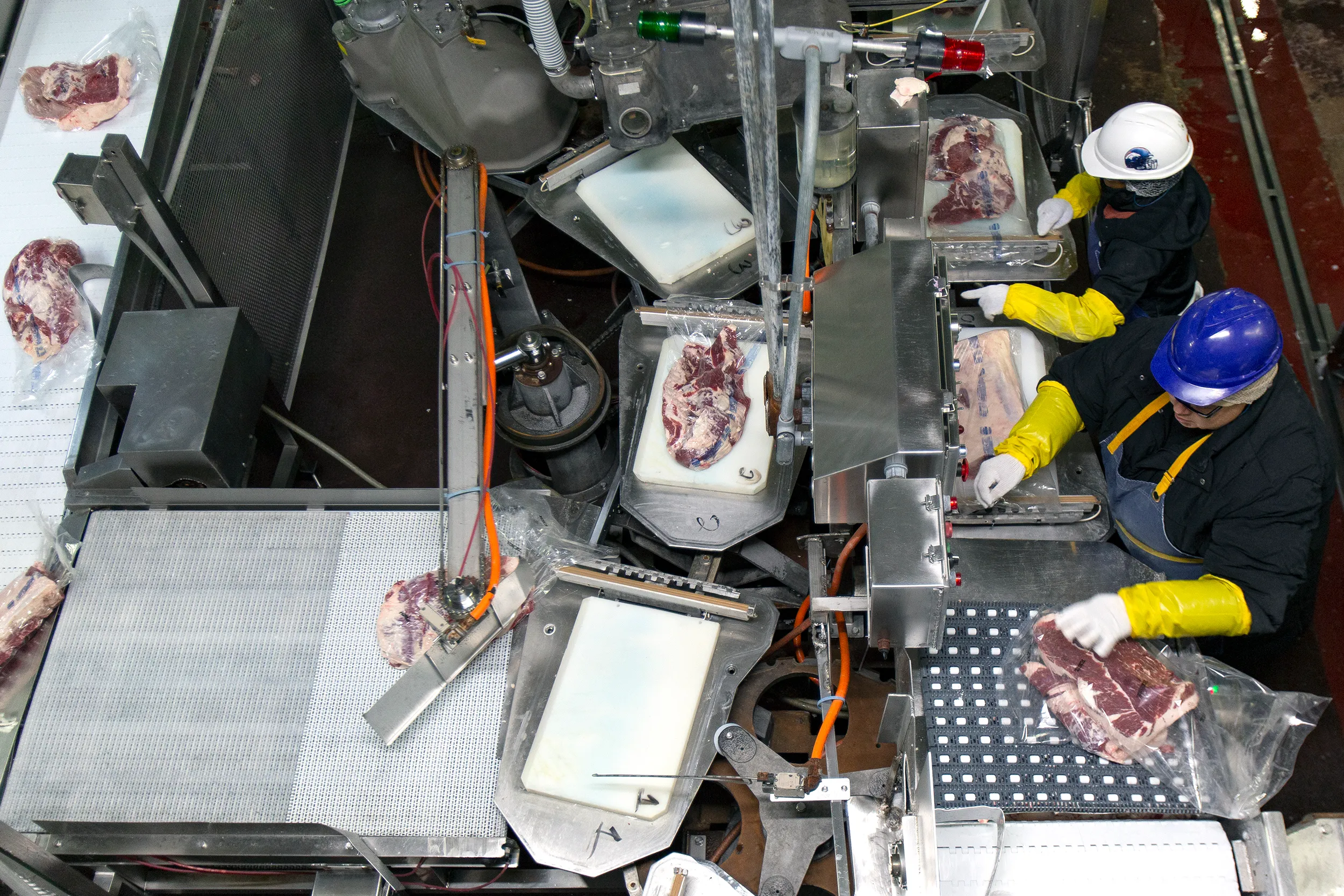
Tamara Chuang
Business/Technology Reporter
Quick links: Ground beef vs. income growth | Supply chain shrinkage | Reader poll results | $250 bonus for young Denver workers | A $500k quantum grant | Rent control settlement
Read more Lynn Bartels, reporter and “Grand Dame” of Colorado politics and, dies at 69
Beef rules! Or at least it was one of the top contenders in the recent What’s Working reader poll about what items cost more nowadays. Coffee, insurance and “everything” were also frequently mentioned.
But in particular, lean ground beef or hamburgers.
“Ten dollars per pound for hamburger is crazy,” said Painless Wolf, who lives in Gardner, northwest of Trinidad, and recalls paying closer to $3.75 a pound for the “90/10” in 2016. “We definitely buy less of everything. Ground beef included.”
According to the USDA , which tracks weekly grocery advertisements, a pound of organic 90% lean ground beef averaged $11.99 this week. The conventional 90% version was $7.42. But even the cheaper 70% lean ground beef was more expensive, at $4.99, up from ago. That’s a 76% jump from five years ago when the budget-friendly fatty beef , based on the same USDA data.

The cost of beef has increased at a faster rate than many other consumer items for a variety of reasons. For one, there are fewer cows. Ranchers facing drought amid rising feed and operating costs for years have downsized their herds. There’s also GLP-1 weight loss drugs that limit how much food users consume. Research shows they’re opting for more protein-rich meat snacks. And the U.S. has no shortage of millionaires or influencers who can afford to pay higher prices. It’s the imbalance of supply and demand that is pushing prices higher. And that benefits ranchers.
“If you actually look at how wages have grown over the last 30 years and how beef prices have grown, this is what people should be paying for beef,” said Dawn Thilmany, a Colorado State University professor of agriculture and resource economics. “We just had a policy in this country that almost kept food too cheap.”

It does seem shocking to see chicken selling for less than $1 a pound, as advertised this week at King Soopers (69 cents a pound for chicken leg quarters — with loyalty card). Both King Soopers and Safeway have sales on T-bones or rib-eye steaks for $8.99 a pound because of Father’s Day, which is Sunday. But that sale only comes once a year.
Cooking at home is more affordable than dining out. And folks like Golden resident Jacki Paone have noticed the increased menu prices and have changed their habits.
She favors Apple Ridge Cafe in Wheat Ridge, where the daily steak special with sides and pie is $22 to $24, instead of higher-end restaurants where steak “is more like $35-40 and doesn’t include all the extras,” she said in an email.
“We save those restaurants for special occasions,” Paone said. “And definitely consider other options rather than steak.”
The beef supply chain is struggling, workers are losing out
Smaller herds and higher selling prices may be giving ranchers some relief, but the economic impact has caused other parts of the beef supply chain to cut costs and improve efficiencies. For businesses that take in cattle and process the meat into usable cuts for restaurants and consumers, the business model makes money or breaks even when they’re operating at capacity.
That hasn’t been happening, according to the Meat Institute, a trade group that represents meat producers like the nation’s largest, JBS. When President Donald Trump accused the nation’s four biggest meat packers of collusion and price fixing in November, Meat Institute president Julie Anna Potts said the industry isn’t making money.
“For more than a year, beef packers have been operating at a loss due to a tight cattle supply and strong demand,” Potts said in a statement. “The beef industry is heavily regulated, and market transactions are transparent. The government’s own data from USDA confirms that the beef packing sector is experiencing catastrophic losses and experts predict this will continue into 2026.”
Last year, Cargill said it would invest $90 million in technology at its factory in Fort Morgan. A new computer vision system was installed to help workers see how to carve more meat off the bone because ”even a 1% yield improvement” helps with diminishing supply.
There’s also a USDA proposal to change the rules and speed up meat-production lines. Labor unions oppose this because of the threat to worker safety and potential for plant closures and job loss.
Colorado is seeing some of this firsthand in Greeley and Fort Morgan, where two of the nation’s biggest beef companies operate. JBS-owned Swift Beef Company has a plant in Greeley, while Cargill Inc. has a meat processing plant in Fort Morgan. Both have dealt with labor disputes this year.
After 3,800 JBS employees went on strike for three weeks, the company agreed to a new contract in April. The base wage went up $0.70 , which the company said was the same “last, best and final offer,” before workers walked off the job.
In Fort Morgan, 1,700 Cargill employees haven’t worked for two months. They were locked out of the plant May 20 after rejecting the company’s new contract offer. But workers had already been on paid leave for a month prior as Teamsters Local 455 tried to negotiate a new contract. The lockout surprised everyone. “They put out security and they’re refusing to allow us back at the facility even though our members just want to work,” Teamsters official Dean Modecker told The Colorado Sun last month.
Cargill, which offered year one wages ranging between $24.20 to $32.10 an hour, redirected cattle to other processing locations in April so the plant has been idle ever since.
Cargill and union leaders said this week that there are no new updates available since the Teamsters filed an unfair labor practice charge earlier this month.
JBS and Cargill have also shut down meat processing plants in other parts of the country this year. Cargill Meat Solutions closed its Milwaukee beef processing plant last month, after notifying state officials of the looming 221 job cuts. Competitor Tyson Foods laid off 3,000 employees and closed its beef-processing plant in Lexington, Nebraska, in January. And last week, JBS said it would close two plants: one in Memphis and another near Philadelphia “to strengthen operations for the future.” That’ll leave 1,485 workers out of a job in Pennsylvania and 208 in Tennessee.
Thilmany, with CSU, said there are good reasons for the closure of those plants. Philadelphia has a higher cost of production and “not a ton of animal numbers out there.” And Nebraska has challenging pasture conditions. Colorado, meanwhile, is a major transportation corridor for this part of the country.
“I think that’s why we’re being saved here in Colorado. But again, there’s quite a bit of labor tension here as well,” Thilmany said. “I think they’re probably scrutinizing every major plant in the country right now and there’s a lot of penciling out what they are going to keep and shut down. These will not be the last two plants you’ll hear about before the end of the year.”
Poll results: How’s the economy treating you?
The vast majority of What’s Working readers who took last week’s poll are feeling the higher inflation we’ve had this year. Not too long ago, Denver led the nation for the lowest inflation in July 2024, at 1.9%. We’re nearly the leader now, as of May 2026.
In the chart above, the higher cost of gas was the most popular choice. But when asked for more specifics, top choices were beef (including ground beef, steaks and burgers), groceries, health and property insurance and “everything.”
Some reader comments:
“Our house insurance is nearly twice as much this year as last year,” wrote George Blakey from Nederland.
Read more Solo trail runner’s death on Colorado 14,000-foot peak prompts safety reminder from rescuers
Deiadre Hickenbottom from Montrose said she noticed “Milk up 1 dollar,” and, of course, “Meat is unaffordable.”
Joan Bowen, a Doctor of Veterinary Medicine who is from Wellington, runs a mobile vet practice in a semi-rural area. She’s been OK with higher gas prices because she drives a Toyota Prius, which gets 63 miles per gallon. But she sees how higher prices are impacting her community even more.
“I still notice the increase,” she said. “Clients are seriously thinking about whether they can afford calls to see livestock.
Thank you everyone who took the poll, which received 155 responses. If you’d still like to add your two bits, here you go: Help us better understand what’s going on in Colorado and take our poll: cosun.co/WWco-economy26
➔ At least gas prices are falling. According to AAA, the average price for a gallon of regular gas in Colorado was $3.93 on Friday, down 23 cents from a week ago, down 82 cents from a month ago, but up 81 cents from a year ago. U.S. gas prices also fell below $4 a gallon to $3.97 on Friday. That’s up from $3.20 a year ago. >> See prices by region
Sun economy stories you may have missed
➔ What’s the status of massive data centers in Colorado? Here’s what you need to know. Local moratoriums spring up after state inaction, while New Mexico and Utah fight “hyperscale” data polluters >> Read story
➔ New homes and businesses in Denver will see major surge in water connection fees. The increases take effect July 1, and come as Colorado cities wrestle with the expense of new reservoirs and high housing costs >> Read story
➔ Following a dismal winter, Vail Resorts reports a decline in early Epic Pass sales for next season. After 14 years of double-digit growth in sales of its Epic Pass products, the continent’s largest resort operator saw a 10% drop this spring >> Read story
➔ Colorado state budget picture improves — but not enough to reverse cuts to public services. Legislative forecasters called it a “best-case scenario” for the state budget, which still faces long-term financial challenges >> Read story
➔ What the heck is happening in downtown Denver? Neither empty nor bustling, the city continues its urban recovery in order, as one official tells it, to “control our own destiny.” Here’s the story so far. >> Read story
➔ A new era for downtown Denver’s biggest mall is beginning to take shape. Denver Pavilions, downtown’s signature outdoor mall, is finding a new identity amid a turbulent time for the center of the city >> Read story
➔ Owner of Denver Post agrees to $13.5 million settlement with city over unpaid rent, will remove sign. The newspaper’s lease was supposed to go through 2029, but it will now end June 30 >> Read story
Support The Sun: Forward this to a friend Or if you’re not already, become a member!
Other working bits
➔ $250 bonus for 14-21 year olds working in Denver ends soon. It’s part of the Mayor’s YouthWorks Initiative to encourage the city’s youth to try a summer job so city employers can build their workforce pipelines. While the bonus is less than past years, that extra $250 is nothing to laugh at. Last year, the city paid 1,592 young workers a bonus. This year, 1,860 have applied so far.
It’s an effort to support job seekers and the Denver Workforce Development agency, which provides job fairs, training and connections for job hunters and employers, said Shelby Morse, a city spokesperson.
“These efforts above are also in alignment with one of our 2026 city goals — Child Friendly — to connect 5,000 youth to out of school programming and work opportunities. Last year, the City and County of Denver connected over 4,000 young adults to jobs through various youth employment programs throughout the year,” she said in an email.
To be eligible, workers must be between 14 to 21 years old, live in the city of Denver, have a job offer at the time of application and then work 100 or more hours between March 1 and August 14. Self-employed individuals or unpaid internships are not eligible. The deadline to apply is July 6 before midnight. >> Apply
➔ Colorado Quantum Incubator gets $500k grant from the state. As part of the state’s Advanced Industries Accelerator, the University of Colorado-led effort called Colorado Quantum Incubator, aka COQI, was approved for a $500,000 infrastructure grant. Plans are to use the funding to create an open-access test facility for industry and researchers. The effort is also supported by Octave Photonics, a next-generation laser systems company in Louisville. There were nine applicants for the grant and the state’s Economic Development Commission approved the local incubator Thursday. >> More on COQI
➔ Property manager LivCor to pay $7 million for illegal rent-setting scheme. LivCor LLC, which managed 10 properties and 3,352 apartment units in Colorado, agreed to settle with the state attorney general on claims it used nonpublic rent data from competitors to set its monthly rents. The case is related to RealPage, which settled antitrust claims made by the U.S. Justice Department last year.
That $7 million will be split among Colorado and eight other states that were part of the lawsuit. Colorado’s share is $841,500, according to the AG’s office. As part of the settlement, LivCor must stop using software that relies on competitors’ nonpublic pricing data to provide rent recommendations. The company must also establish an antitrust compliance and training program. >>
Got some economic news or business bits Coloradans should know? Tell us: cosun.co/heyww
Thanks for sticking with me for this week’s report. Tell me your beefs about the economy at cosun.co/heyww. ~ tamara
Miss a column? Catch up:
- Uneven inflation still eroding affordability in Colorado
- Colorado teens take different path to summer jobs
- Saving Jamestown’s historic Mercantile, where everybody knows your name
- Front Range foreclosures are on the rise
- Distributors trade tips on artificial intelligence during Denver event
- Swipe fees, AI and other legislation that Colorado businesses are cheering or fearing
- 44 years after Colorado’s Black Sunday, an incubator in Grand Junction keeps businesses running
- What’s behind Denver metro’s average rent of $1,758
What’s Working is a Colorado Sun column about surviving in today’s economy. Email [email protected] with stories, tips or questions. Read the archive, ask a question at cosun.co/heyww and don’t miss the next one by signing up at coloradosun.com/getww.
Support this free newsletter and become a Colorado Sun member: coloradosun.com/join
The Colorado Sun is part of The Trust Project. Read our policies.
Corrections & Clarifications
Notice something wrong? The Colorado Sun has an ethical responsibility to fix all factual errors. Request a correction by emailing [email protected].
Read more Does solar energy need subsidies to compete with fossil fuels?