 By admin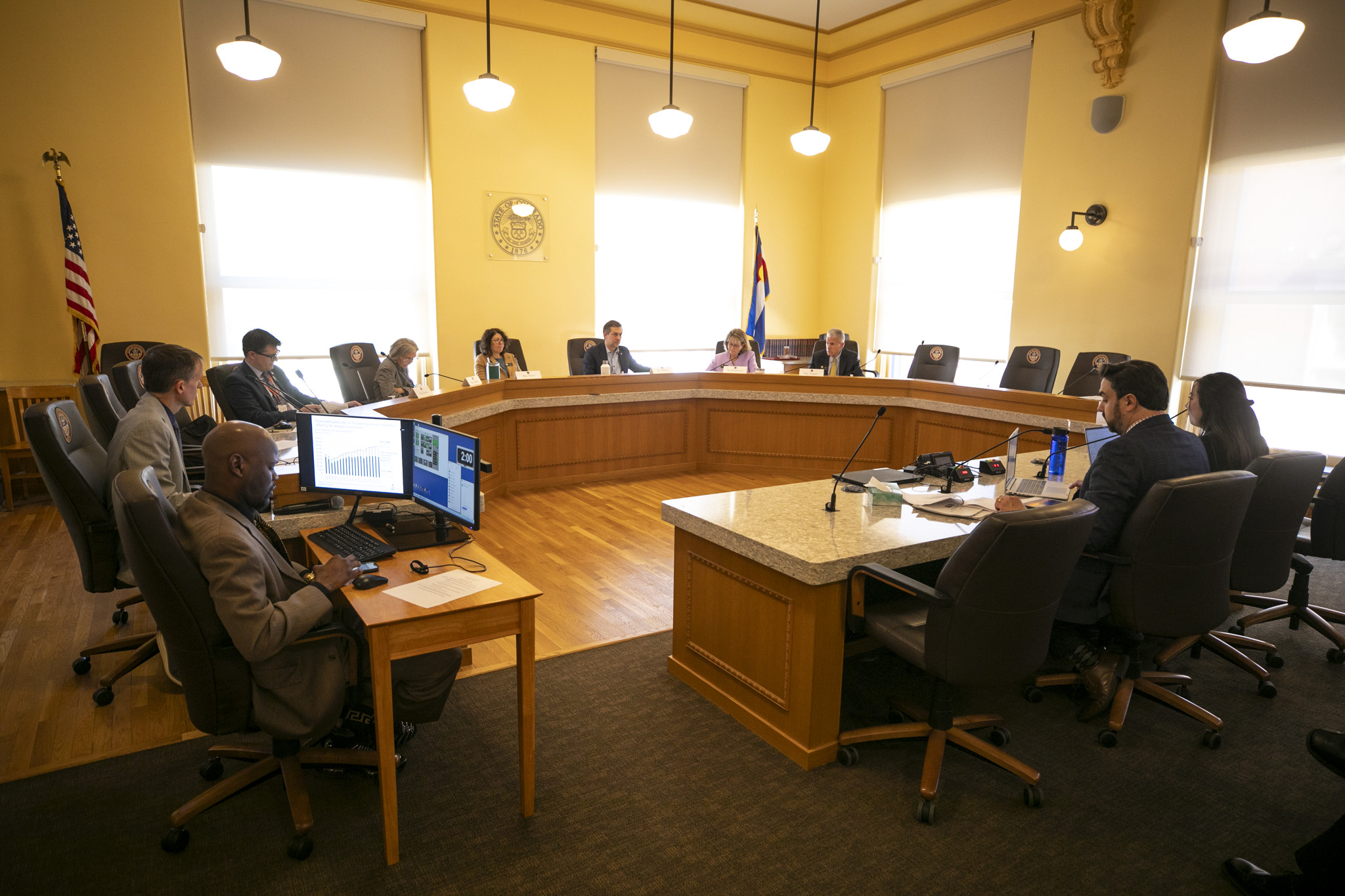
After years of enduring $1 billion budget deficits, Colorado lawmakers on Thursday got some positive news for a change from state economic forecasters.
The Joint Budget Committee might not need to cut much more spending next year — and they may even have enough left to start rebuilding the state’s reserves.
“I’m calling it the Goldilocks forecast,” Greg Sobetski, the chief legislative economist, told the JBC. “We’re in a position where revenue is sitting just right for the (2027-28 fiscal year) budget to essentially be the best case scenario I can be presenting.”
But, state economists cautioned, the budget relief is only expected to be temporary — a one-time reprieve that won’t solve the long-term financial challenges the state faces. Healthcare and other costs are still rising faster most years than the state is allowed to spend under the Taxpayer’s Bill of Rights.
And things could still deteriorate in a hurry, with the economy showing growing signs of weakness as gas prices begin to take their toll on consumers and businesses alike. The governor’s office estimated there’s a 40% chance of a recession in the coming years.
Here are a few key takeaways from the latest quarterly economic forecasts.
The budget picture is improving — for now
After making close to $2 billion worth of spending cuts and other budget-balancing maneuvers over the last two years, lawmakers are now expected to end the current fiscal year on June 30 with a surplus of $116 million, under the forecast from Legislative Council Staff.
That puts them in a better starting position than they expected for the 2026-27 budget year, which starts July 1. And it means they aren’t expected to face another $1 billion shortfall in the 2027-28 budget, which lawmakers will start working on in the fall.
Instead, they’d only need to cut $315 million in spending — and that’s if they want to restore the state’s reserves to 15% of general fund spending after dipping into them this year. If the state keeps its reserves at 13% of spending, where it is now, no further cuts would be needed.
The budget situation improved for a couple reasons. H.R. 1, the federal tax and spending bill, didn’t cut state tax collections by quite as much as expected this year. And growing inflation means the TABOR cap will grow more than expected next year, allowing the state to spend more.
Still, forecasters don’t see the state returning to the budget outlooks of a few years ago, when lawmakers could afford to expand services. The $315 million projected deficit in 2027-28 relies on extending a number of budget cuts for another year — including the reimbursement rate for Medicaid providers, who won’t get an inflationary raise in next year’s budget.
After 2027, the state’s budget situation is expected to deteriorate again, when federal cuts to Medicaid and food stamps begin to take effect. That will leave lawmakers with the difficult choice of how much the state should step in to preserve its social safety net.
“This will be a big conversation going into next legislative session,” said Mark Ferrandino, the director of the governor’s Office of State Planning and Budgeting.
TABOR refunds are expected to return
Both forecasts expect taxpayer refunds to return in each of the next two budget years — but not to the levels they reached during the pandemic.
Under the legislative forecast, Colorado would owe $330 million in TABOR refunds in the budget year that starts July 1, followed by $521 million in the following budget year. The first $200 million in TABOR refunds would cover the cost of a homestead property tax break for seniors — something the legislature had to pay for out of the state’s general fund this year. Taxpayers would also receive around $120 million in sales tax refunds.
State revenue isn’t expected to grow fast enough to reactivate two tax credits for low income families: the expanded earned income tax credit, and the family affordability tax credit. They were turned off this tax year in response to slowing revenue.
Consumers are struggling
Forecasters expect the state economy to grow slightly in the coming years thanks to strong business investment. But the labor force is shrinking as older Coloradans retire, and younger workers are joining an economy that’s expected to have “anemic” levels of job growth in coming years, said David Hansen, an economist for Legislative Council Staff.
One industry — healthcare and social services — was responsible for the vast majority of new jobs over the last year, adding 18,000 workers from April 2025 to April 2026.
Most sectors shed workers in that period, the forecast shows, with the federal government shrinking the most due to layoffs imposed by the Trump administration. Colorado lost 6,000 federal jobs since April 2025 — a 10% drop in the state’s federal workforce.
Household finances are deteriorating, as well. Consumers are being hit hard by inflation, and spending more of what they earn on necessities, economists said. Credit card delinquencies have risen to levels last seen during the Great Recession.
“It is a pretty awful leading indicator of household stress among that part of the economy,” Sobetski said.
The pain felt by lower income households, though, hasn’t yet translated to less revenue for the state. Sobetski said that’s because Colorado’s general fund has become heavily dependent on taxes paid by higher earners.
Read more Nearly $2M of dark money has flooded into Democratic statehouse primaries in Colorado
“This is indicative of rising inequality,” he said.