 By admin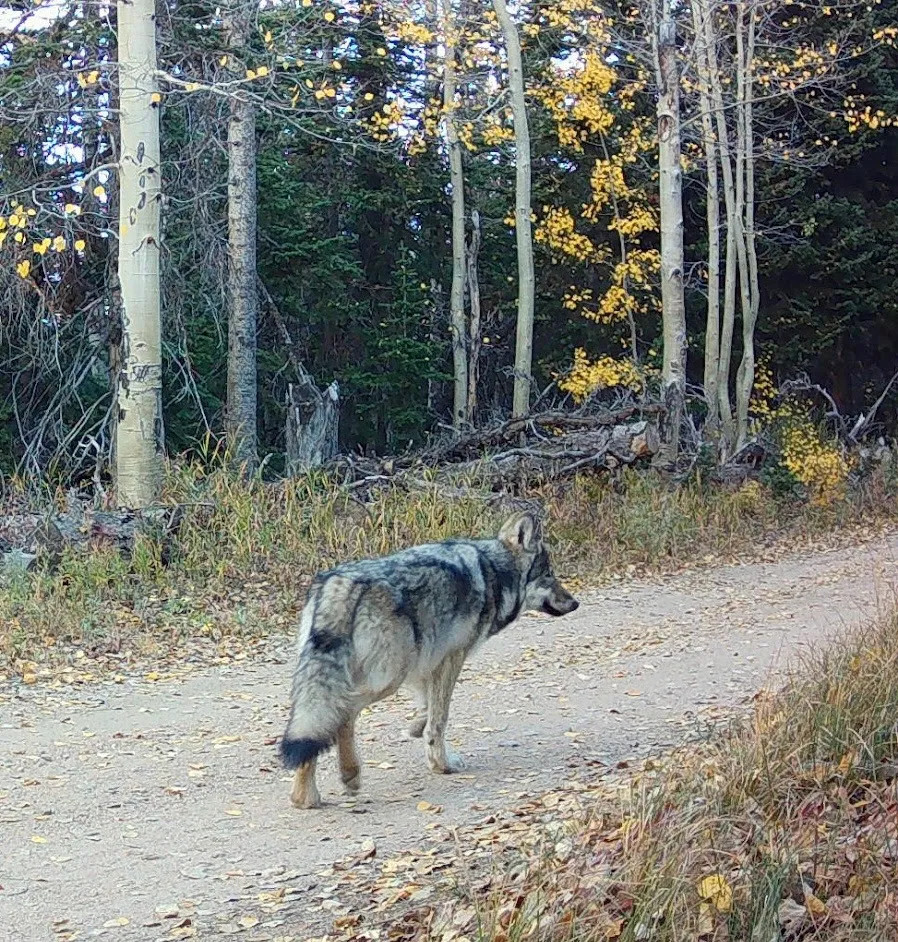
Some called the wolf “Elijah,” some “Lucky,” some “Freedom.”
A woman made a ballet about him. The wolf born in 2024 symbolized different things to different people.
Read more Looking for areas where Michael Bennet and Phil Weiser differ on policy? There aren’t many.
The “Lucky” crowd thought he was fortunate to have escaped being killed after preying on livestock. The “Freedom” crowd cheered on his survival, saying he was the embodiment of all that was wild. The “Elijah” crowd? One member of his fan club sent The Colorado Sun a detailed account of his origin story after he was shot the first time. “Like his namesake prophet, he rose to heaven with the angels,” she wrote.
On June 12, Colorado Parks and Wildlife killed the uncollared wolf born to the Copper Creek pack. The wild-born wolf was supposed to have been trapped with the rest of its family in 2024, when the pack was captured and then rereleased in Pitkin County in 2025. But he couldn’t be caught, and he remained behind in Grand County and surrounding areas, where state officials said he preyed frequently on sheep necessitating their decision to track and kill him.
Wildlife officials said they shot the wolf in Routt County. In a statement, CPW said visual evidence confirmed it was the same wolf responsible for 10 different fatal livestock attacks involving 22 sheep, the latest of which occurred on June 10 and 11. CPW spokesperson Luke Perkins said information about compensation claims will be in the final report of the wolf’s death.
Groups are split on whether CPW should have pursued the wolf until they found and killed it. Some are criticizing the amount of money and personnel the killing took.
CPW Director Laura Clellan in a statement defended the agency’s decision based on the wolf’s many attacks and cooperation from the ranchers whose livestock the wolf was killing “to identify and deploy all viable and reasonable non-lethal tools and techniques identified through their site assessment and consultation” with CPW staff.
This is the second time CPW and its agents tried killing the wolf. The first was in September.
After shooting it the first time in Rio Blanco County, agents spent six days searching for the wolf, but couldn’t find it. They gave up, but continued to monitor the region for signs of wolf activity or reports of wolf vocalizations.
In CPW’s announcement that it had successfully shot and killed the wolf last week, Gov. Jared Polis blamed the wolf for having too little self-control. “This elusive wolf had a number of chances but sadly chose to continue to depredate which necessitated this challenging management decision,” he wrote.
Read more A new era for the Denver Pavilions is beginning to take shape
But Rob Edward, president of the Rocky Mountain Wolf Project, said “the precipitating event that led to the death of this wolf was the illegal killing of his father in 2024, and then his separation from his mother and littermates shortly thereafter. He wasn’t a bad wolf, he was dealt a bad hand.”
Delia Malone, an ecologist and president of the wildlife advocacy group ColoradoWild, criticized the killing on Facebook, writing CPW gunners “killed two of five of the first wolf pups born in Colorado in 78 years…but to be clear, CPW’s staff takes their marching orders from the livestock and hunting industries.”
Perkins told The Colorado Sun “CPW does not respond to Facebook comments.”
2020 vote to restore wolves challenged by Trump ally
The Rocky Mountain Wolf Project said the death “exposes weaknesses in Colorado’s wolf recovery and restoration program that the agency and stakeholders must address to maintain public trust, support livestock producers, and give wolves the best chance to thrive on Colorado’s landscape.”
But Jo Stanko, a rancher and regional assistant commissioner with the Colorado Department of Agriculture, said “the lethal taking” of the wolf “is not an event to celebrate or condemn. It is an example of taking emotion out of the issue and the (wolf) management plan working as designed, efficiently and effectively. The CPW and US Fish and Wildlife came together quickly. The producers had been forward thinking by already utilizing a variety of non-lethal deterrents. This led to a quick and effective conclusion.”
The news comes after the Colorado Conservation Alliance on June 5 filed a report with the U.S. Fish and Wildlife Service claiming an analyst “whose work has been praised by President Donald J. Trump” , which allowed for wolf reintroduction in 2020, and found it failed by a margin of 5.7%.
That’s in direct contradiction to certified election votes from the secretary of state’s office that show the measure passing by 56,986 votes. There have been no known formal challenges to the vote in the six years since it passed.
In an email to The Sun, Eric Washburn, a senior policy advisor for a government relations service focused on energy, wrote “I guess this must be Colorado’s January 6 moment. The claim of voter fraud related to Prop 114 is ridiculous and completely unfounded. This is just one more desperate effort in a long line of desperate efforts over the past few years to invalidate the results of Colorado’s free, fair, and legitimate election in 2020 as it relates to gray wolf recovery.”
New data from the Colorado Polling Institute shows around half of residents polled on the Front Range and the rest of Colorado would welcome a proposal to suspend wolf reintroduction.
Read more 10 Colorado mining trails and tours that help explain 150 years of state history