 By admin
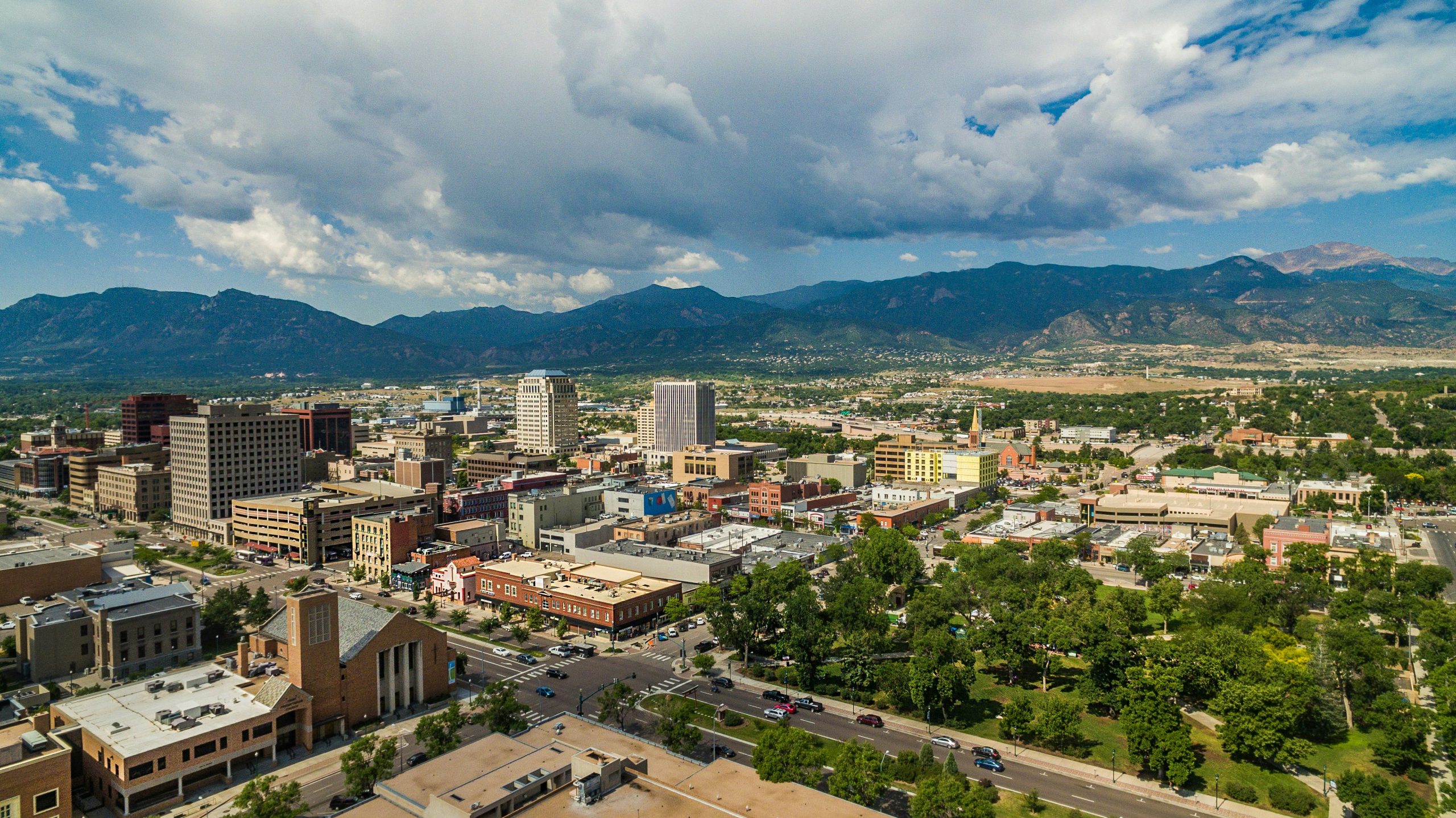
Colorado is leaping into the fray with a bid in the highly competitive race to see which state would house the newly proposed United States Space Academy.
President Donald Trump announced the new academy in August, saying it would be led by NASA and its students will be the next generation of space leaders. The whole idea is still in development, from how it would be funded to what degrees would be offered and where the physical academy would be located. It’s that last question that has states jockeying for position to house the academy and get the economic boons that could come with it.
Gov. Jared Polis announced Friday that Colorado wants in, and is proposing a site in Colorado Springs. Whether the state will be a serious contender is up for debate.
“Colorado has the talent, innovation, and aerospace expertise to train the next generation of American space leaders, and we are a mile closer to space,” Polis said in a news release Friday. “Colorado is uniquely qualified to provide future Space Academy students the education, hands-on experience, leading to good paying, life-long careers that the space industry needs.”
The proposed federal academy won’t be as traditional as other service academies, like West Point or Annapolis. Some graduates will go into the Space Force, the youngest branch of the U.S. Armed Forces, while others will likely go into NASA or the civilian sector.
The goal is to prepare future “astronauts, scientists, engineers, operators, entrepreneurs, civil servants, and warfighters and ensure that they are capable of advancing American interests in space,” the Trump administration said in its August proclamation.
“To continue to lead the world in space exploration and technology, while securing and defending our national interests in space, the Nation must prepare the next generation,” the proclamation said.
The Trump administration established a commission, chaired by NASA Administrator Jared Isaacman, to outline details for the academy. That means coming up with recommendations for everything from the academy’s organizational structure to its academic and leadership curriculum, degree programs, military or civilian federal service obligations for graduates, prerequisites for applicants and process for finding the academy’s permanent home.
That new home should be larger than 300 acres and ready to support 1,200 undergraduate students by the fall 2031 academic term, according to the administration.
It should also be able to expand to about 4,000 students, include academic, student life and research facilities and have space for everything from sports to cafeterias and secure technical facilities.
Colorado has a shot at being the academy’s new home, according to the Polis administration and the Colorado Space Coalition, a public-private-education-industry group that aims to strengthen the state’s position as a leader in space innovation.
Colorado houses the NASA Aerospace Workforce Hub. It already has partnerships between community colleges and aerospace employers. Its aerospace industry ranks No. 1 per capita in aerospace employment, supports over 2,000 aerospace businesses, and employs over 55,000 jobs directly and another 184,000 indirectly, according to the state’s news release.
And in Colorado Springs, local groups, like the Colorado Aerospace & Defense Economic Council, have been recruiting businesses, workers and industry partners to bolster the region as an aerospace and defense hub.
“For generations, our community has supported our nation’s military installations and national security missions, building a world-class aerospace and defense ecosystem of military leaders, innovative companies, educational institutions, and a highly skilled workforce,” Colorado Springs Mayor Yemi Mobolade said in a news release. “This bid builds on that proud legacy.”
But not all Coloradans agree.
In August, U.S. Sen. John Hickenlooper, a Colorado Democrat, called the proposed plan “duplicative, costly and unserious.”
“Establishing a dedicated service academy for space may sound good on paper, but our nation already has an exceptional institution that trains tomorrow’s Space Force leaders: it’s called the U.S. Air Force Academy,” Hickenlooper said in a prepared statement in August. “To duplicate that effort at a time when our national deficit is soaring, is reckless and makes a dire situation even worse.”
Hickenlooper’s office did not respond to requests for updated comments Friday.
It’s unclear whether or how Congress would fund the academy. Other federally-run colleges cost roughly $1 billion per year to operate and NASA already has a tight budget, according to Politico.
Colorado also faces tough competition. Officials from at least a half-dozen states have been vying for the new Space Academy — all with NASA centers, higher education institutions and space industries.
Officials from Alabama, Florida, Louisiana, Nevada, Ohio and Texas have shown interest in housing the new academy according to news reports. The president will choose where the Space Academy is located.
Colorado Springs has also been part of the yearslong national tussle over the location of the U.S. Space Command.
The Trump administration chose Alabama to house Space Command in 2021. President Joe Biden opted to keep it in Colorado Springs. Trump moved it back to Alabama in 2025. (The entire Colorado Congressional delegation, Republicans and Democrats alike, opposed the move.)
The current plan is to break ground on the new site no later than 2027, begin instruction by 2028 at an interim location and transition to the permanent campus by 2031.
The fast-approaching midterm elections could also throw a curveball at the proposed academy.
The commission established in August is supposed to make a plan for the academy, but its recommendations aren’t due until late December — after the Nov. 3 elections, which features many tight, toss-up races.
Congress has not approved the proposal, and future decisions will be up to the next Congress. The venture could face new challenges in two years under a new administration.
Read more Colorado has enough spare winter electricity to replace furnaces with heat pumps, report says
This is a developing story that will be updated.