 By admin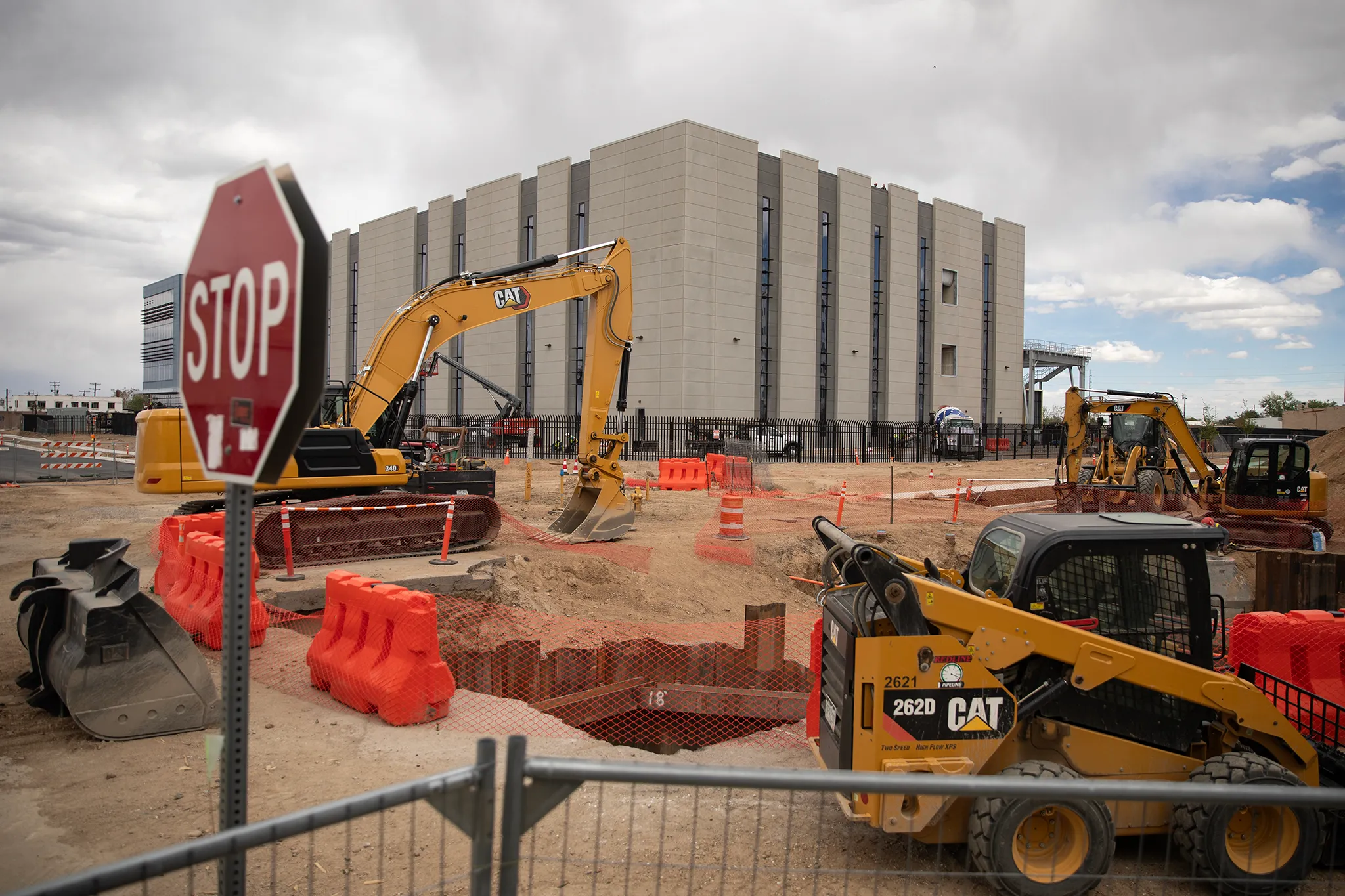
Colorado communities are moving ahead with approvals of massive new data centers, even as new public polling shows citizen opposition swelling over concerns about electricity and water use and noise.
Read more Camper bitten by bear in southern Colorado recalls moment it “came crashing” into tent
The Colorado Springs City Council will hold a key public hearing Thursday on the controversial “Taurus” data center proposed for a former microchip factory near Garden of the Gods. That center could draw up to 50 megawatts of power from Colorado Springs Utilities, and neighborhood groups have risen up with fears of noise and other impacts on the area.
Politicians voting on planning recommendations and permits are looking over their shoulders at poll results like these: found 82% of Coloradans “oppose a data center in their city or town, 77% oppose one in their county, 86% oppose one near their neighborhood, and 75% oppose one elsewhere in the state.”
Fifty-five percent of those surveyed favor a ban on all data center construction, rising to 68% for voters aged 18 to 44.
This burgeoning not-in-anyone’s-backyard sentiment is resulting in public meetings like Thursday’s Colorado Springs hearing, jammed with hours of citizens signed up likely for vehement denunciations of new projects.
Here’s where recent projects now stand:
Weld County says “yes”
The Weld County Commission is embracing data growth, approving on Sept. 9 a plan from Global AI that would become the largest data center operation in the state. Global AI applied to build a 41-acre data center on a 438-acre unincorporated parcel previously controlled by Carestream Health and Eastman Kodak.
The commission had earlier this year approved a set of special planning and permitting rules for data centers, banning development in agricultural zones and requiring water conservation plans and adequate power sources. The city of Greeley is moving to annex the land Global AI is building on, near Windsor.
While many local residents objected to the Global AI approval, the commissioners said they were adding important limitations on the developer, requiring a closed-loop cooling system that needs far less water use than many existing data centers, limits on acceptable noise pollution, and a decommissioning and bonding plan.
Read more Eastern Colorado roadside attraction celebrates 100 years of being over the top
Aurora says “yes, but with conditions”
Aurora is currently home to the state’s largest — and still growing — data center complex, built by QTS. When the next phase of the data center is finished, the operation could draw many times the electrical needs of Denver International Airport.
The backup generators installed at many data centers to secure data flow in case of outages have become part of the debate in Aurora. The fossil fuel-driven generators can produce alarming local pollution, even when run for short periods.
The Aurora City Council recently considered and rejected an outright ban on new data center construction, which would not have affected QTS’ already-permitted operations. Instead, the council opted for a regulation banning the older-technology evaporative cooling of data centers that uses far more water than newer closed-loop systems.
Colorado Springs reaches decision-time
The Colorado Springs City Council is expected to pass final judgment on the Taurus proposal Thursday night, after hearing potentially hours of testimony from groups that have been organizing against the plan for months.
The debate has become fierce enough to prompt the Colorado Springs Gazette to ask the candidates running for the city’s U.S. House seat in November’s election to weigh in on the project.
Planners previously agreed to set some limits on the Taurus application, pushed by California-based developer Raeden. That included a cap on how much total power the data center could draw, requirements for a closed-loop water system, and noise monitoring.
The debate may draw in wider renewable energy issues and resource questions. Colorado Springs Utilities has previously sought state approval to keep the coal-fired Ray D. Nixon power plant in Fountain open past its scheduled closing year, in order to meet growing demand and provide reliable generation. Environmental groups argue that growth in data centers has helped stall replacement of highly polluting fossil fuel energy with cleaner solar and wind sources.
Read more Colorado governor, an ex-beekeeper, takes executive action to save the bees