 By admin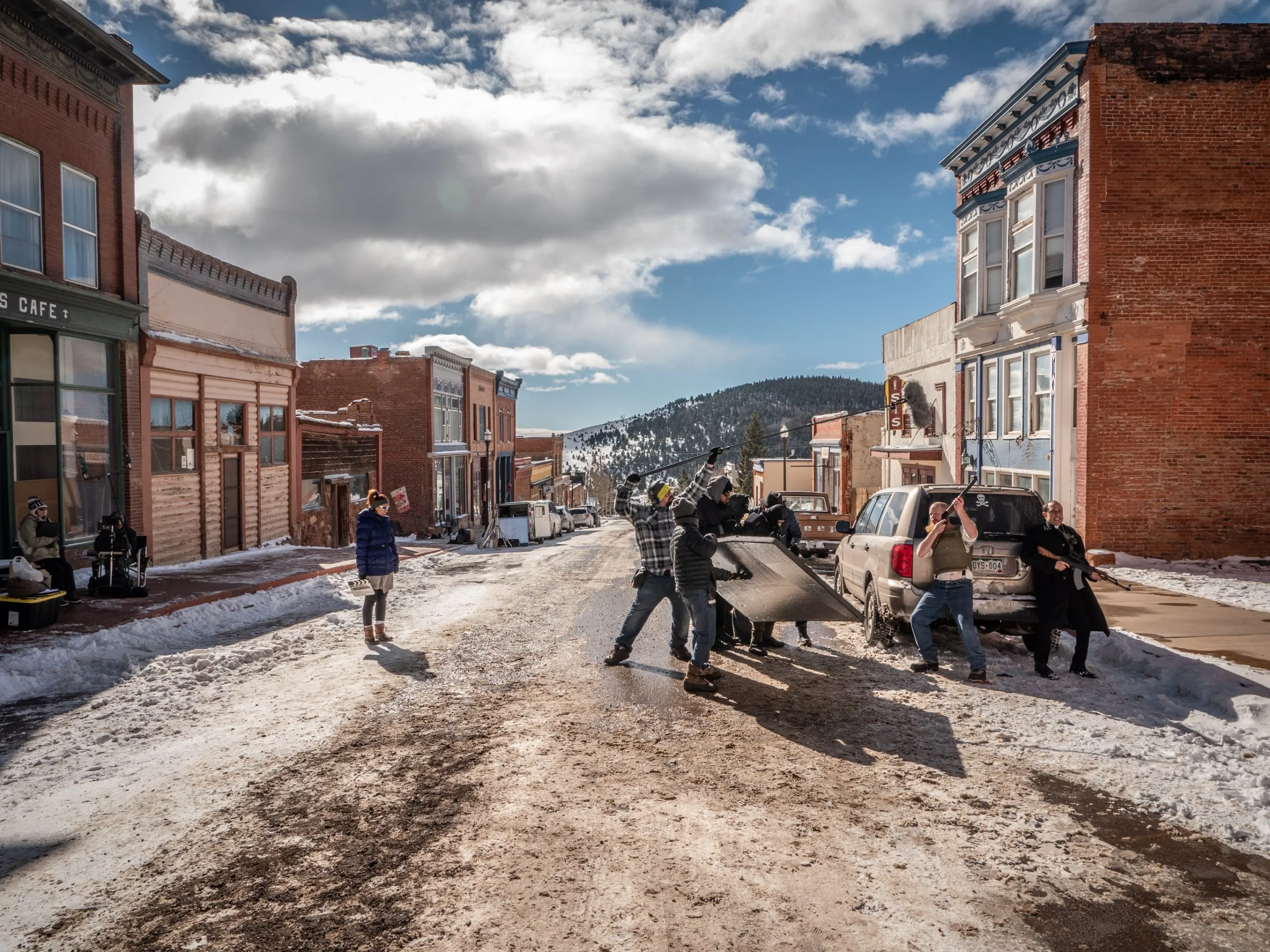
The whispers started about two years ago. The Stanley Hotel was getting a $450 million upgrade that included a new film center, the Sundance Directors Lab was trying out a new home in Estes Park, while grumblings about the world-class film festival clogging up ski season in Park City were getting louder.
Read more Is Colorado’s median home price higher than the national average?
Was Sundance trying to leave Utah? Was Colorado trying to lure it here?
Though at the time no one would say so on the record, the state’s actions spoke loud enough to get the message across. Colorado had been tinkering with its film tax incentives — a $5 million bump here, a massive sales tax rebate there, a four-year tax incentive signed into law. At the start of 2025, after it had become public that Sundance was shopping around for a new home, things kicked into high gear.
A Boulder coalition received $1.5 million to help persuade Sundance execs, and shortly after that state lawmakers offered a $34 million tax credit to the festival. In March 2025, Sundance announced a 10-year contract with Boulder.
All of that to say, the filmmaking in Colorado has momentum that’s been building for the past few years. But none of it matters if the state can’t start to build these big tax breaks into a sustainable film industry.
Lauren Sloan is six months into her job as the film commissioner at the Colorado Office for Film, Television and Media, and six months away from welcoming Sundance to Boulder. We caught up with her last week to get her take on what the hype is all about, who the festival is for, and why “being friendly” is one of the most important things people can do to support Colorado’s film industry as a whole.
Sun: Let’s start with what your role really is. It’s shorthanded to Colorado film commissioner, but you also oversee TV and other types of media. So what do you feel like is the role of the film commissioner right now? And what are the most immediate priorities for the office?
Sloan: I think the Television, Film and Media commissioner might be a little too long. But yeah, we do include all forms of media and content creation. But the mission of the office is really to be promoting production within Colorado as it relates to being an economic driver and creates jobs.
There is this little tiny festival that’s moving to Boulder in January. So with Sundance coming, it’s a really incredible moment for us as the Colorado film and media industry, because we have a spotlight on us like never before. … We’ll have a captive audience of all of these incredible filmmakers coming to our state, so I want to be able to showcase the state and utilize that as a way to get folks to lure them here for production and work.
Sun: You’ve worked in film production, so you can see the state through that lens. If you are scouting locations in the West, how attractive is Colorado? How competitive are we right now?
Sloan: I think if you’re looking at a map, you have a 25% tax credit in Utah, you have 30% in New Mexico, you have an ungodly amount in Georgia and all these other places. In Colorado, we are at 20% and we can go up to 22%. So if you’re looking at a map, it’s really easy to pass by us.
But if you get into the minutiae of our program, we do become more competitive. We cover above-the-line costs (writers, producers, directors) and below-the-line costs (staff, equipment, location costs). Not all states do that. If you can get into a conversation about how our program works and what we cover, we can be more competitive, but it’s just a matter of doing a lot of proactive outreach from our office so that we can have those conversations. That’s really a focus of our office right now.
It’s also a priority for us to make sure we are expedient with our issuance of the tax credits. There are some other states that it can take years to receive your tax credit. We’re working on six months or less right now. So that’s another way that we can become competitive, given our current legislation.
Sun: We’ve written about the economic ripple that film production in Colorado can have, especially in rural areas where there are some extra incentives. And it often is spoken about in terms of return on investment. I’m wondering if there is anything that gets lost in that conversation when we’re talking about dollars in and dollars out.
Sloan: Economic development does provide that hard data that we are able to champion the program with.
But there are some anecdotes and intangibles that film production brings. We’ve heard stories about a film that shot in Creede, and the crew found a really nice knife shop and then they all bought knives that come from this place. People will sometimes move to the town. And it brings exposure to the film industry in places where people may not think about it. They may not understand this is a potential career path until they can see it up close.
Sun: It’s always a huge source of curiosity when a street is closed off for filming.
Sloan: That’s right. I grew up in the same town where “Home Alone” was filmed, my friend grew up in the “Home Alone” house. Every year they put a Kevin cut out in the window. And it’s still an attraction. People come and take photos. You know, there is that film tourism component I would love to be able to get to at some point, where people can see where different things are filmed.
Sun: Let’s transition a little bit to talking about festivals. With Sundance, I’m sure there are people who are like, ‘I don’t get it. What’s the big deal? We have so many good film festivals already.’ How do you explain what Sundance is and who might be impacted by it moving here?
Sloan: The Sundance Film Festival is one of the top five international film festivals. They receive tens of thousands of submissions every year, so they are really able to program the best of the best. This is really just a different scale in terms of setting the tone for culture and film. They are taste makers. In terms of the cultural impact, that’s huge.
In terms of economic impact, again, they are one of the top five festivals in the world. Just the data that we’ve seen from what they’ve done in Utah, we’re expecting 15 to 20,000 out-of-state visitors, with lots of money being spent in and around Boulder County for hotels, restaurants, all those fun things. And we’re really encouraging people to explore beyond because it’s not Park City, it’s not a ski-in and ski-out town.
So culturally I think it’s going to be a really exciting offering for Coloradans. This is not a New York and L.A. industry event. Anybody can go. In Utah, 70% of their ticket holders were Utah residents. So that’s something that we’re really wanting to make sure people know that this is just for anybody. If you’re interested in the film, if you’re interested in poking around and learning more, you’re more than welcome.
Sun: Sort of mirroring what I was asking about from the production side of things, how attractive does Colorado look from the festival lens? Do we need to focus on what we have, or should we be thinking about growing the scene right now in terms of festivals?
Sloan: So we have over 100 film festivals in Colorado already. I was actually just on a panel with Kate (McCluskie of Breckenridge Film Festival) last week and the title of the panel was “Rising Tides Lift All Ships.” Because really, given that we have this film festival tax credit, which to our knowledge is the first of its kind in the country, we are prioritizing film festivals as an economic driver, and showing that that is an important piece of the fabric in our state storytelling.
The Durango Film Festival kind of has a niche with Western-leaning things. Mountainfilm (in Telluride) obviously has more outdoorsy content. Denver Film has regional premieres that are going to be doing the awards circuit series. SeriesFest (in Denver) is television focused. And there is always room for more. We would never say don’t start a festival. The more film culture we have within the state, it’s just going to benefit us all.
Sun: As we kind of talked about toward the beginning, there is this sense of moving into the next chapter in terms of both festivals and production. So how do you feel like we keep this momentum up right now? And how can people who aren’t involved in the industry support or become a part of that?
Sloan: Again, our program is modest, but decent. And there are also things that nonindustry folks in their regions can do in terms of making their area film friendly.
We work with regional liaisons across the state who are the experts in their area. So if somebody is interested in a ranch in Park County, I’ll call up Ann Lukacs, because she knows her area better than I do. We have locals that are the experts that are able to help anybody that’s interested in a specific location or region.
But then Ann is also working with her community to make sure that people are film friendly. So making sure they have a smooth permitting system, charging reasonable rates for location rentals and just, you know, being friendly when folks come in. You’re going to have a crew come into your diner or your coffee shop. Just being friendly, literally friendly, makes a big difference.
I was in Louisiana in the early 2000s when their film incentive really kicked off, and I was waiting tables at a restaurant when Jessica Simpson was there shooting “Dukes of Hazard.” Everyone loses their mind. But if you’re working in the restaurant, you want to make sure everyone’s having a good time.
So it’s just instilling that hospitable nature that I know Coloradans certainly have. It does make a really big difference, because people talk. They’ll go back to L.A. and say, ‘oh, I really enjoyed working in the state.’ Or, ‘I didn’t have a good time working in that state.’ We can use some of those things to our advantage as well. I’m very aware that we’re not going to be Georgia with unlimited funds. I just would like to create something that’s a little bit more impactful and something we can sustain for the long term.