 By admin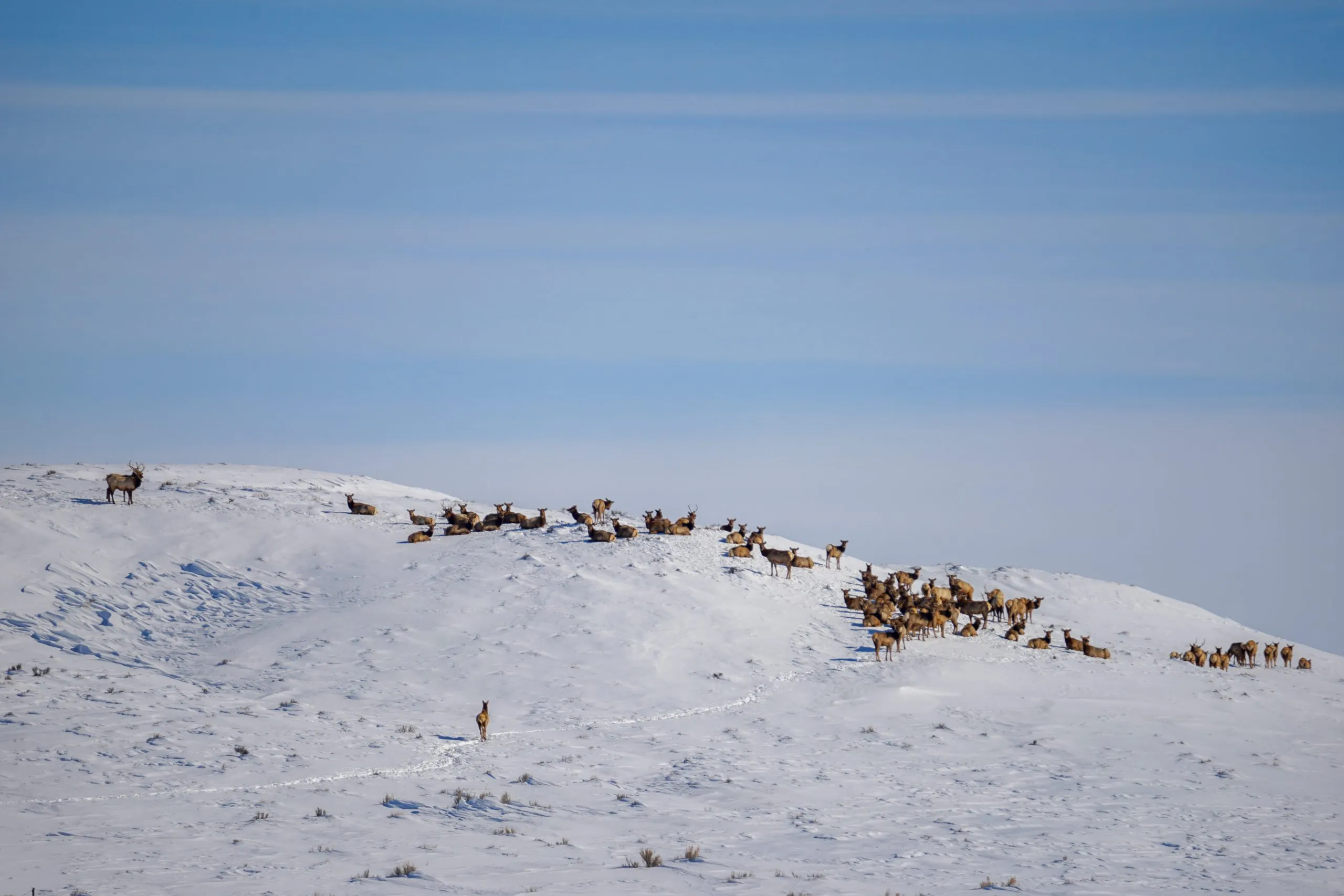
Two environmental groups are suing to overturn the June federal oil and gas lease sales in Colorado and Wyoming, arguing the U.S. Bureau of Land management failed to take into account vital migration corridors for elk, pronghorn and mule deer.
Read more Colorado IT office rehires 15 of 173 laid-off state workers, says overhaul will save at least $6M
The Tuesday in federal district court in Denver by the Carbondale-based Wilderness Workshop and the Wilderness Society, a national conservation organization, is challenging the lease sales, which covered 430 square miles across the two states.
The June 15 Colorado auction, offering 170 parcels spanning 155,816.48 acres, was the largest sale on record for the state. About 86% of the parcels were leased, raising almost $35.3 million in total receipts, according to BLM.
The Colorado land is primarily in Moffat and Rio Blanco counties. Over six auctions from December 2025 to December 2026, BLM is on pace to offer more than 400,000 acres of public land for sale in Colorado.
“There are very important lands that are at stake here,” said Clay Samford, an attorney with Earthjustice who is representing the two conservation groups. “There’s important big-game habitat, big-game migration corridors that are important to the people of Colorado and Wyoming in these sales.”
The U.S. Department of the Interior in a statement said: “We have no comment to offer on this due to pending litigation.”
The lawsuit contends that the bureau’s interpretation of the Trump administration’s One Big Beautiful Bill Act, or H.R. 1, conflicts with other federal requirements and as a result has not considered the migration routes for elk, pronghorn and mule deer, some of which straddle the two states.
The governors of Colorado and Wyoming have issued executive orders calling wildlife an important resource and directing state agencies to make it a priority to maintain wildlife migration corridors.
In his 2020 order, Wyoming Gov. Mark Gordon, a Republican, noted that the state is “home to the largest intact mule deer and antelope migration corridors in North America” and the corridors are “essential for the maintenance of viable mule deer and antelope populations.”
Wyoming’s Sublette pronghorn herd makes the longest documented annual land mammal migration in the Lower 48 states, traveling more than 150 miles between a summer range near Grand Teton National Park and winter range in the Green River Basin.
Colorado’s Democratic Gov. Jared Polis said in his 2019 order that Colorado’s Rocky Mountain elk herd, with a population of 250,000, was the largest in the country. “Simply put, wildlife is essential to Colorado’s outdoor recreation economy and landscape heritage.”
“In Colorado, the Bears Ears and White River mule deer and elk herds undertake what may be the longest migrations of these species in the contiguous United States, moving 70 miles from summer range in the Yampa and White River drainages near the Continental Divide to winter range near the Colorado-Utah border,” the lawsuit said.
Read more US strikes Colorado River deal with Mexico
However, in doing the environmental assessments for the sales, the lawsuit said, the bureau failed to take wildlife into account.
“BLM’s EA for the Colorado lease sale did not analyze the impacts of leasing on big game habitat or migration corridors,” the complaint said. “As a result, BLM’s leasing decision ignored significant environmental impacts.”
The bureau, for example, “ignored the synergistic impacts of leasing on one end of the Baggs mule deer migration corridor while BLM in Wyoming is authorizing leasing on the other end of the same corridor.” The Baggs corridor is highlighted in Gordon’s order.
At issue is BLM’s interpretation of several elements of the One Big Beautiful Bill Act and how that may conflict with other federal laws and mandates.
The act requires nine oil and gas producing states, including Colorado and Wyoming, to hold quarterly oil and gas lease sales and that all parcels nominated by individuals or industry be put up for auction within 18 months.
In its interpretation, the BLM is prioritizing oil and gas over other uses of public land. The conservation groups contend that the Federal Land Policy and Management Act still requires a balancing of uses with “preference criteria” to direct oil and gas development away from areas where it would conflict with wildlife habitat.
“It’s not clear that Congress tried to overrule FLPMA in the Big Beautiful Bill,” Samford said. “BLM still has these sustained yield mandates and needs to ensure it’s meeting them under this new regime.”
Complicating the management is the BLM’s ruling that it can only impose restrictions on leases — known as stipulations — if they are included in the agency’s resource management plan for the region. The plan for northwestern Colorado was done in 2011.
“The problem is that the plans were all created under the assumption that at the leasing stage or later, BLM could add new protective stipulations as needed,” Samford said. “So effectively, the Big Beautiful Bill limits BLM to discretion past the land management plan stage.”
“There is part of this suit that is looking a bit more broadly at how the Big Beautiful Bill Act is interpreted as part of the leasing process, and so that’s an issue that we think is important to bring to the court,” Samford said.
Read more Two more bears killed in Colorado, including one that charged deputies as witnesses watched