 By admin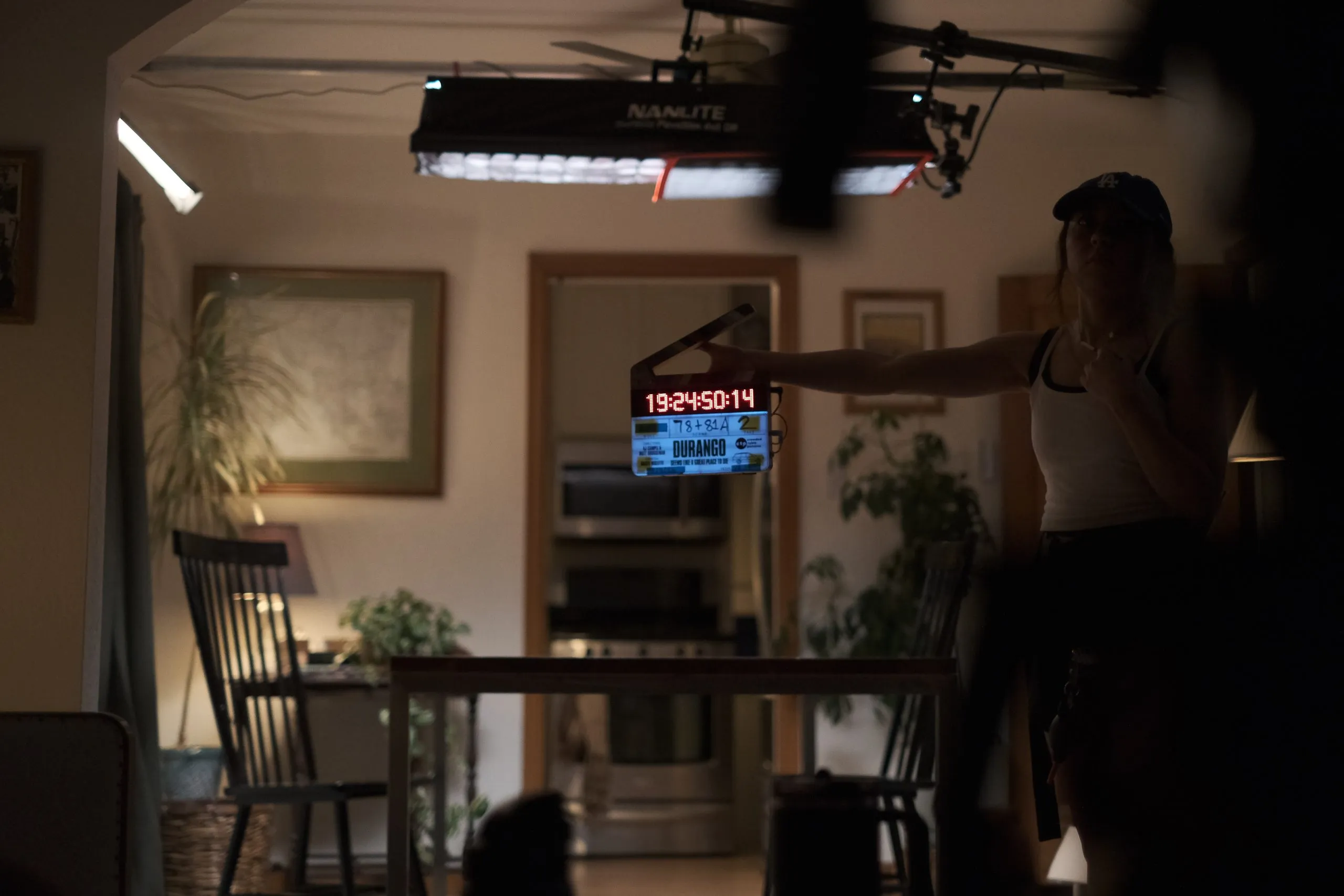
BOULDER — The motel is fully booked with no room to spare not even for a couple hours but no problem they’ll just throw a few cones in front of room 13 and make it work. The motel’s receptionist tells guests to keep their blinds closed until about 11 p.m. when filming stops. There aren’t enough parking spots, and street parking is full, so the film crew dances their cars around like musical chairs every time a Ram ProMaster or a Ford Transit packed with lights and diffusers and other movie “magic” pulls into the tight lot.
Read more Colorado keeps 4.2M acres roadless as Trump administration opens much of the West
“This is indie filmmaking,” said Matt Bruggeman, cowriter and director of the forthcoming feature film, “Durango Seems Like A Great Place to Die.”
Independent filmmaking is nearly as old as filmmaking itself, with roots reaching back to the formation of the Motion Picture Patents Company, also known as the Edison Trust, in 1908. The exclusive group of studios that made up the trust dominated early moviemaking, while those who produced films outside of those studios were defined as independents.
The Sundance Film Festival is still billed as an independent film festival for those movies without studio investment or guidance. But a lot has changed about independent filmmaking since its inception, and even since the festival’s start in 1978. While the Colorado lawmakers eagerly welcomed Sundance with major tax incentives, the state has been slower to roll out support for the filmmakers whom the festival relies on.
“It doesn’t make sense to film in Colorado economically, right now,” said Tyler Sapp, one of four executive producers on “Durango.”
Colorado offers filmmakers a 20% tax credit (up to 22% for filming in rural areas) for in-state expenses, while just a few hours south, New Mexico offers a base credit of 25%, with the ability to stack incentives up to 40%.
“We have fewer films as a result of that, so it’s harder to make a case to expand the tax credit when there aren’t many films to be supporting,” Sapp said. “The intention of something like this,” he said, gesturing to the sprawl of equipment taking over the motel parking lot, “is to do our part, to show up and actually be making the things we want to see more of.”
Starved for narrative
Momentum has been building in the Colorado film scene for years, commissioned by Denver Arts and Venues and Colorado Creative Industries, published in 2023. The report showed that between 2011 and 2019, employment in Denver’s film industry grew 48%, faster than national growth in the film sector at 30%, and more than double the state’s overall employment growth of 21% during that period.
Despite its potential, the industry was held back in Colorado by a lack of infrastructure and incentives, the report concluded. Furthermore, most of those jobs were in the commercial sector — advertisements and brand-sponsored short films that use the Rocky Mountains as a backdrop.
“We’re such a commercial town that we’re starved to make narrative here,” said AJ Campli, cowriter and director of “Durango.” “So everyone is willing to work on this for …” he trailed off, not wanting it to sound like they aren’t paying their crew (they are).
“We’re just willing to put more of our own resources into the production,” Bailey T. Miclette, an executive producer and co-founder of Boulder Media House, jumped in to say.
“Us included, right? We understand that there’s a very good chance there is no money to be made and lots of money to be lost on this, but we believe it’s worth it,” Bruggeman said.
To fund the film, the group crowdfunded, pitched in their own money, landed the state tax credit and secured a loan against it. In some ways the mix is risky, with more to keep track of than a studio contract or a “negative pickup,” an industry term for a studio or distributor agreeing to buy a film upon completion.
But in other ways it removes a lot of oversight, and gives the filmmakers more control over their work. There are no commercial interests to contend with their creative visions.
“It’s very pure in an artistic way, because there’s not some studio telling us what the formula is,” said Chloe Chamberlain, an entrepreneur and executive producer. “It’s just artists making work, and doing it in any way that will get it done.”
The discount shoe tax credit
The industry has been taking small steps toward expansion in Colorado since the 2023 report and the 2024 tax credit expansion. The Colorado Office of Film, TV and Media published a film location directory, with more than 700 sites for potential shoots — from the Denver Zoo to the entire historic town of Georgetown. This year also marks the first opportunity for film festivals to apply for a tax credit of up to $75,000, depending on the size and expenditures of the festival.
And then, of course, there’s Sundance, expected to draw tens of thousands of cinephiles into Boulder from all over the world when the festival opens Jan. 21 for its 10-day run.
Outside of the state Capitol, groups like the Colorado Film and Video Association are also working to spur the film industry’s growth. The association just wrapped up their first-ever Producer Accelerator, a six-week-long curriculum that helps connect the dots between the creative side and the business side of filmmaking.
One of the biggest misunderstandings in the filmmaking world is what a producer actually does, said Shawna Schultz, vice president of the Colorado Film and Video Association. They are first and foremost businesspeople and entrepreneurs, pitching projects, making budgets and shopping around for the most cost-effective way to make a movie.
“If you told someone you could buy a pair of shoes at this store and get 20% off or you could buy the same pair of shoes at this store and get 30% off, it’s a no-brainer,” Schultz said about Colorado’s 20% tax credit.
For that reason, the producer accelerator focuses on producers who are already here in Colorado, and who want to build out Colorado’s film scene. Producers like Sapp, Chamberlain, Miclette and Jill Coats, the four-producer team behind “Durango,” who are dead set on making a Colorado movie despite the costs.
For those who aren’t part of the industry, there are two ways to show support, Schultz said: Go to the movies — especially film festivals that show mostly independent films — or donate $20 to a Colorado film’s crowdfunding campaign.
Those who want to take it a step further can attend the Producer Accelerator Pitch Event at the Sie FilmCenter on Sept. 19, where 12 producers from the inaugural cohort will present film concepts to other filmmakers and industry professionals.
On the last day of shooting “Durango,” everyone gathered for the final scene at the Marmot Burrow Amphitheater in Staunton State Park. The film was short on extras, so they pulled pretty much every crewmember who wasn’t behind a camera into the scene.
After the first take, the directors huddled tight and watched the footage, smiling as they watched it unfold on a tiny screen for the first time.
Hikers chattered in the background during one take. A fox ran by during another. The lead actor tried making eye contact with one person, then ditched that approach because it felt unnatural.
After each take Campli walked through the center of the scene giving notes and words of encouragement, a hair and makeup attendant buzzed around the lead actress. For four straight hours they filmed the same three-minute scene over and over — pausing for brief breaks to refuel with Jimmy John’s sandwiches, Doritos, Funyuns, sour candies and tiny Gatorades.
During one take, as the main character reached the end of his monologue, Campli quietly backed away from the cameras, hands pressed to his mouth in a wordless prayer. The actor wrapped up the scene and Campli punched the air below him in silent celebration. And cut.
Read more Nevada sues in federal court to block Colorado River cuts