 By admin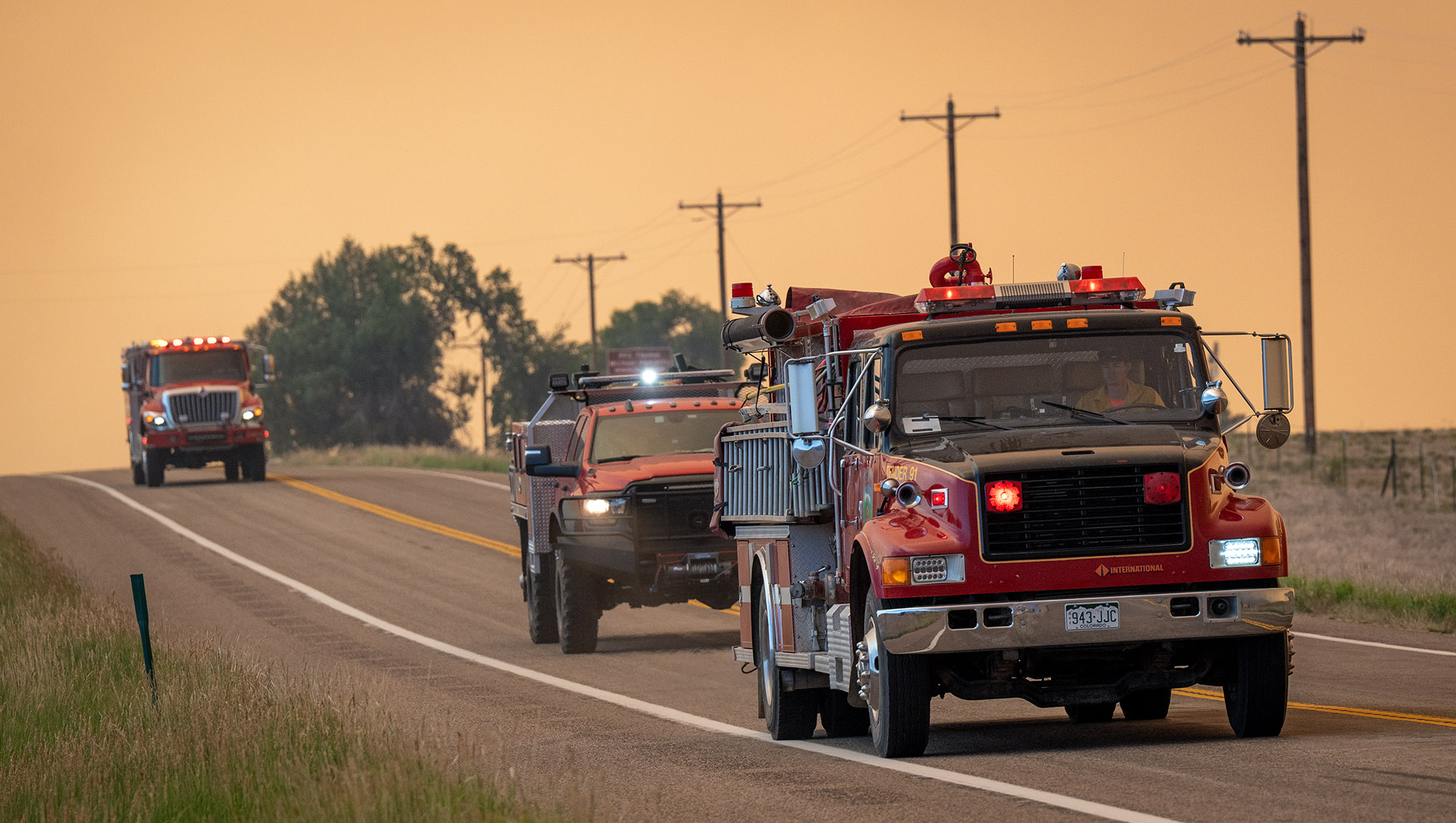
A wind-driven wildfire burning in Pueblo and Custer counties has destroyed structures, and forecasters warned that critically low humidity levels and strong winds could create dangerous fire conditions through Thursday.
Read more Aspen Snowmass hopes to battle warmer winters by storing snow. Here’s how.
Mandatory evacuations were in effect on Tuesday morning as firefighters battled the 22,829-acre Aspen Acres fire, which remained 0% contained. Officials had not yet determined how many structures had been lost.
Nearly 370 animals were being sheltered at the Colorado State Fairgrounds after being evacuated from areas threatened by the fire.
“We understand everyone is curious about their homes. We are still assessing the area as it becomes safe for firefighters to do so as firefighting efforts are still ongoing,” the Beulah Fire Protection District said in a Tuesday morning update.
The fire made an 8-mile run off timber in the foothills and is burning through extremely dry grass and brush, and running east, according to the Colorado Incident Management Team, which took command of the fire Monday night. Additional resources have been ordered and are enroute.
The cause of the fire remains under investigation.
High temperatures with winds gusting up to 45 mph Tuesday and Wednesday are expected in southern Colorado, forecasters at the National Weather Service office in Pueblo said. Humidity levels will drop below 12%, the weather service said.
Critical fire weather is also expected for the high country, forecasters said, warning of sustained winds combined with dry, hot air.
“Any new starts or established fires will likely spread rapidly under these conditions,” forecasters said.
Elsewhere in Colorado, firefighters continued battling several wildfires that have prompted evacuations and strained firefighting resources.
During a news conference Monday night, Tim Ross, USFS incident commander, said firefighters across Colorado are competing for limited resources.
“With the recent activity in the entire state of Colorado, there is a battle for resources,” said Ross during an update on the Willow fire burning northwest of Leadville.
“Federal resources are across the state, that’s not to say the local resources are overmatched or overwhelmed or anything like that, but we’re a force multiplier and we go where there is a need in the state.”
Snyder fire
There are 133 firefighters working the Snyder fire and more were en route Tuesday to fight the 30,163-acre fire burning on the Colorado-Utah border, fire officials said Tuesday morning.
The fire remained 0% contained as of Tuesday morning.
“The fire environment is conducive for large fire growth because all elements for extreme fire behavior are present,” fire officials said. “Live and dead fuel moistures are at critical levels and D3 severe drought conditions exist over the fire area.”
Below average to minimal snowpack, a lack of spring moisture and above average temperatures over the past six months are also contributing to the parched landscape.
Gold Mountain fire
Firefighters on the ground and aviation teams are focusing on protecting homes and other threatened structures by fighting the fire burning northeast of Ouray, which was estimated at 7,103 acres as of Monday night.
Crews are using a variety of suppression tactics to tackle the flames that are burning in steep terrain and shifting directions with the wind, officials with the U.S. Forest Service-Grand Mesa, Uncompahgre & Gunnison National Forests said.
As of 4:15 p.m. Monday, the fire had not crossed County Road 14A and crews are using that corridor as a “key operational boundary” to keep the fire east of U.S. 550 and County Road 14A and north of the city of Ouray.
Officials determined that the fire started on private land, but the cause remains under investigation.
The Rocky Mountain Complex Incident Management Team 3 is preparing to assume command Tuesday.
Ferris fire
The Ferris fire, burning in Dolores and Montezuma counties, grew Monday night and is now estimated at 19,613 acres, according to officials with the San Juan National Forest.
Strong winds are predicted Tuesday, but crews are scoping out areas where they can safely engage along the fire’s edge to stop its forward progress and protect homes and private property, fire officials said in a morning update.
As the fire moves northeast and away from flammable ponderosa pine, officials said Monday that fire activity was expected to decrease.
Willow fire
After a quiet morning Monday, the fire was more active in the afternoon, increasing by about 700 acres, and was mapped overnight at 1,919 acres, Forest Service officials reported Tuesday morning.
The Willow fire started Sunday afternoon about 2 miles northwest of the Leadville fish hatchery and quickly moved to the north toward Turquoise Lake. Ross, a USFS incident commander based out of Colorado Springs, said during a news conference Monday night that the historically low snowpack is being felt by firefighters.
“Currently across the state we are seeing unprecedented conditions. With the historically dry winter, some of the things that we would take for granted as a firefighting force — alpine lakes, snowpack, standard fuel moistures — are quite a bit lower than we’re used to seeing, record lows,” Ross said. “So it is definitely increasing the activity of the fire, the rate of spread, and the availability of all the fuels.”
Trails and campgrounds around Turquoise Lake remain closed, and numerous evacuations and preevacuation notices are in effect for county roads west of Leadville, according to the Lake County Office of Emergency Management.
No injuries have been reported and no structures have burned as of Tuesday morning.
Big Sheep fire
The fire was first reported Monday afternoon near Moonshine Ranch, which is west of Walsenburg. It was roughly 314 acres by Monday evening, according to the Huerfano County Sheriff’s Department.
Preevacuations notices were sent out Monday evening for all those between the fire and Highway 69 and to Farisita. The cause of the fire has not been released.
Read more This new Adams County library wants you to get closer to nature. That includes a mud pit.