 By admin
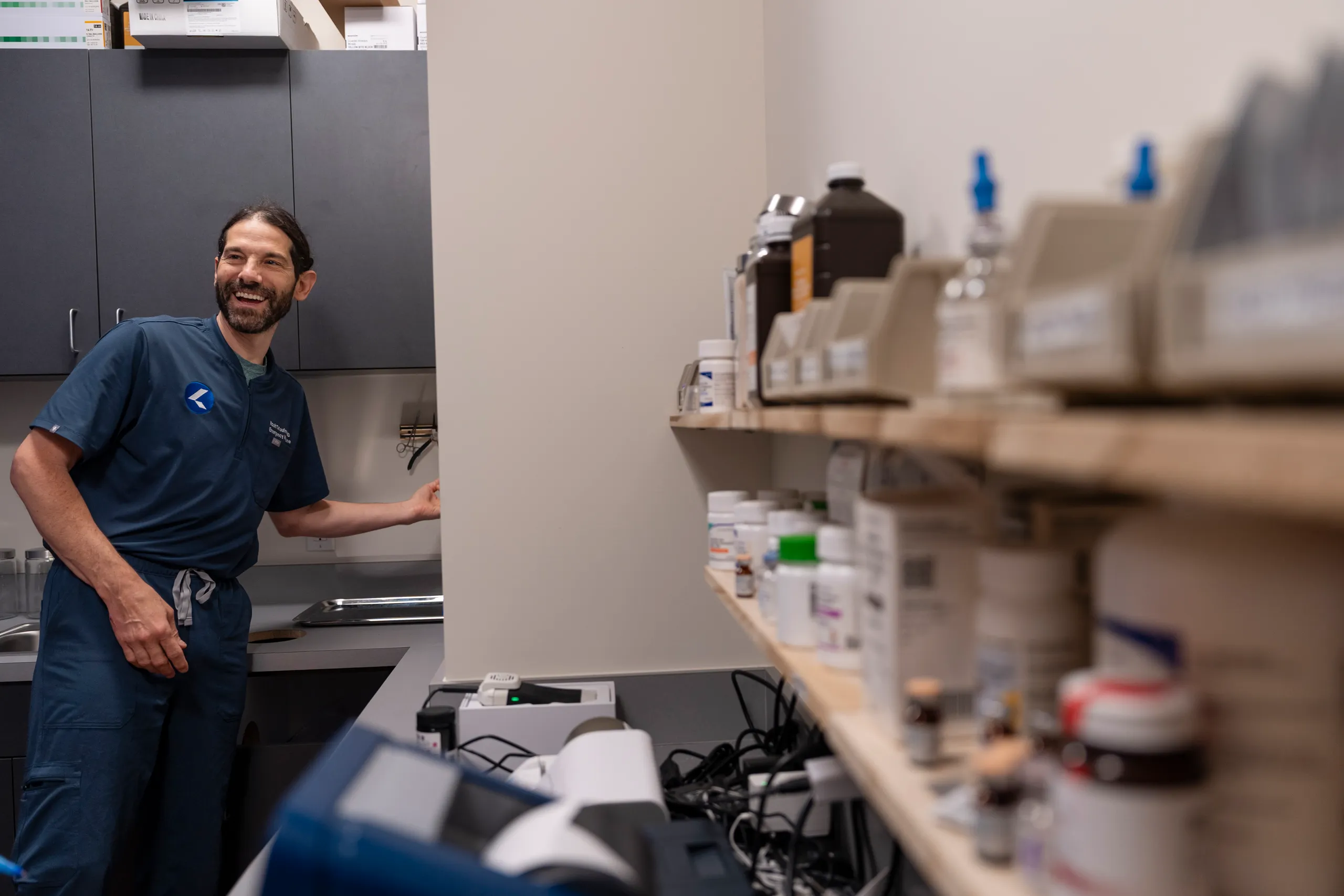
Noah Kaufman can’t resist a challenge.
The longtime emergency medicine doctor gained a fan following — and the nickname “Ninjadoc” — for negotiating courses of deviously designed features with names like Salmon Ladder, Jumping Spider and Warped Wall on the popular TV series “American Ninja Warriors.”
Read more New rules require Front Range lawn care companies to trim summer use of gas-powered equipment
These days, well past his ninja prime, he tackles obstacles with more prosaic names: Interminable wait times. Exorbitant costs. Surprise billing.
Still in love with practicing medicine but burned out on the ER, Kaufman has channeled his efforts into a growing direct-pay healthcare movement that touts the advantage of lower costs and transparent pricing — for everything from primary care to surgery — while skirting traditional insurance. Colorado has been a national leader in adopting the direct-pay model, attracting roughly 10% of the country’s direct primary care clinics since 2009.
Five months ago, Kaufman carved out his niche with the launch of a direct acute care facility tucked into northwest Denver’s Jefferson Park neighborhood. KaufCare, as he named it, leans into his 23 years as a board certified ER doc to claim a middle ground between regular urgent care facilities and emergency rooms equipped to handle the most serious cases.
“It would be disingenuous or irresponsible to act like I’m a hospital, that I could do everything,” Kaufman says. “I can’t. But having the experience of a career in emergency medicine, I’ve got that professional discernment to know what I can take care of safely out here.”
He describes urgent care facilities — often staffed by less experienced providers — as good for basic problems that need immediate attention when a patient can’t wait weeks or more to see a primary care physician. A hospital emergency room visit provides a higher level of expertise and resources, but can come with distinct drawbacks: potentially long wait times, high charges and unanticipated fees.
Kaufman estimates that his practice — including fellow Dr. Steve Krebs, plus three medical assistants — can treat 80% to 90% of the cases an ER traditionally sees. But they can do it at a fraction of the cost, with a menu of services and prices published online. Kaufman sees KaufCare as an “escape valve” for nearby ERs that can also pull more complex patients from urgent care.
“If we take away the cuts and the broken bones, X-rays and blood clots, all those things from the ER,” he says, “then it frees up my colleagues, the younger versions of me, to take care of the truly sick people who have real emergencies.”
I wouldn’t want to be your primary care doc. I’m here to sew you up, to do procedures, to take a fish hook out of your cheek.
— Dr. Noah Kaufman, longtime ER doc who created KaufCare
Inside the red brick storefront in the 2500 block of Eliot Street, a stylish waiting area features soothing blue hues and striking wall art. One piece depicts two hands with fingers curled to create the popular image of the outline of a heart. A closer look reveals the detailed bone structure of the hands. Kaufman and one of his employees made it while testing their new X-ray equipment.
On a tour of the facility, he winds his way through a small pharmacy, a lab, past an ultrasound machine to exam rooms stocked with everything he used to employ when he worked in ERs.There are models and diagrams — “I’m really big on education” — a room for IV procedures and an ADA-compliant bed. In another nook is his office where, when he’s not seeing patients, he can “vibe code” — use plain language to create software code for billing and scheduling tools using artificial intelligence, saving money along the way.
And then his favorite room — the imaging room.
“This is my X-ray machine,” Kaufman says, as a smile creeps across his face. “I love it. It’s like giving a machine gun to a monkey. I’m so happy. I’m a big kid.”
He rattles off some of the available procedures. Joint injections for chronic pain. Mole removal. X-rays for a rolled ankle. Stitches.
“I wouldn’t want to be your primary care doc,” Kaufman says. “I’m here to sew you up, to do procedures, to take a fish hook out of your cheek. If you break your finger, I can cut off your ring. You got a golf ball-size cyst on your neck that you’ve had for years? Well, we take that off for a fraction of the price of the hospital.”
All without traditional health insurance.
“I was very idealistic growing up — I still am — and wanted to change the world,” Kaufman says. “I’ve wanted to be a doctor since I was 2 years old, and so when I was in medical school and I gave that oath to ‘First, do no harm,’ I never realized that I would be indoctrinated right into a system that’s doing massive financial harm to people.”
Built into his business plan are a menu of options such as memberships — $149 a month buys one visit per quarter — and even prepaid visits designed for companies wanting to protect their employees against pricey ER charges. For $500, KaufCare covers one visit. Companies can dole out these ER Alternative Visit Passes as employees need them. They’re transferable and cover a variety of services.
“It’s the type of membership you don’t want to use, right?” he says. “But it’ll save you potentially five grand from the ER.”
The downside is that what gets paid to a direct-pay provider doesn’t count toward an insurance deductible. That means, if the patient later needs to use their health insurance, they’ll have to pay in more before the insurer starts picking up the tab.
Origins of a medical ninja
A Chicago native, Kaufman grew up in a sports environment. He gravitated to wrestling and gymnastics, which gave him a solid foundation for his later love of rock climbing and ninja. Tired of the cold, he enrolled at the University of Miami in Coral Gables, Florida, where he was a cheerleader who did flips across the field after touchdowns.
After college, he took a year off to live and teach English in Japan before going to medical school at Tulane University in Louisiana and undergoing emergency medicine training in Ohio.
With a strong, wiry build well-suited to the acrobatic demands of an obstacle course, he seized a moment in 2013 that became a made-to-order narrative for the “American Ninja Warrior” made-for-TV competition. While waiting for his turn to tackle the qualifying course in Los Angeles, where he was hoping to be cast in the show, he saw a fellow competitor fall from an obstacle and dislocate his shoulder.
Kaufman quickly stepped in and worked the ninja’s shoulder back into place — while cameras rolled. Later, he completed the qualifying course, making it look easy and playing to the crowd. When he grabbed the top of the Warped Wall with one hand and gestured to the crowd with the other, the story was complete.
Kaufman cemented his “ANW” status as “Ninjadoc.”
He appeared in seven seasons of the show and, with some of his fellow competitors, eventually formed a team they named the Wolfpack. Their entrepreneurial instincts soon spun off the Wolfpack Ninja Tour, which capitalized on the rising popularity of the sport and created competitions that also included classes for young enthusiasts. Their slogan: Making the world healthy one kid at a time.”
But after events from Hong Kong to New York to Atlanta, and another at the University of Denver, the business sputtered and fell victim to the COVID-19 pandemic. They had to sell off their assets after live competitions became impossible and completely shut down in 2023.
Now, at 51, he deals with back issues that have limited his activity — but also provided him a window to a healthcare industry that he saw mostly from the inside out. He sought multiple opinions on his back from two orthopedic docs and three neurosurgeons. Got MRIs, CT scans. Fielded confusing bills from multiple providers.
“The system is infuriating for patients,” he says. “My whole career, as a builder, as a ninja, as an entrepreneur, I’ve always been, like, ‘I could make this better.’”
His investment runs from the financial (his life savings) to the behavioral (ER burnout gave way to professional renewal) to the physical. “I mean, I ripped up the floor, I’ve literally bled for it — I cut my hand open,” he says of the building remodel. “Me and my buddy painted these walls. He made this piece of art.”
He points to a painting by his friend Matt Greco, who designed and built the obstacle courses when the Wolfpack Ninjas were taking their show all over the world. Now, Greco has turned his skills to designing the KaufCare space.
Read more How little free libraries are making a difference in Colorado’s book deserts
“Wolfpack is still in our DNA,” Kaufman says with a grin.
A growing direct care “ecosystem”
KaufCare has found a role in a still small but expanding approach to healthcare.
Five years ago, Pinnacle Advanced Primary Care launched with the aim of restoring primary care medicine to what it looked like decades before insurance became the norm. Now it operates three clinics — two in Colorado Springs and another in south Denver — that provide care mostly for employer groups.
Essentially, the direct primary care model creates a cash pay membership model similar to Netflix or any other subscription, says Travis Bockenstedt, Pinnacle’s president and chief experience officer — “the business guy,” as he explains his role.
Bockenstedt traces his introduction to the direct care model to eight years ago, when his health insurance company found a loophole in his coverage to dodge a $26,000 medical bill that led him “down this rabbit hole of our broken healthcare system.” A Google search revealed direct primary care almost by accident.
Now he considers himself a “full-time evangelist” for the movement. At Pinnacle, he says, the membership fee covers unlimited office visits with small out-of-pocket expenses such as $15 for procedures like stitches, skin biopsies or mole removals. Cash pay rates for the top 10 labs run between $3.50 and $72.
With the added expense of billers and coders and variable insurance reimbursement rates, Bockenstedt says, he estimates 40% of a practice’s revenue goes toward chasing down its money. Going cash-only allows doctors to spend more time with patients. They no longer have to squeeze 20 to 30 appointments into their schedule just to make ends meet.
Pinnacle docs, he estimates, see six to 10 patients per day for an average of 40 minutes each.
Beth Holmes, vice president of Hint Connect, a network of direct primary care practices marketed to employers, says the model has grown immensely — 837% growth in members and 555% growth in clinicians, according to .
But while the growth may be encouraging, she adds, the actual number of clinicians and the awareness of the general population remains relatively low. On the supply side, she adds that barriers to entry for a direct primary care practice have been lowered by the emergence of larger practices like Pinnacle.
“As the paths into it are more diverse and sometimes easier,” she says, “it does make it easier for primary care doctors to leave the kind of systems that are maybe more secure but less satisfying.”
Colorado’s embrace of direct primary care tends to be higher per capita than most other states, Holmes says, even though most consumers may not have heard of it. To work effectively, the model needs a “market marker” — that first clinic in a marketplace that can establish roots and prove the concept. Once established, that clinic can drive demand and attract others.
Colorado was the 20th state to pass direct primary care legislation, which generally defines the concept with regard to existing insurance regulation, including rules that prohibit contracting with Medicaid. The 2017 legislation was “pretty early in the direct primary care world,” Holmes says.
When it comes to Kaufman’s niche in that world, she notes that the model of direct acute care may be breaking new ground: “Direct urgent or emergent care is something that I don’t think is very common. He may be on the frontier of that.”
Surgical options have been around for a while but also are slowly gaining traction in Colorado.
Smith Medical, the Littleton-based surgery center named for Oklahoma direct-pay pioneer Dr. Keith Smith, opened in 2024 offering a wide menu of surgical specialties — with prices posted on the website. While the venture was inspired by Smith, an anesthesiologist who co-founded the Surgery Center of Oklahoma and launched transparent online pricing in 2009, Smith Medical was opened by Roy Rose and Dan Barnett as a standalone facility, with its name an homage to its pioneer.
Lisa Fagan, CEO of the Littleton facility, explains the pitch to employers: Go ahead and carry a high-deductible “catastrophic” insurance plan for workers, but only for emergencies — for instance, a car wreck that results in hospitalization, or cancer treatment. For everything else, employees use a smorgasbord of direct-pay options at no cost to them — no deductible or copayment — and the employer still saves 40%-60% on premiums.
“We don’t actually believe that insurance should go anywhere,” Fagan says. “We just think that it needs to be put in a tighter box. So we’ve kind of built our own network that is all direct for employers.”
Pinnacle turns to Smith Medical for surgeries and to Kaufman for advanced urgent care for its Denver-area patients, understanding that traditional emergency room visits can be the most expensive place to receive healthcare. Bockenstedt says the three companies are “complementary to each other,” but he echoes the observation of Hint’s Holmes when it comes to the challenges of growing the direct–pay model.
“We want to keep our members within the direct care ecosystem as much as we can,” he says. “I always tell people that purchasing healthcare is the most personal buying decision you will ever make. I just think people are scared to try something different.”
But with rising costs and quality concerns, could traditional healthcare be approaching a tipping point? Hint’s Holmes says that question comes up every year. She’s still waiting, but remains optimistic about the direct-pay model.
“People in the direct care group are really fired up and really passionate about it, and they really want other people to know about it,” she says. “So as long as those two factors are still true, it’ll continue to grow.”
Plans for expansion
Although day-to-day patient flow has fluctuated significantly during the rollout, Kaufman says KaufCare has been profitable since the first month. He adds that he has begun talking to “growth partners” with the aim of expanding nationally. He calls claiming his slice of the direct-pay buffet a no-brainer, a very disruptive business model that will save patients money, bring expert care out into the community and eliminate problems of the ER.
So why is he a pioneer?
“The reason it hasn’t been done before is because all of us ER docs are in golden handcuffs, and we’re owned by the hospitals,” Kaufman explains. “If you’re paid $400,000 a year, why do you come out and do this, take all this risk? Why go compete with the urgent cares?”
Then he answers his own question.
“This is a continuation of ‘Ninja,’” Kaufman says. “This is a big obstacle, trying to do something good in the world. I’ve been a doctor for a long time. I feel like I have a lot of privilege. I’ve had a lot of opportunity, and I owe it to give back. I love helping people. I love being a doc.”
The biggest challenge so far has been marketing — which, for all his varied skills, remains a trial-and-error proposition. Kaufman has invested in Google Ads, paying upwards of $7,000 a month to compete with dozens of private-equity owned urgent care facilities, popping into view when people search “urgent care near me.”
Those ads, he estimates, have brought in 70%-80% of KaufCare’s patients. He has also purchased a billboard, posted on social media, even made “boots on the ground” visits to area businesses — a combination of tactics he calls “guerrilla marketing at its finest.”
So how’s it going?
Kaufman says business so far has met his expectations. What that looks like varies with the day: A busy day might see 10 patients come through, a slow day might bring in only a couple. While he pursues clientele, he’s been buoyed by Google reviews — he calls them his “main KPI,” or key performance indicator. In the morning, or during lulls, he and his staff start the day by reading them aloud, almost as an affirmation.
Now, preparing to open his doors for the day, he stands in the welcoming waiting room and issues a command.
Read more What to do in Colorado this week: MacArthur “Genius” Chip Thomas stops by the San Luis Valley
“Hey, Siri,” Kaufman says. “Play some jazz.”
Smooth, soothing notes pour from the speakers.
“Hey, Siri,” he adds, “turn it up.”