 By admin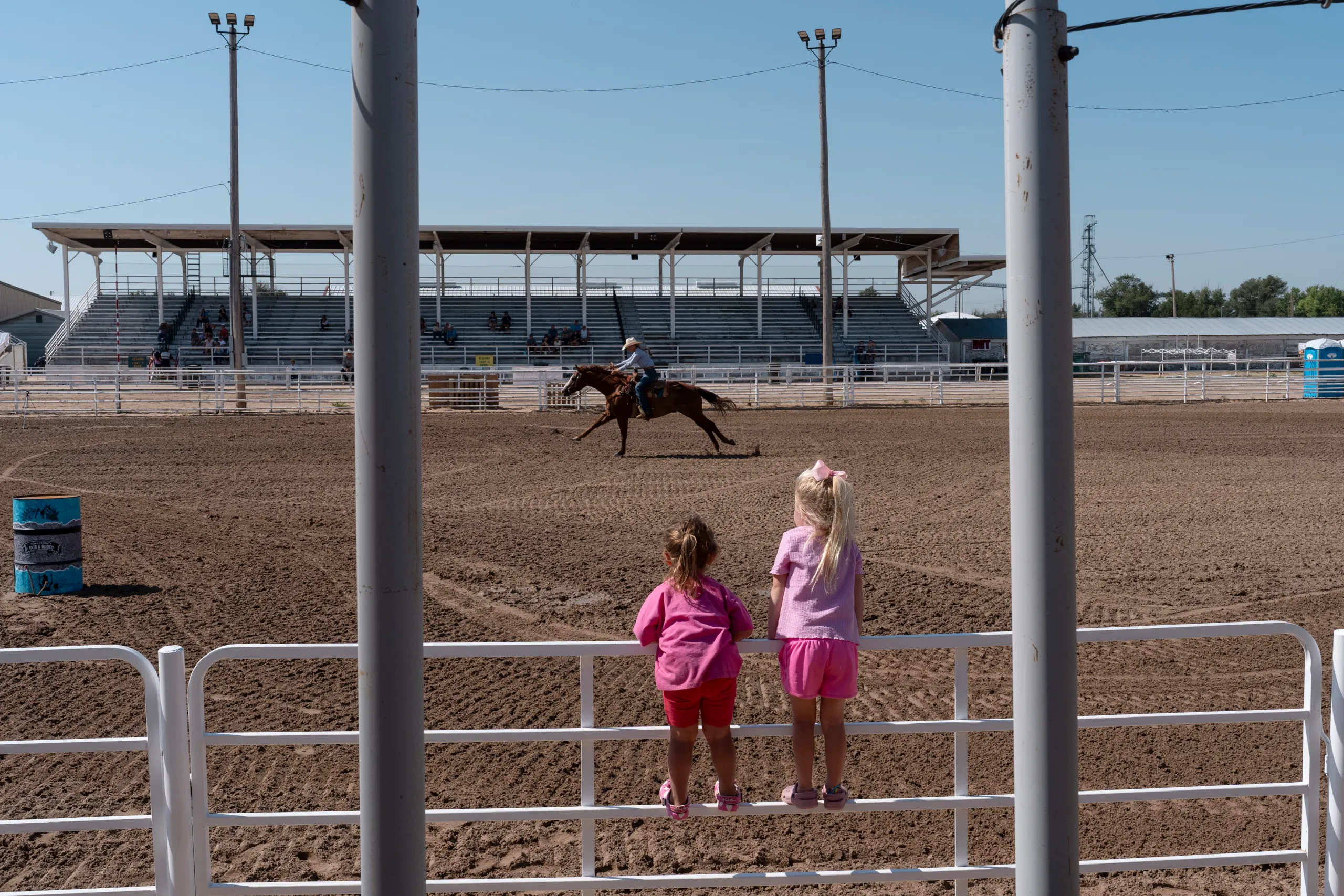
Words by Jennifer Brown. Photos by Cheney Orr.
More photos below: Scenes from northeast Colorado’s county fairs
Most people have probably attended a county fair at some point, maybe to experience a rodeo, eat a corn dog or buy a ride-all-night carnival wristband. But that late-summer week when the livestock barns fill with 4-H animals, and home-sewn dresses and plates of snickerdoodle cookies are set out for the judges, feels different for the people who are participating.
The sense of community created when all the projects — the lambs, pigs and steers, the pies and the birdhouses built in woodshop — come together at the fairgrounds leaves a mark. It’s been decades since I was a 4-H kid, but interviewing people in the livestock barns at the Larimer County Fair brought it all back.
This story first appeared in Colorado Sunday, a premium magazine newsletter for members.
Scrubbing the mud off the pigs I raised all summer and slathering them with baby oil to make their pale-pink and black-spotted skin shine before entering the show ring. The nerves I felt competing against “real” farm kids as a 4-H girl who grew up with horses and chickens but did not know much at all about hogs.
The feeling of a blue ribbon, or even better, a purple one.
A tart-sweet bite of huckleberry pie while sitting at a sunny picnic table. Dressing in Western-style blouses with pearly white snaps and cowgirl boots for one week of summer nights, just before school started again. Belting out every word to “I Love a Rainy Night” as Eddie Rabbitt played live on stage in the center of the rodeo arena in our little town.
The screams coming through the cages of the Zipper as they summersaulted in a neon blur.
A version of all of my memories of the Northwest Montana Fair were alive and well at the fairgrounds in Loveland, where kids from small towns across Colorado are still living them.
I visited the Larimer County Fair with Sun photographer Cheney Orr, who went to fairs across northeastern Colorado this month to learn how 4-H projects, rodeos and even demolition derbies are bringing people together.
LEFT: A demolition derby driver watches from the sidelines after his vehicle became inoperable during the competition at the Logan County Fair. RIGHT: Hellen Jones, 84, right, rides the Ferris wheel during a senior-only ride at the Washington County Fair.
Where food comes from
Valarie Holman is a real estate agent married to an engineer. Her kids, though, are pig, sheep and goat farmers.
The family of six from Wellington loads their small collection of livestock into a trailer bound for the Larimer County Fair every August, the culmination of months of work feeding and watering and training animals for show.
Holman grew up in 4-H, showing horses in nearby Boulder County, and wanted a similar experience for her children. Every fair week, she runs into people whose fair and 4-H roots run just as deep. The assortment of barns and exhibit halls just off the interstate in Loveland are filled with people Holman knew from her 4-H days whose kids are now showing their own animals. “It’s like a reunion going on,” she said.
Holman sat on a camping chair in one pig stall while her son, 13-year-old Carson Holman, chilled in a hammock swinging above a pen next door containing 232-pound Tank and 203-pound Acrobat. Sounds of pig squeals and snorts cut through the buzz of the high-powered fans of the hog barn, where kids filled water pails and carried shovels of sawdust smelling like fresh-cut timber.
Tank was headed to the pig showmanship ring in a couple of days, while Acrobat — named for his tendency to attempt to climb fences and whatever else is around — didn’t make weight and would go home in the trailer.
“And then we’ll eat him,” Carson said, without emotion.
This is his fifth year taking hogs to the fair, so he knows the drill. “Tank, he is going to get sold, so he is going to a butchering place, and the meat will go to the company that bought him,” Carson explains. “After we sell him, he will have a marking of what butcher he’s going to, and I just go in the pen and like, sit with him and pet him.”
LEFT: Dani Malsam, 18, washes her dairy cow, Tilly, before showing her at the Larimer County Fair. RIGHT: Ryker Jones, 8, closes his eyes while praying during Cowboy Church at the Yuma County Fair.
It’s tougher to say goodbye than the eighth-grade boy is saying, his mom knows, but it’s all part of the experience. Acrobat will end up in the family’s freezer.
“I love that they know where their groceries come from, and I feel like we’re more appreciative and we don’t waste food,” Holman said. “And I think too, we know where the animals come from, so we know they’re healthy.”
Holman’s daughters have raised sheep and goats over the years. Carson, the youngest sibling, chose pigs because he “wanted to do something different” than his sisters.
“I’ve wanted to do it since I was a baby,” he said, sitting up in his hammock to chat. “I found that they are cute and adorable so I just kept doing it. They do have a personality. Some years they don’t want to get into our trailers to get them here and this year, they just wandered right in, so they are all different.”
For months, he’s been feeding and watering the two pigs, and taking them for walks. The walks are mainly to prepare for the show ring, where the object is to keep the pig moving and constantly keep its body in full view of the judge, who is rating the hog’s shoulder, loins and hocks. With a whip, Carson gently taps the pig on the ear to make it turn.
Read more Colorado Sun takes top public service award, 26 other prizes at journalism awards ceremony
“Right here is the ‘go,’” he says, pointing to Tank’s flank.
At the Holman house, it’s up to the teens to know when they are running low on feed, when the troughs might freeze, or when the sheep they raise are ready to give birth.
“They know they have to keep track of feed and water two times a day, even if it’s Christmas, if it’s snowing, if it’s cold and windy, because we live north of Wellington,” Holman said. “There’s no compromise; they have to do the things. With the babies, we’re watching the camera because we have to have our babies when it’s stupid-cold, right, so they’re ready for August.
“It’s truly their project.”
Fair time: The outfits
Taryn Stegner plans her outfits and hairstyles for fair week far in advance, not only for the rodeo and carnival but for standing in the show arena in the pig barn.
“I got this cute little pink shirt and cute jeans,” said Stegner, whose family has raised pigs for generations. Stegner, now 25 and working as a volunteer, showed animals in 4-H for 10 years before becoming a fair volunteer six years ago. She couldn’t imagine not hanging out in the pig barn for a week in August.
But back to the plans for her outfit: Her hairstyle to go with the cute pink shirt is two pony tails twisted into one bun. The bubblegum-pink, short-sleeved shirt has ruffles off the shoulders, and she planned to pair it with jeans in mid-blue and big hoop earrings. Her manicured nails had French tips, in purple.
On the day of the pig show, Stegner held a clipboard and a pen as she helped organize hundreds of 4-H kids into the ring. Her bright shirt popped against the sawdust under her sneakers.
Stegner grew up in Wellington and joined 4-H when she was 9 or 10, competing in pigs, goats and dance. “It teaches you a lot as a kid: responsibility, respect, community, how to speak, build a personality. It makes you into a pretty good person,” she said.
Her mother showed horses as a girl and her father showed hogs. Now Stegner’s dad is the swine superintendent at the Larimer County Fair, which means he’s in charge of setting up the barn, assigning pens and checking in 4-H’ers, and organizing the weigh-ins and showmanship competitions.
The job is all volunteer work, done “all just out of his heart,” his daughter said. The rest of the year he works as a truck driver.
As for Stegner, she takes time off from her job as a dental assistant in Fort Collins to get to the fairgrounds at 5:30 a.m. on pig move-in day. She wouldn’t miss it, setting up stalls and seeing old friends from her 4-H days. She runs into her old 4-H dance partner about once a year, at fair time.
“We have all known each other forever,” Stegner said. “It’s so exciting coming back. Carnival night and the lights are bright. Kids are running around, and everyone is having a great time.”
Learning to work with “things that are frustrating”
Reagan Stastny had just finished taking her baby goat to the fitting competition, where a judge asked the 10-year-old from Berthoud to point out the goat’s body parts. How did it go?
“Um, nervous wreck,” she said.
The way Reagan describes it, fair time is the best but puts butterflies in her stomach, mostly on account of her adorable — and wild — little goat, Tulip. “I think it’s fun but sometimes I’m a nervous wreck,” she said. “My goat is not halter-trained properly. She jumps around and she doesn’t know what she’s doing.”
Tulip is dark brown with a white poll, which is the spot on top of her head where her horns are growing. Specifically, she is “chocolate with random white,” Reagan explains in an announcer-type voice. Tulip tries to wrangle out of Reagan’s grasp to buck up off the ground and regularly tries to chew the girl’s blonde ponytail.
Reagan and the new friend she met in the goat barn, Abby Tillotson, 11, are 4-H girls who chose to raise dairy goats because, unlike many other animals, dairy goats don’t get sold for meat at the end of the fair. The same-size girls whose goat stalls were assigned to the same row spent hours taking the goats for walks, cleaning up the pens and brushing and clipping the animals for show.
Abby, from Wellington, has chickens and a dog at her house in town, but keeps her goats at her grandparents’ house in the country. Ginger Snap and Bambi, both the color of fawns, are Nigerian Dwarf goats that at 1 and 2 years old, are calmer and better behaved than 4-month-old Tulip.
They’re old enough to milk, Abby said, but her family hasn’t done that yet. “I guess we don’t have enough time, because once you start milking them, you can’t stop,” she explains.
A highlight of fair week for the girls is the goat-girl costume contest. Reagan and Tulip planned to dress as a gardner and a tulip, while Abby and Bambi had fisherman and trout costumes. That and the fact that when other 4-H kids say goodbye to the sheep, hogs and steers they’ve raised all summer, the girls can load their sidekicks into trailers and take them back home.
The goats are enough work as it is, but it’s worth it — a family project that “involves everyone in some way,” said Cadie Tillotson, Abby’s mom.
“It teaches our kids how to be resilient and to solve problems, and work with things that are frustrating, like goats, animals, people,” she said, in between contests inside the goat barn. “It teaches them a lot, and so I’m willing to put in effort for that.”
Read more 4.25 million gallons of raw sewage taints Arkansas River after Pueblo city accident