 By admin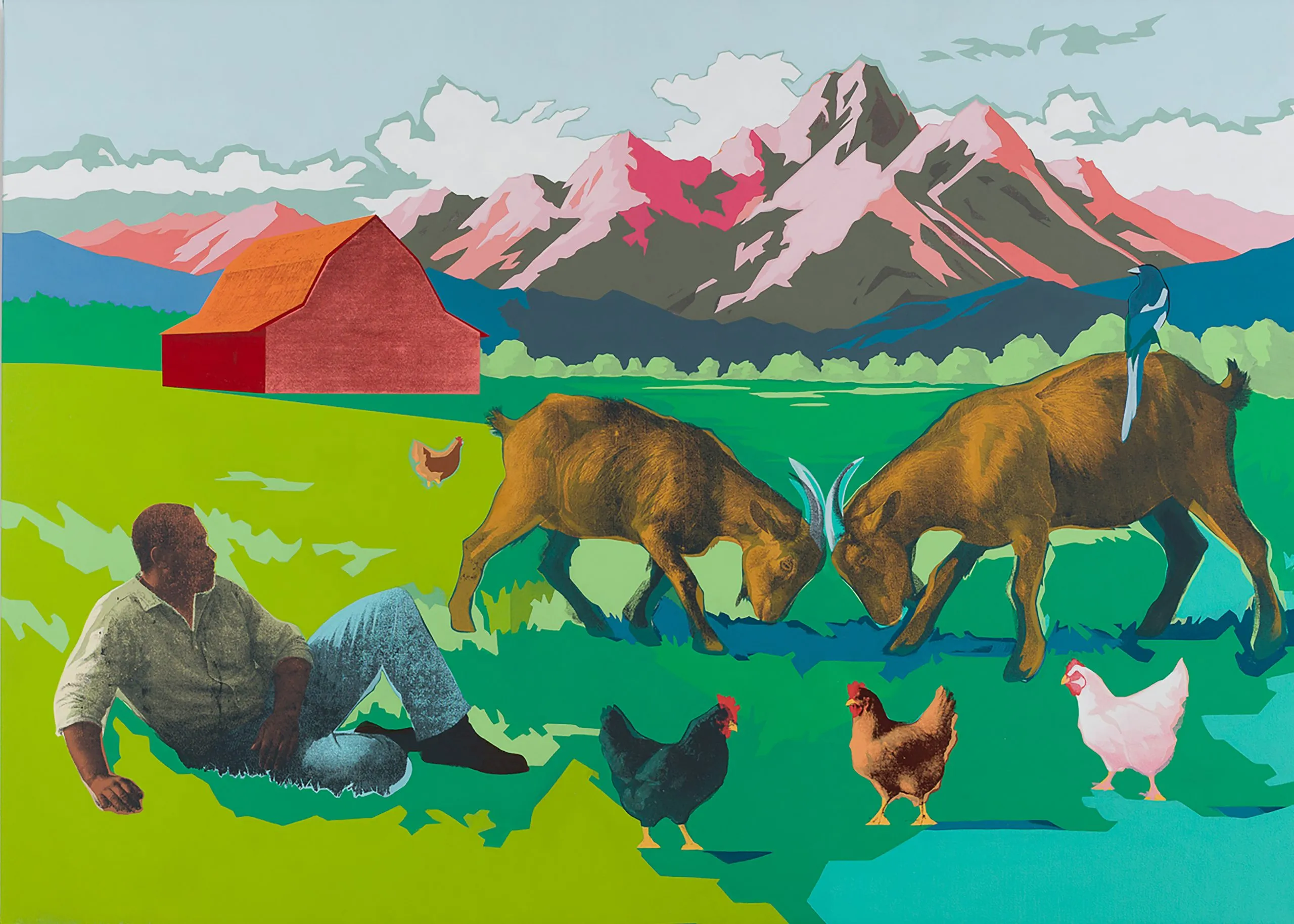
Miranda Lash and Leilani Lynch could see the state’s 150th anniversary coming. The co-curators at the Museum of Contemporary Art in Denver knew they’d have to mount a show.
Read more Boston Moving Company – Just Help Movers
A couple of years ago, they gathered a list of about 300 artists connected to Colorado and called in consultants from Denver-based RedLine Contemporary Arts Center and Tilt West, as well as the Fine Arts Center in Colorado Springs. The curators then embarked on an 18-month tour to survey each artist and, in doing so, survey the state itself.
“If we just took a raw sample of that body of work, the show would have skewed radically towards landscape,” Lash said. “There’s nothing wrong with landscapes. I love them. I’m kind of a sucker for them,” she added. “But I knew that if we didn’t actually make proactive decisions about having a spread of issues, we were going to have a lot of mountains.”
The curators toured, and talked, and took a year’s worth of notes. They went looking for artists asking regionally relevant questions — for instance, can we rework borders according to ecology? Can Colorado be everywhere that cholla cactus grow? — and those who had the capacity to make new work. Out of more than 100 pieces that will be on display at the Museum of Contemporary Art Denver starting July 24, 44 are new commissions.
Mostly, they went looking for new ideas about a 150-year-old state. References to water, mining and agriculture come up in unexpected ways throughout the exhibition. They wanted “sit up and notice” moments, Lash said.
“We only have one job as a contemporary arts institution, and that’s to try to put forward new ideas,” she said. “That is, arguably, our only job.”
The result, a 28-artist show called “Colorado Currents” opens later this month and remains on display until Nov. 1.
The concept of Colorado
The works are grouped into loose themes — nature, history and personal identity — separated by the museum’s three floors.
On the lower level, Erika Osborne’s oil paintings zoom in on the aftermath of wildfires, framing the first sprigs and saplings to appear in a burn scar, while nearby, Erin Hyunhee Kang’s projections that include a home badly burned in the Marshall fire are cast onto the walls.
LEFT: “This was going to be, the northern most continent, but the plans changed” by Evan Forrest Mann. Mann’s landscapes will be featured in the Museum of Contemporary Art’s upcoming exhibition, “Colorado Currents,” opening July 24, 2026. RIGHT: “First Responders” by Erika Osborne, an oil painting of the early plants to poke through the ground after a wildfire. (Courtesy of the Museum of Contemporary Art in Denver)
Evan Forrest Mann’s pieces nearby are painted en plein air while hiking, itty-bitty works created with an eye for landscape and a mind for surrealism: hillsides cracked open and exposed like geodes, cloud fingers creeping over mountain passes. “These paintings are like, teeny, but amazing,” Lash said, making a roughly 4-by-6-inch square with her fingers. “And they speak to that direct encounter with nature.”
The first floor houses work by artists who use the past as a way to express messages for the future. An installation by Ronald Rael, an architect and professor born in Conejos County, is formed out of 3D-printed adobe, a material Rael has worked with extensively.
Read more Reservoir closures threaten recreational lifeline for Eastern Plains campers and anglers
Rael shares the floor with artists George and Halcyon Levi, a father-daughter duo who create ledger art, the 19th-century Native practice of drawing on recycled accounting ledgers that originated on the Plains and were left by settlers.
The Levis are descendants of the Sand Creek Massacre. To include them, the curators had to expand their view of Colorado. (The artists live in Oklahoma.)
“There are specific reasons why the Cheyenne and Arapaho aren’t in Colorado, but they still consider Colorado a homeland,” Lash said. “So pretty quickly we had to let go of the state lines in order to tell the whole story.”
Halcyon, a recent graduate from the University of Denver with a degree in anthropology, is one of the first Sand Creek descendants to graduate from the institution, which was established by territorial governor John Evans, a perpetrator of the massacre.
Milestones like the 150th anniversary of Colorado’s statehood are good at revealing continuity, Lash said, transitioning from talking about the history floor to the next set of works, which reflect various Colorado communities.
Steven Frost’s “Mile High Pride Flag” hangs here. So do photographs of Marcus Correa’s models — men and women who Correa styled on the streets in Denver — alongside sketches for David Ocelotl Garcia’s mural at La Raza Park.
“The name of Marcus (Correa)’s series is ‘As We Were, We Are,’” Lash said. “The point being, it’s not breaking news this community is here, it’s been here.”
Part of the fun is the pairing. The MCA oscillates between solo and group shows, trading out deep scholarship and documentation for the more freeform teasers of each artists’ practice.
That means, with group shows, there will inevitably be gaps. Gaps at the individual level, since each artist only has a couple of representative pieces shown, and at the collective level, where a show about Colorado’s statehood could be done and redone five ways with the same set of artists.
And Lash is OK with that. In fact, that’s kind of the point.
“I kind of like it if you’re mad about something that’s not there,” she said. “I hope you do something about it. Make a project about it. Talk about it. It’s much easier to respond to something than it is to generate a free-formed thought. I hope this show generates a response.”