 By admin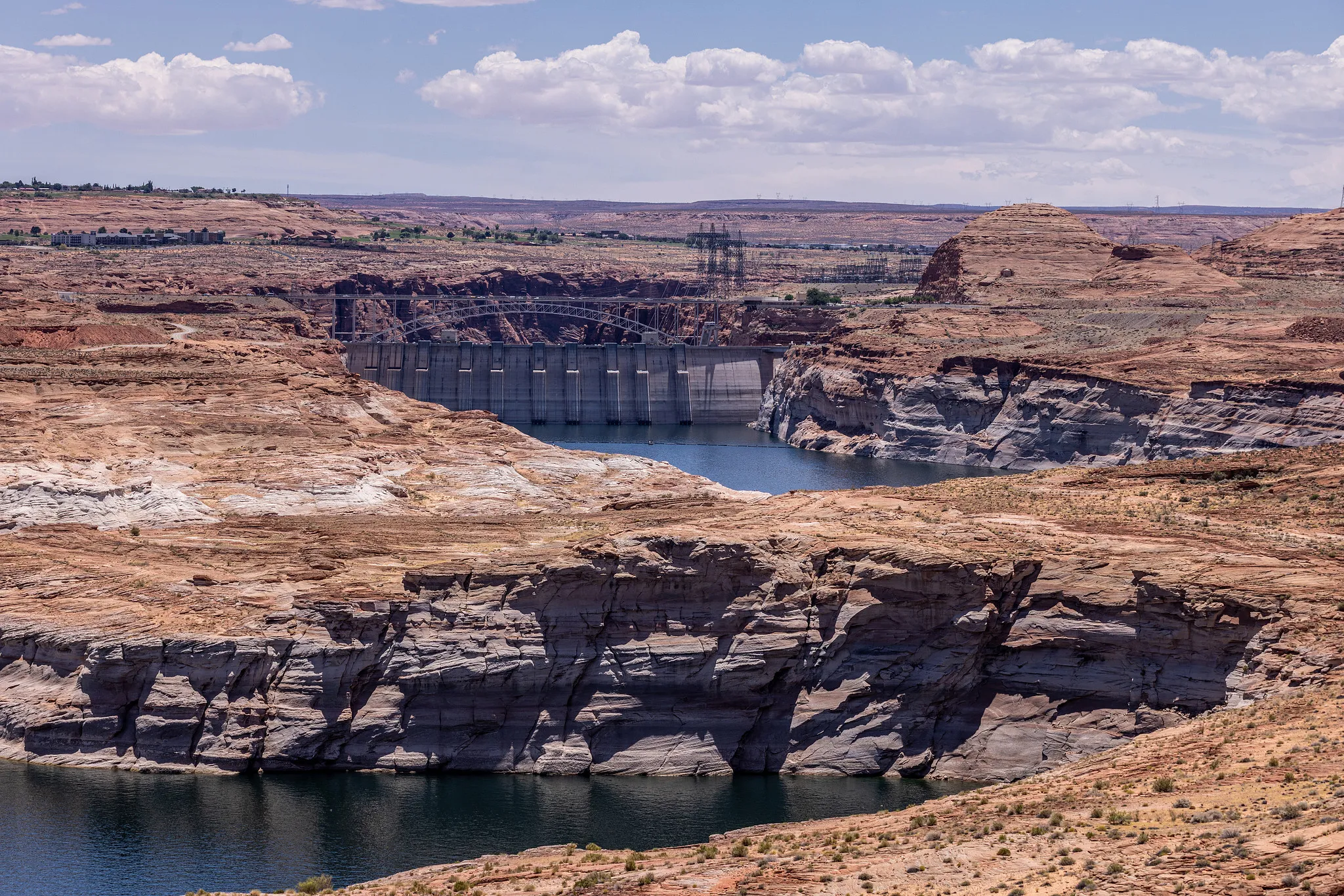
Max Wilson, like water managers around the Colorado River Basin, spent Monday waiting for a new federal report outlining the river’s future — and future water cuts.
Read more Keep your aspen close and healthy in fire season, study says
He watched the federal website where the report would be published, which appeared to be temporarily down. He sat in the city’s ninth-floor water office, talking about how Phoenix has prepared for this moment, while looking out on the Arizona Capitol and the sprawling metropolis below.
“I would certainly say it is tense,” said Wilson, water resources management advisor for the city of Phoenix. “We are waiting with bated breath for the federal government to speak.”
Federal agencies are expected this week to release the report, the final version of an environmental review that outlines the government’s plan for how to manage the river basin’s key reservoirs in coming years. It’s one of two reports that represent the culmination of three years of gridlocked negotiations over how to manage the river basin’s key reservoirs after the current management rules expire this fall.
But water managers and officials had a host of concerns and only a few positives to share after seeing early glimpses of the plan.
“While this will be the culmination, we anticipate, of some bad news and frankly a flawed process, I don’t think any of us are expecting to be surprised by the content,” Wilson said.
Colorado River officials have been working since 2023 on a new set of rules for how to release and store water in two immense reservoirs, Lake Powell on the Utah-Arizona border and Lake Mead on the Arizona-Nevada border.
But the negotiations have been gridlocked, in part of politics and in part because of challenging water conditions. Without a firm consensus from basin states over how to manage the reservoirs, the federal government has put together its own plan.
Water officials will decide how much water to release in two-year intervals, and they will renegotiate their plan every two years for the next 10 years, according to early descriptions of the federal plan.
The basin would have to operate within certain bounds. The Lower Basin states — Arizona, California and Nevada — would have upper limits on how much water they’d be asked to cut, maybe 3 million acre-feet in some years. Lake Powell’s releases could be limited to a range of 5 million to 12 million acre-feet. (One acre-foot roughly equals the annual water use of two to four households.)
More uncertainty under the new plan
It’s a loose framework, water experts say. But the two-year framework might help people respond more quickly to changing water conditions and storage levels in reservoirs, said Anne Castle, a former Colorado River official for the Department of the Interior.
“We were hoping for a longer-term framework that would also do that,” she said. “So whatever the hydrology was, we’d know what the rules were.”
Constant negotiations will take staff, time and money away from actually adapting to the new rules, experts said. Plus, managing the basin and continuing negotiations is going to be difficult with its current water challenges.
“I struggle to find many pros,” Wilson said. “We’re looking at a 10-year period of essentially forever negotiations where the valley and southern Arizona will be at immense risk of losing … access to a significant water supply that we have grown on and we depend on.”
The lakes Mead and Powell make up the majority of water storage for the basin’s 40 million water users (some estimates say 35 million). But the reservoirs’ combined storage is at a historic low.
Plus, the Colorado River has been shrinking. Over the last 27 years, its flows have dropped by 20% compared with the 20th century average, said Brad Udall, senior water and climate research scientist at Colorado State University’s Colorado Water Center.
Since 2020, the river’s flow has been about 10.2 million acre-feet on average per year — that’s a 33% decline, he said.
“That’s a stunning drop. There’s nothing like it in the historical record” dating back to 1906, Udall said.
The expiring agreement, established in 2007, at least set up a plan that would last 20 years, Castle said. That gave city water utilities, irrigation district officials, dam managers, farmers and businesses more certainty about what to expect each year and how to plan.
“We don’t know exactly what the effect will be on individual states, on individual water users and the various economies in the Lower Basin states, in particular,” Castle said.
Impacts upstream and downstream
Colorado water officials and utility managers could not be reached or declined to comment on the preliminary plan, described in several state meetings, conferences and in front of Congress.
The implications for Colorado are less direct than for downstream states. Blue Mesa Reservoir, a federal water project and the largest reservoir in Colorado, is on the table as a bargaining chip. The Lower Basin wants that water to be more accessible, while the Upper Basin doesn’t want to drain upstream reservoirs.
Castle will be watching for details about how the federal reservoirs will be used and how reservoir storage will be recovered under the new plans. Once upstream reservoirs like Blue Mesa are drained, they’ll need a good winter or more to refill, she said.
“Whatever the resolution is, releases from (those reservoirs) are only a temporary solution,” Castle said. “They might buy us another year or two. But if we don’t eliminate the gap between supply and demand, we’re just draining those reservoirs.”
States have also been making legal threats. Arizona said in May that upstream states — Colorado, New Mexico, Utah and Wyoming — will be out of compliance with a century-old agreement by the end of September. The agreement, called the Colorado River Compact of 1922, says upstream states the flow of the river to be depleted below a certain level.
Arizona argues that’s a delivery requirement — and that if the requirement isn’t met, they can sue. A lawsuit could result in mandatory water deliveries from upstream states. Upstream states, like Colorado, have a very different legal interpretation, saying they aren’t using their full share so therefore couldn’t be the cause of any depletions.
Some people also argue climate change is the cause, not water use.
“This is this enormous gray area around how climate change affects the law of the river and how arguably there are no clear answers,” Udall said.
Experts will also be scouring the reports for anything that would waive or trigger potential lawsuits.
Colorado and other upstream states could also be called on to conserve certain amounts of water in the new federal plan.
In Phoenix, Wilson is looking at years when the city might receive all of its Colorado River water or none.
Phoenix, plus some cities, tribes and other water users, draws from long canals that are part of the Central Arizona Project. The water system is junior in the basin, which means it would be cut first in time of shortage. Phoenix can normally use up to 190,000 acre-feet of water from the project.
The city has been preparing for years, building new pipelines and wells to move water from other river basins and to access water underground. But it’s a lot of water to replace. By the end of this year, the city could be asking residents to cut back on their water use in addition to voluntarily conserving, he said.
“I don’t think that ultimately folks have come to terms with the fact that this is a water supply that Arizona needs to be able to thrive,” he said.
Read more A group of aspen trees can slow or even stop fires, study says. Colorado foresters agree.