 By admin
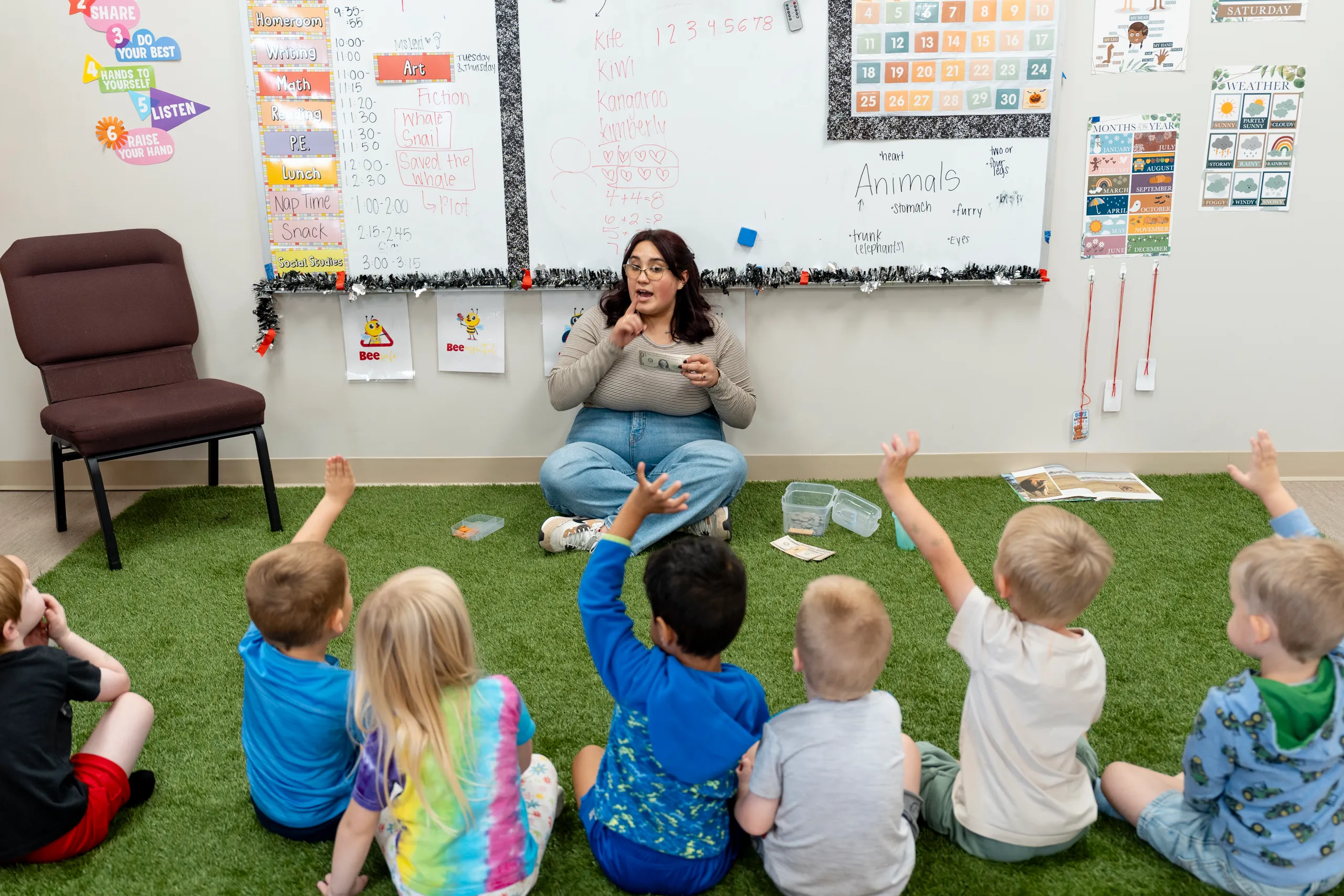
WELLINGTON — Gina Wallick took over a childcare center earlier this year in a town that is a pitstop for travelers along Interstate 25 but home to more than 12,000 residents who have few options for childcare and preschool.
Read more Judge rules Ridgway hotel can’t house workers building Telluride’s Four Seasons resort
Wallick said she wanted to preserve the Wellington center — north of Fort Collins, where she owns another childcare center — so that as more young families move to the area, they have “a reliable, quality” spot to send their children.
Bee Curious Early Learning Center has been up and running since August, now thrumming with the sounds of young students learning how to pronounce the letter “K” and jabbering as they color pumpkins and ghosts on Halloween-themed worksheets.
But one major and unexpected challenge has strained Wallick’s business in its first few months: Despite more than 50 emails Wallick said she has sent to the state’s early childhood department to register Bee Curious Early Learning Center as a universal preschool site, Wallick said she has received no paperwork from the department. Nor has she gotten anything more than an automatic email reply confirming the department’s help desk received her inquiry and “will be in contact within 5 business days.”
The department’s silence has cost Wallick nearly $40,000 in state funding, potential new students and much of her enthusiasm for an industry she has given 13 years.
“It’s devastating my business,” she told The Colorado Sun.
Wallick is far from the only preschool provider who has had to wait for answers from the Colorado Department of Early Childhood for weeks or even months. The department’s help desk over the summer was wading through more than 900 tickets submitted by parents, providers and school districts from all over the state during a busy enrollment season. Those tickets dealt with a range of questions and issues. Some, like Wallick, have needed critical documents. Others have come from parents, providers or districts with questions about whether a child is eligible for universal preschool or requests to shift a child from afternoon preschool to a morning session.
The help desk has since been able to overcome its backlog, adding more staff and expanding office hours in August, and speeding up responses so that the people requesting help through a ticket hear back in about a day. But the communication lapses and lags have resurfaced a big question for providers and districts: What responsibilities should the state early childhood department manage and what responsibilities should fall to providers and school districts?
Providers and districts say that enrollment is one priority they should have more control over. That way, they can immediately make the changes parents are asking for, such as switching what part of the day a child attends preschool, rather than pointing families to the state department’s help desk.
State officials argue that preschool enrollment falls under the state early childhood department’s purview so that families can easily apply to multiple preschool programs with a single application in the state’s online platform and have access to a variety of programs — in districts, community-based centers and licensed homes.
Who should take the reins of enrollment?
After $3 million in federal stimulus funds used to operate 32 local coordinating organizations expired, the state shut them down at the turn of the fiscal year. Many of those organizations, which were responsible for helping families and childcare providers roll out universal preschool, were operated by Early Childhood Councils that still exist and continue to help improve the quality and accessibility of local programs for kids from birth to age 5.
The state department also turned to a help desk it has had since the start of universal preschool in 2023.
Staffed with both employees from the state department and from an outside vendor, the help desk began fielding questions and concerns from providers, school districts and parents.
Jen Noonan, owner of Eaton Early Learning Center, said the help desk has recently become much more efficient in getting back to providers and families. But over the summer, some families trying to enroll their kids in universal preschool had to wait months for the state department to fully register those children and clear up confusion.
One family living in the boundary of Greeley-Evans School District 6 wanted to send their child to Eaton Early Learning Center, a community center that contracts with Eaton School District RE-2. But the cutoff date — the date by which a kid must turn 4 to attend preschool — is different in the two districts, Aug. 1 for Eaton School District and Oct. 1 for Greeley-Evans School District 6. The child was turning 4 in August. The state’s online enrollment platform, BridgeCare, deemed the child ineligible for universal preschool in Eaton School District RE-2 because he turned 4 after the district’s cutoff date. But he technically was eligible for universal preschool because he turned 4 before his home district’s cutoff date in October.
That created a lot of stress for the family, who contacted the help desk and struggled to get answers, Noonan said.
“We shouldn’t have to have a family wait on a decision from the state when they could just walk into my program and I could say, ‘I have control of my enrollment and I can enroll this student because I know that it’s the year before they go to kindergarten,’” Noonan said. “Instead, we were just like delaying, delaying, delaying because we have to go through the state and they don’t know the situations locally.”
She describes the state department as an unnecessary “middle man” whose enrollment process sometimes forces families into back-and-forth communication with the help desk over phone calls or emails. The process becomes especially complicated for parents who are learning English or working jobs that don’t have the flexibility for them to stay on hold for a phone call or pick up when they get a call back, Noonan said.
“We really need to figure out a better system and a better way to do it so that locally we can enroll our children that are here wanting services and needing it and not having to jump through so many hoops to make sure that they’re eligible for the program,” she said.
The state department of early childhood has contracted with its online platform, BridgeCare, since the start of universal preschool to serve as a hub for parents’ and providers’ enrollment needs. Families apply with a single application to preschool programs through BridgeCare. The platform also has a separate portal for providers where they can look at their enrollment and adjust seats among other administrative duties.
One application allows families to apply to multiple programs and rank their top preferences. They must also apply to the specific provider or district they’re interested in separately from their BridgeCare application.
If a parent wants to make a change to their child’s enrollment, they must open a ticket with the state help desk, which offers live translation for families whose first language isn’t English. If they want to shift their child from afternoon preschool to morning preschool, for example, they must contact the help desk. If they believe their child qualifies for full-day universal preschool subsidized by the state and enroll them in full-day preschool, then later learn their child only qualifies for half-day programming and need to switch to a half-day slot, they must file a ticket with the help desk.
Read more Clear skies on the horizon for Four Corners communities impacted by floods
Providers and school districts say that if the state department handed over some control so that they could make those changes for families instead, families would avoid an extended wait for help, particularly during peak enrollment periods.
“We have to ask them for permission for everything,” said Mat Aubuchon, executive director of learning services at Westminster Public Schools. “I realize they’re understaffed. I will give them the kudos. They’re doing the best they can with what they have, but they’re not willing to hear any discussions around changing the process.”
Westminster Public Schools was among the districts that signed onto a 2023 lawsuit against Gov. Jared Polis, the Colorado State Board of Education and state education agencies including the Colorado Department of Early Childhood. The six districts along with two education organizations argued that BridgeCare hindered districts’ ability to assign children to preschool programs best suited for them. They sued to get full access to the state department’s enrollment system so they could have more control over how they placed kids into classrooms.
A Denver district court judge dismissed the lawsuit, ruling that the plaintiffs did not have legal grounds to sue, but Aubuchon says that more than three years after the lawsuit, the same enrollment challenges still haven’t been solved.
One of the state department’s top priorities has been designing a system that makes it easier for parents to find the kind of preschool setting that will best educate their child, whether in a school district, community center or licensed home, and apply one time with one application.
The department wants to maintain that process for families through BridgeCare, which allows families to explore preschool programs across all settings and then rank their choices in one place. Giving some level of control over enrollment to providers and districts could deprive families of their top preschool program choices. If a family’s top choice is a program in a school district that doesn’t have room for them and their second choice is a community provider, the department can directly match them with that community provider instead of the family having to submit different applications to the district and the community provider.
“Prior to universal preschool, families had to submit multiple different applications with different deadlines and different costs for preschool, a process many families likened to a high-stakes competition,” department spokesperson Chynna Roberts wrote in an emailed statement. “Parents or guardians should decide where and when their children attend preschool based on their child’s needs, not the providers. This approach helps families navigate a range of available options without having to navigate separate enrollment systems for each setting.”
BridgeCare also stores all enrollment information in one central place, which the state department uses to calculate how much funding to pay providers and school districts each month. The system helps the department ensure state funding is allocated only to programs offering universal preschool.
Parents, providers and districts would benefit more from the department narrowing its focus, said Leigh Pytlinski, executive director of teaching and learning for Jeffco Public Schools.
The department “needs to be a licensing and funding organization, not an enrollment organization,” Pytlinski said.
“A significant financial burden … through absolutely no fault or delay on our end”
When Wallick, the owner of Bee Curious Early Learning Center, took on the Wellington business, she made sure the building got a good deep clean, turning rundown classrooms with old rugs and donated toys into bright spaces that would light up students’ curiosity and motivate teachers.
She purchased new toys, cubbies to hold students’ backpacks and sleep sacks where they can curl up for naps. She has held trainings for teachers, including bringing in an expert to walk educators through ways to steer kids through big emotions. Her center started serving meals to students and, earlier this month, she invited families to the center for a book fair.
Her next project: building a playground on an outdoor patch that is bare except for woodchips.
But funds have been tight. Without the proper paperwork in hand to add Bee Curious Early Learning Center to the state’s list of registered centers and districts offering universal preschool, Wallick said she has not received any state funding. She continues to serve 16 students in a classroom designated for universal preschool and has had to take out a loan to pay her staff, provide meals and pay rent for the building. The loan and profits from her center in Fort Collins, Curious Minds Early Learning Center, are helping her keep her Wellington center afloat.
Wallick, whose Wellington site cares for infants, toddlers and preschoolers from both Colorado and Wyoming, said that she also suspects she is losing prospective students. Her center doesn’t appear on the state department’s webpage where families can browse universal preschool providers.
In an email that Wallick sent to the state department Sept. 15, her second month of offering universal preschool, she wrote, “Bee Curious has fulfilled its responsibility by opening our classrooms, staffing the program, providing care and education to these children, and absorbing the associated payroll and operating expenses. We cannot continue to operate a publicly funded program indefinitely while waiting for paperwork that should have been completed before services began. At this point, this is creating a significant financial burden on our center through absolutely no fault or delay on our end.”
While state officials say their backlog is cleared, Wallick still hasn’t gotten any answers.
Her emails to the department have been met with automatic replies, including one on Oct. 5, that read, “Thank you! Your email address has been validated. We’ve received your inquiry and will be in contact within 5 business days. If you have additional information to provide, please respond to this email and do not submit an additional ticket.”
Wallick’s initial frustration and anger has now turned into feelings of defeat as she continues to wait. Both she and the families she serves are counting on universal preschool and support from the state.
“In a community like Wellington, families need this UPK classroom,” Wallick said, “and so I think it’s a very important class and it’s preparing children for school. These families really need this service and we need it to keep the center profitable.”