 By admin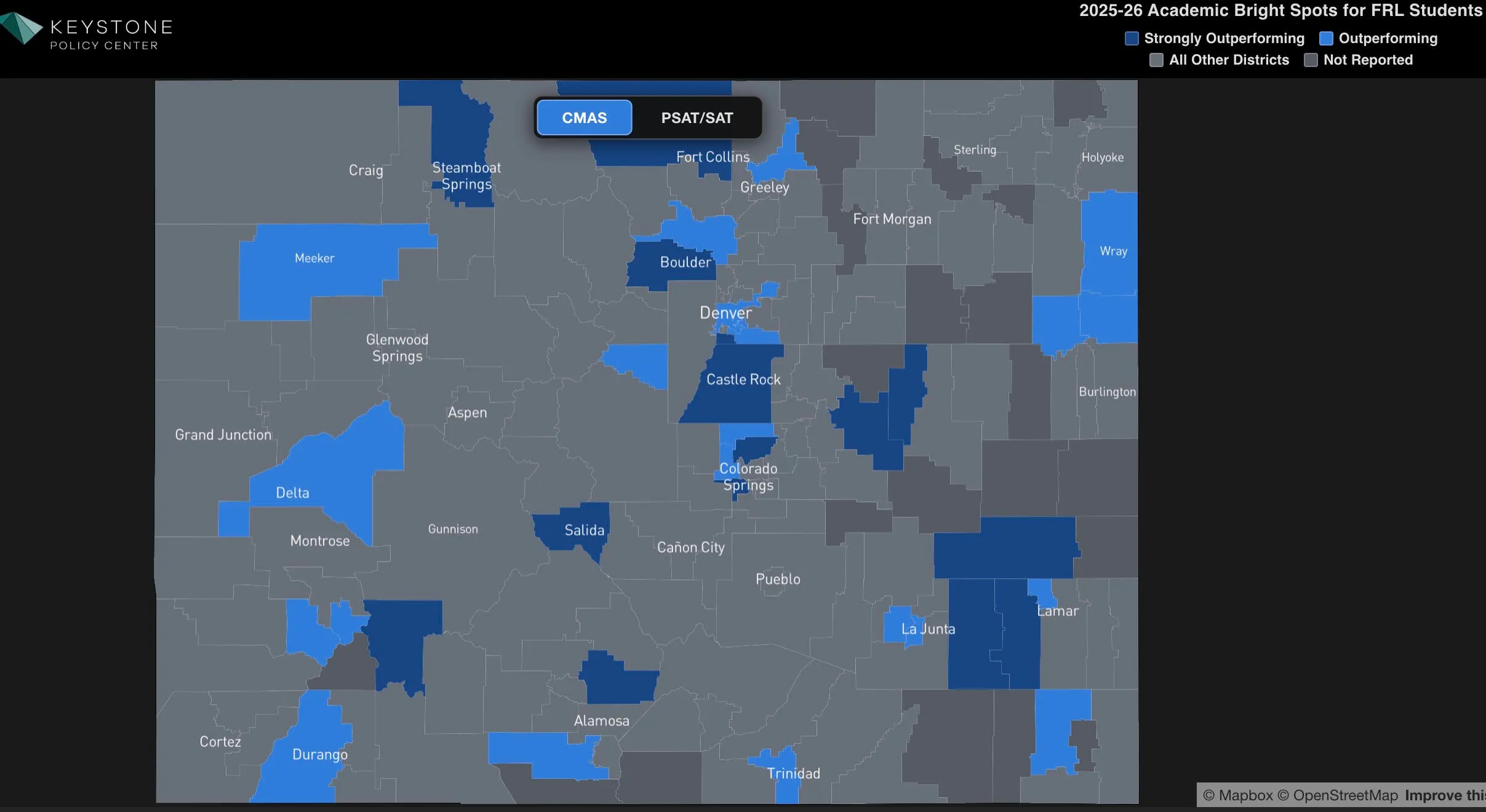
Mastering math at Big Sandy Elementary School in Simla begins with a question every day, not about how to multiply or make sense of fractions, but about life outside school walls.
Read more Manny Rutinel resigns from Colorado legislature to focus on pivotal congressional race
What is your favorite food? What was your favorite thing you did over the weekend? How many siblings do you have?
It’s a warmup routine that helps math and science teacher Rebecca Stanko get to know her fifth graders beyond the grades they get on her tests.
“They’re open to really work hard with you,” Stanko, a 20-year teaching veteran, told The Colorado Sun. “When they know you believe in them and you have high expectations, the kids really rise to it.”
It sounds simple, but teachers like Stanko say building relationships with students is often the first part of the equation that leads to their success. And it’s one tactic within a broad set of strategies that Big Sandy School District 100J, located about 60 miles northeast of Colorado Springs, has rolled together to help many kids read, write and solve math problems on grade level.
The district, which last year educated 322 students, is one of 15 Colorado school districts where rates of proficiency in reading, writing and math are significantly higher than expected given the share of kids from low-income families in those districts. Just over half of Big Sandy 100J School District’s students qualify for free and reduced lunch, a federal benchmark of poverty.
Using testing data from the Colorado Measures of Academic Success released by the state education department last month, the Keystone Policy Center pinpointed districts punching above their weight in reading, writing and math when factoring in the percentage of their students living in poverty.
The center also found 12 districts where high schoolers taking the PSAT and the SAT performed much better than expected when considering their populations of low-income students.
“On average, we know that poverty has an impact on educational attainment, and so the reason why we would want to look at it through this lens is to see if there are schools or school districts that seem to be adding value or doing more for whatever reason to enable a group of low-income kids to perform better than their peers in some other school district in Colorado,” said Van Schoales, senior policy director for the nonprofit Keystone Policy Center.
“The only way that we can get better,” Schoales added, “is by understanding, identifying those places that are doing better and understanding why.”
What do the tests really tell us?
Questions around how accurately CMAS results reflect students’ abilities in reading, writing and math across districts and Colorado as a whole have divided state education officials, educators and district leaders.
The standardized tests aren’t enough to give a full read on students’ understanding of state academic standards, but they still offer some idea about how students are performing, Schoales said.
“Standardized tests are imperfect,” Schoales said. “But they’re the best things that we have at the moment for measuring how groups of kids are learning, and without them, we’re completely blind. We’d have no idea.”
In Big Sandy School District 100J, 54% of students hit proficiency in reading and writing on CMAS tests last spring while 46% of students were proficient in math.
A few advantages in the district have made the path to proficiency smoother, including fewer learning disruptions during the pandemic when teachers said the district closed down for only about three months. That prevented most students from serious setbacks in different subjects.
Small class sizes — typically capped at 16 students — have also been a help, allowing teachers to more easily analyze test data that reveals individual students’ needs and then tailor their instruction.
In reading, writing and math, teachers break students into small groups, sometimes dividing them up by skill level.
During Jennifer Townley’s fifth grade English language arts period, small groups often gather after a lesson for the entire class. While one group of advanced students might work together to study a novel, another group on par with grade-level expectations might spend time reviewing skills learned in class that same day. And nearby, a third group of kids lagging behind might go over remedial skills to catch up to their peers, said Townley, who doubles as the school’s literacy coach and is now in her 14th year teaching in the district.
“We’re solving a little puzzle with kids,” she said. “What’s it going to take to get them where they need to be?”
In Stanko’s math classes, students rotate throughout different “centers” after learning together as one big class. With individual help from Stanko, they zero in on their assignments, constantly review the concepts they’ve already learned and answer questions online about math concepts that are still stumping them. The goal every week goes beyond simply figuring out an answer. Stanko challenges them to explain how they arrive at an answer, a critical problem-solving skill they must demonstrate on CMAS tests.
Educators at the elementary school also exercise students’ reading and writing skills across subjects, including social studies and science, and they enlist help from older students. Some high schoolers serve as student aides and every March during “Read Across America Week,” older students pop into elementary school classrooms to sit with their younger peers, partner up with a buddy and take turns reading to one another.
Read more Climber dies after falling from Castle Peak near Aspen
The elementary schoolers look up to their older peers, which adds to the sense of community in the school, Stanko said.
“Those older kids really encourage the younger kids to be successful,” she said.
Teachers round out student learning by carving out time to focus on character building and ask their fifth graders to step up as leaders for students in other grades. Every month, fifth grade students guide groups of elementary schoolers through activities that help them understand the importance of persevering, respecting others and being honest and trustworthy.
Empowering fifth graders to lead groups of students helps them develop their character from an early age and reinforces their sense of belonging, teachers said.
They see those skills giving students an edge in math and reading, helping students find pride in themselves and how well they tackle their lessons.
Even as many students in Big Sandy 100J School District master reading, writing and math, figuring out new ways to continue improving learning is always top of mind for educators. Among the new strategies they are testing out this year is a 20-minute reading break they call “WIN” time, or “what I need” time, in which teachers will group students based on their learning needs so they can focus on phonics, connecting letters with sounds, or asking and answering questions based off the text they read.
“Even when you’re doing well,” Townley said, “I think it’s important to keep on pushing.”
“We’re not going to lower the bar”
While reacclimating students to in-person learning and reacquainting them with literacy and math skills that became fuzzy during the pandemic, teachers in Sangre de Cristo Re-22J School District realized they had more than academic gaps to tend to. They also had to clear one big hurdle: a cloud of apathy hanging over many students.
“Prior to the pandemic, kids could use their imaginations,” said Jenna Crowder, principal of schools in Sangre de Cristo School District Re-22J in Mosca. “They were engaged. And post-pandemic, I feel like we have definitely fought some apathy from students.”
During the COVID days of online learning, kids fell into the habit of making excuses when not turning in assignments and then repeatedly asking teachers for extensions — habits that stuck once they returned to classrooms, Crowder said.
But the district, which served 235 students last year, has made progress in the battle to motivate students, which is now showing up in their standardized test scores. While 55% of students demonstrated proficiency on the reading and writing CMAS test last spring, 33% were proficient in math — higher rates of proficiency than would be expected for a district in which 58% of students qualify for free and reduced lunch.
Some of students’ drive has reemerged after schoolwide assemblies the district holds every quarter to spotlight kids working their hardest. That’s not always the students at the top of their classes, Crowder said.
“We try very, very, very hard to celebrate the grit and the perseverance,” she said. “We try very hard to encourage kids to just try their best. I tell kids all the time, ‘We’re not asking for perfection. We’re just asking that you try your best.’ And then we know what we need to do.”
Inside classrooms, teachers use techniques similar to those used by their counterparts in Big Sandy 100J School District. One of the most promising tools teachers have is data from regular reading and math assessments, which clues them in on where individual kids stand when it comes to phonics and reading comprehension, for example. Some of those tests also measure student growth — how much progress a student is making over time in different courses.
School staff also review CMAS results to determine individual students’ strengths and blind spots and also understand how they might need to retool their instruction.
“What standards are we consistently missing on a yearly basis?” Crowder said. “What standards do we tend to hit really well on a yearly basis?”
And then comes the small group work in reading, when teachers lump together students from different grades to zero in on the skills that need more of their attention. After studying data, teachers split kids into groups of second and third graders and groups of fourth and fifth graders based on their reading ability. Each group devotes 45 minutes to small group instruction, with some brushing up on phonics and others focused on critical thinking, Crowder said.
The district is adopting that small group approach in middle school this year so that sixth and seventh graders have a chunk of time to catch up on reading skills. Many of the kids still struggling have come from other districts, according to Crowder.
It’s a different story in math. Arranging students into small groups hasn’t achieved the same results, so the Sangre de Cristo School District is trying something new. Along with targeting more of its math instruction to state standards, rather than simply relying on curriculum, the district is also turning to a math consultant from the state education department who can coach educators on ways to get through to students.
“Typically we see more struggle in math than in reading,” Crowder said, “so this year the mission is ‘Why?’ Why do we see kids struggle more in math and how do we fix it? How do we approach it in a different way to get better results and ensure kids are learning the math that they need to learn?”
All while finding the right balance between grace and accountability.
“We can have grace and empathy for our students, but we still hold them accountable and we help them reach the goal instead of excusing them from the work,” Crowder said. “I think it helps. I think the kids know that we support them. The kids know that we will help them attain the goal. We’re not going to lower the bar. We will help them get there.”
Read more Can a Democrat flip Colorado’s reddest seat? Eileen Laubacher is trying.