 By admin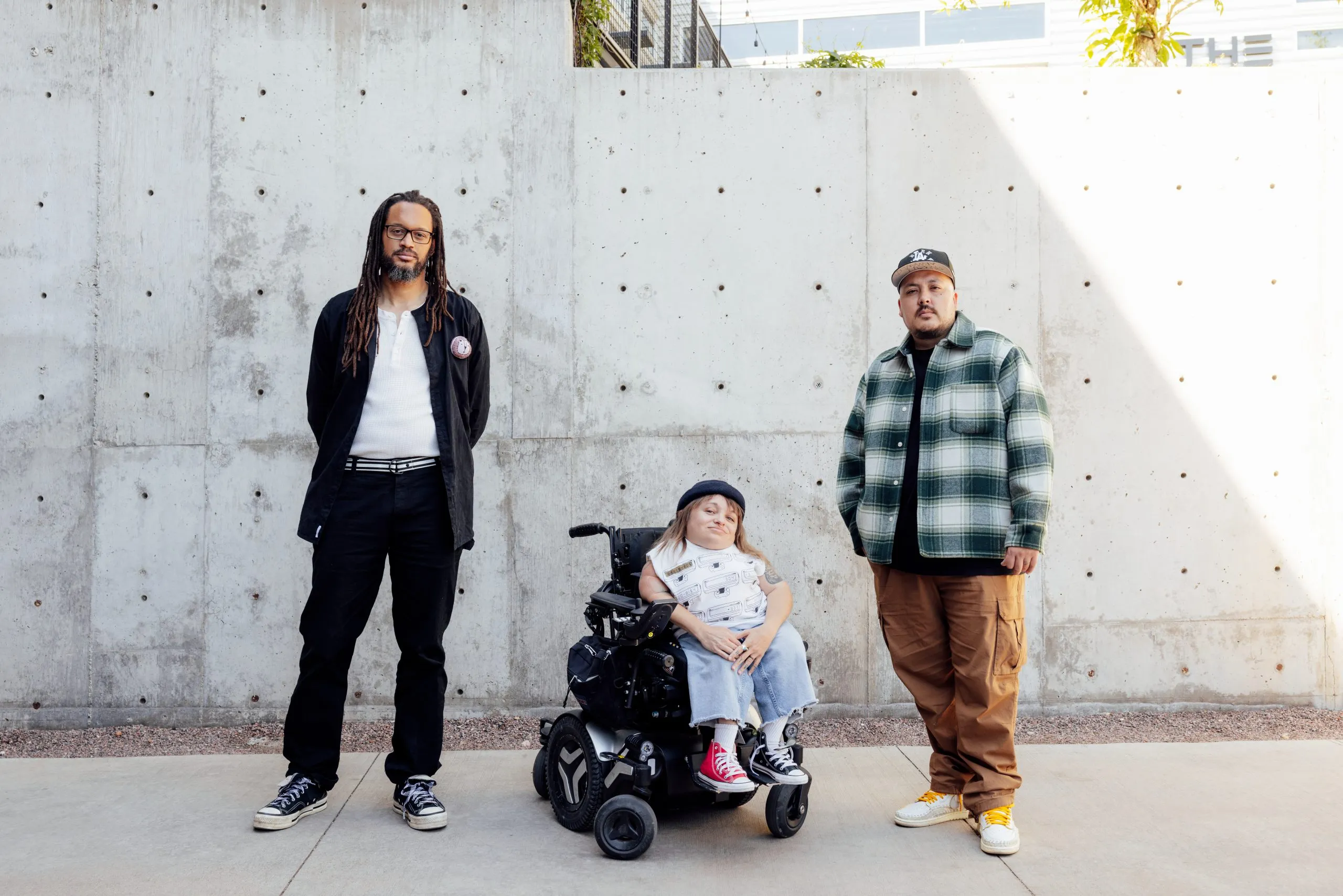
Photographer Armando Geneyro was on the way to his last performance review at Denver Public Schools, when he noticed a missed call on his cellphone.
Read more Can you be pulled over for having tinted windows in Colorado?
Geneyro is a dogged documenter of Denver life, one who has turned his lens on the blocks that shaped him for over a decade. He also worked a day job in the Social Work and Psychological Services department at DPS until earlier this year, when the role he’d served for 11 years was eliminated as part of a restructuring.
The missed call was from Chrissy Deal, the director of leadership, arts and social change grants for the Bonfils-Stanton Foundation. Geneyro called back and learned he had been awarded a $50,000 grant. He will use the money to start a youth photography workshop and to float his creative practice for a while.
“I went into my end-of-year review in a totally different mindset,” Geneyro said. “The universe really has a funny way of creating perfect timing.”
Geneyro is one of three Denver artists to win the second-ever Social Impact Artist Award, a biennial grant that includes $35,000 in unrestricted funds and $15,000 to pursue a specific project.
The others are Flobots and Youth on Record co-founder Stephen Malloy Brackett, and Wheelchair Sports Camp frontwoman Kalyn Rose Heffernan.
“I think it’s vitally important for us, being the position that we’re in, to look for individual artists and find ways to support those artists,” said James-Allan Holmes, president and CEO of Bonfils-Stanton. “So many of the artists that are really deeply rooted in community work aren’t necessarily tied to the entities that we might be funding other ways.”
In other words, Bonfils-Stanton spends a lot of money supporting nonprofit organizations that might or might not funnel money to individual artists, but this is a way to reach those artists directly.
Of the 75 applications, the three artists the foundation chose stood out because they stand out. They are known quantities in their respective communities. They are the trusted voices and the clear eyes.
“I feel really honored to be celebrated and recognized by the city I love so much,” Heffernan said. “And also to get celebrated and recognized before I’m dead. That’s very sweet. It doesn’t always happen like that.”
The new house party is the old house party
The $35,000 is up to the artist’s discretion to use. “They can invest in their practice. They can pay their rent. They can buy a car. They can do whatever. It’s their money,” said Deal of Bonfils-Stanton.
The other $15,000 is administered by the Art Students League of Denver for a project each artist had to pitch when they applied.
“Life has shown me that you’ll be caught on the back foot if you try to make something up for a situation as opposed to having things you’re just working on,” Brackett said. “So at this phase of my life, I try to make sure I’m not starting from zero.”
When Brackett starts to talk about his project, it’s clear this is something that’s been percolating for a while.
The long and short of it is that he wants to build a parallel music industry. One that creates the conditions for young musicians to work on politically charged music without “the fear of being critiqued by Ph.D.s at conservative think tanks,” Brackett said, thanks to the immediate distribution of anything and everything on the internet.
Read more Following a dismal winter, Vail Resorts reports a decline in early Epic pass sales for next season
“People have forgotten what their scream sounds like,” he said. “So how do we make it safe for people to scream?”
And what does a collective scream look like as a $15,000 pilot project? A house party.
“That’s what we’re calling it,” Brackett said. “The house party.”
Eventually, Brackett wants to build a nationwide circuit of House Party bands and venues that can guarantee the kind of loud, political and intergenerational spaces he grew up with.
It starts with a showcase at Blucifer’s First Rodeo, an artist-run music festival that sprung up on South Broadway to fill the vacuum that the Underground Music Showcase left when it moved to RiNo. Then he’ll host an all-ages hip-hop cypher with local Denver musicians.
“It’s way too easy for us to get into generational arguments as opposed to being like, I want you to say whatever the hell you want, and I’ll make sure you have a microphone,” Brackett said. “Kids are making revolutionary music, but it’s not being platformed, and we can’t expect the Spotifys of the world to platform antiauthoritarian music. The system now, it’s not there.”
Don’t have to wait until you’re rich and retired
Heffernan is using the money to merge two of her passions — music and disability rights — into a lifelong dream project she’s calling Wheelchair Band Camp.
“I will basically combine the real wheelchair sports camp that I grew up going to as a kid — that I stole the name from — with Girls Rock Denver, which I’ve been a part of for a very long time as well,” she said.
Heffernan will pilot it as a one-day event and then “who knows what’s next,” she said. “It’s a project I’ve always had in my mind but didn’t think I’d do until I’m rich and retired. But now I get to do it.”
As for Geneyro, his project was a little more on-the-spot than the other two — he dreamed it up in a 36-hour push to meet the deadline. But once he got going, the wheels turned easily.
Two years ago, Geneyro published his first photo book, “God Bless the Block,” a collection of photos that pay tribute to the 2700 block of Larimer in Denver.
He’ll use the money to get a group of four young photographers the gear they need to photograph their families, communities and cultures. He’ll also work closely with them for five months to develop their photographic styles and photojournalism skills, and then he’ll help them compile it into a book.
They’ll have a book launch, with the photographers speaking on a panel. “The audience will be able to buy their book and get it signed, like a real book release, the whole thing,” he said. The four photographers will split the book profits.
“If I would have had this (workshop) when I was like 18 to 20 years old, maybe I would have gotten into this way earlier, instead of in my mid-30s or early-40s,” Geneyro said. “I’m so excited to get started. Because for me, it’s an amazing opportunity. But for some of these participants it could be life changing.”