 By admin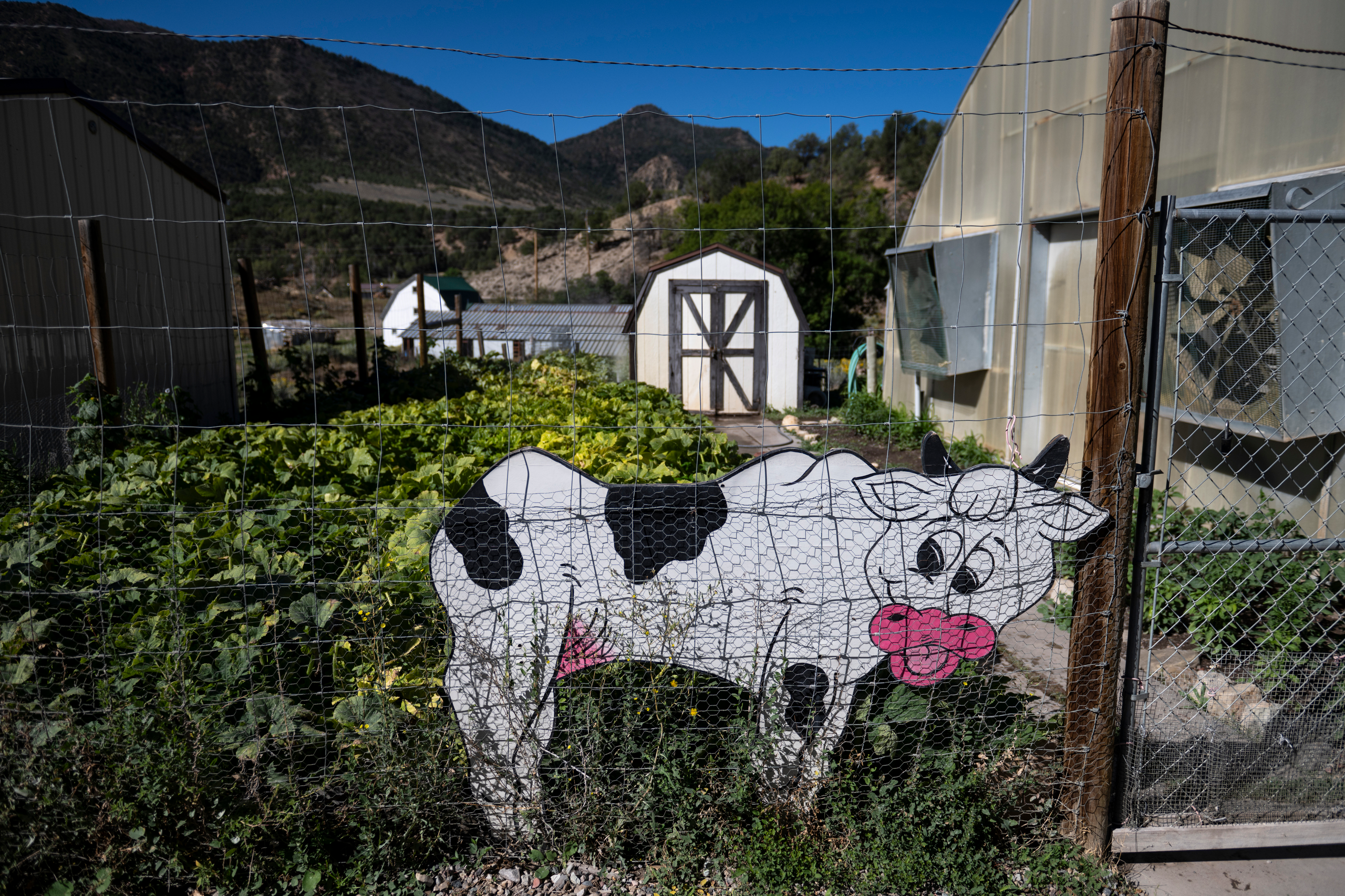
RIFLE — There are no tall, razor-wire fences separating the nearly 145 men housed at this state prison from the high plateaus and rugged canyon landscapes of rural Garfield County. Downtown Rifle is only a few miles away.
There’s a formal count at 6 a.m., noon and 9 p.m. Otherwise, men can move freely across the sprawling grounds to walk laps around the outdoor track, do a puzzle in the library or tend to the tomatoes growing in the greenhouse. When there’s good weather, families can visit the grassy courtyard for barbecues.
From the outside, the minimum-security prison looks less like a traditional correctional facility than a small college campus. The men, much like students, learn a trade, like welding or automotive repair, and if something is broken on prison grounds, they are usually the ones to fix it.
The Rifle Correctional Facility is the latest state prison to adopt the community-focused model, known as the Beacon program, built around giving incarcerated people more freedom, responsibility and opportunities to prepare for life after prison. Though not suited for all prisoners, the approach could reduce the likelihood that people commit new crimes after release, corrections officials and advocates say, by offering a different path as they near the end of their sentences.
“I wake up grateful for where I am, not only in terms of location — of being in a Level 1 facility and being in a gorgeous, idyllic mountain scene — but perhaps most importantly, is that I’m around people that dignify one another’s humanity,” said Matthew Bonner, 48, who has been incarcerated in county jail and state prisons for roughly 17 years.
Department of Corrections officials carefully vet each inmate, giving priority to those with a mandatory release date within 36 months and parole eligibility within 10 years. The crimes vary, but most men incarcerated at the Rifle prison are there for lower-level crimes, like repeated DIUs and drug offenses.
The prison has a doctor on-site only during business hours, limiting it to people without acute medical needs. It also does not offer medication-assisted treatment for people battling addiction.
Bonner, who has been at Rifle since last October, said he wakes up with an “attitude of gratitude” because he feels both staff and other residents want something better for themselves and one another — vastly different than other prisons where he experienced “hatred and blame and animosity and criminal-minded thinking.”
“Here, it’s not like that,” he said. “Here, people are trying to help one another succeed in the current and long term.”
Several times a week, Bonner trades his forest green prison clothes for workout gear and leads fellow inmates, and sometimes staff, through CrossFit workouts. He also teaches “7 Habits of Highly Effective People,” a leadership course he says helped transform who he was into who he is today.
The classes are valuable, but largely what makes the prison unique, Bonner said, is the openness of its staff. Correctional officers and other employees eat alongside the men in the food hall, offer advice on keeping their plants alive and build rapport over the ordinary details of life inside.
“For the most part, these guys stay put,” Ron Armstrong, associate warden, said. “Most of these guys are one foot out the door anyway and the last thing they want to do is risk extra time with an escape charge.”
“I’m scared to say this out loud, but man, I love it,” said Armstrong, who was promoted to his post at Rifle in July after about 20 years at Buena Vista Correctional Complex.
“In two years, I’ve had one bad day. Heck, I come into work singing.”
Though the program in Rifle began in February, a similar program has operated for years at the Skyline Correctional Facility in Cañon City. The Colorado Department of Corrections does not track recidivism rates by prison, making it difficult to assess whether Skyline’s program has reduced the likelihood that participants return to prison. But staff members point to several men who have reported finding jobs using skills they learned in the program.
The Beacon program has also expanded to the Delta Correctional Facility, which can house up to 400 people.
Unlike many Colorado prisons struggling with chronic understaffing and low staff morale, Rifle has cultivated a culture built around relationships between staff and the men they oversee.
That rapport can also give staff a chance to intervene before a man makes a decision that could derail his progress, Armstrong said.
“You’ve got that mile view of somebody that’s getting ready to implode and mess up everything that they’ve been working for,” Armstrong said. “So staff have the ability then to kind of intervene and say, ‘Hey, what’s going on? Don’t do anything rash, don’t do anything dumb.’”
That connection also means recognizing that leaving can be just as daunting as arriving, said Capt. Harmony Tilley.
“It’s scary, but it’s OK to be scared,” said Tilley, who has worked at the prison for nine years. “I tell them, ‘I’d rather have you guys be nervous about this. That makes me feel a lot better when you’re worried and you’re nervous because that shows that you care enough not to come back here.’”
Real life skills
Getting a job inside the Rifle prison looks a lot like getting one on the outside: Men express interest, apply through a job board and interview for the position.
Part of reducing recidivism is giving people skills they can use beyond bars, Capt. Rick Rhinaman said. All the men at the Rifle prison have jobs — from laundry services to electrical work and plumbing. While serving their sentences, they can also earn professional certifications in trades such as HVAC and wastewater treatment.
“We pretty much do everything in-house for the facility when it comes to maintenance. I try to keep it all in-house so they get more hands one time learning,” he said from the prison’s vehicle maintenance and welding shop. (It also helped keep costs low — the cost per resident per day is considerably lower than other higher-security facilities.)
The men are trusted with meaningful work, but they’re still in prison. The tools are kept behind a metal grate and locked away when they’re not in use.
Several men have put their training to use after release, staff members said. One of the first to earn his 608/609 certifications got a job with an HVAC company near Longmont, about three months after leaving prison. Another man has started his own construction company. A third, who had worked only as a cook before prison, learned electrical and HVAC skills in prison and then after his release, he continued his training at a vocational school in Pueblo. He now works as an HVAC technician for a private company.
Community advocates also help Rhinaman teach those skills.
That peer-to-peer teaching is part of what Rhinaman said sets Rifle apart from other facilities. So is the emphasis on building relationships between staff and the men.
“A lot of these guys never had that on the street, from their family or anybody, and that’s why they end up incarcerated because they never had any guidance,” he said.
Experts from Colorado State University also come to the prison to teach agriculture and horticulture. On an early September morning, the greenhouse was filled with rows of yellow squash, zucchini, tomatoes and several varieties of peppers.
As of last month, the men and staff had grown 3,500 pounds of produce, 40% of which was donated to Garfield County. The rest was used for meals at the prison.
“My staff do not cook at all. All they do is supervise and monitor and make suggestions. The residents do all the cooking, all the baking,” said Rhinaman, who says he’s been nicknamed “grandpa” by some of the incarcerated men.
In learning how to cook, the men also learn how to keep a commercial kitchen clean. Rhinaman gives them recipes for squash fritters, zucchini bread, bread-and-butter pickles, cinnamon buns, apple crisp and more. Bread is baked in-house daily.
Elsewhere in the prison, men take peer-led budgeting classes, attend religious services and Bible study, and practice with a band in the chapel. A room filled with computers gives them a place to study and take GED exams or get their haircut by a fellow inmate at the barber shop. There’s also a sweat lodge — a sacred, dome-shaped structure used by many Indigenous people for ceremonies.
“Sometimes they get here and they’re like, I don’t know what to do, I’ve never been given this much freedom; I’ve never been given this much autonomy; I’ve never been given this much cooperation with the staff,” Armstrong, the associate warden, said.
“Some of them, they’re a little slow diving right into what it is we’re trying to do. But most of them come around.”
Beyond the prison grounds
Some of the work takes place outside the prison. In groups no larger than 10, men help rebuild trails alongside Colorado Parks and Wildlife staff and take on projects in nearby communities.
In Collbran, a town of about 300 people 45 miles east of Grand Junction, a small staff was racing to finish painting the town’s rodeo grounds before its July 4 celebration. The town has just four full-time employees, including public works and office staff.
About seven men from the Rifle prison spent “the better part of a week” painting buildings and maintaining the grounds under a sergeant’s supervision, said Heather Jenkins, the town clerk. They did “a fantastic job,” she said.
“We were running into a deadline there, so it really actually helped us out quite a bit, and we were happy to have them,” Jenkins said.
She plans to invite the group back before the end of the year to help install fencing near the town’s sewer plant.
“They were really willing to do anything that we had available to them,” she said.