 By admin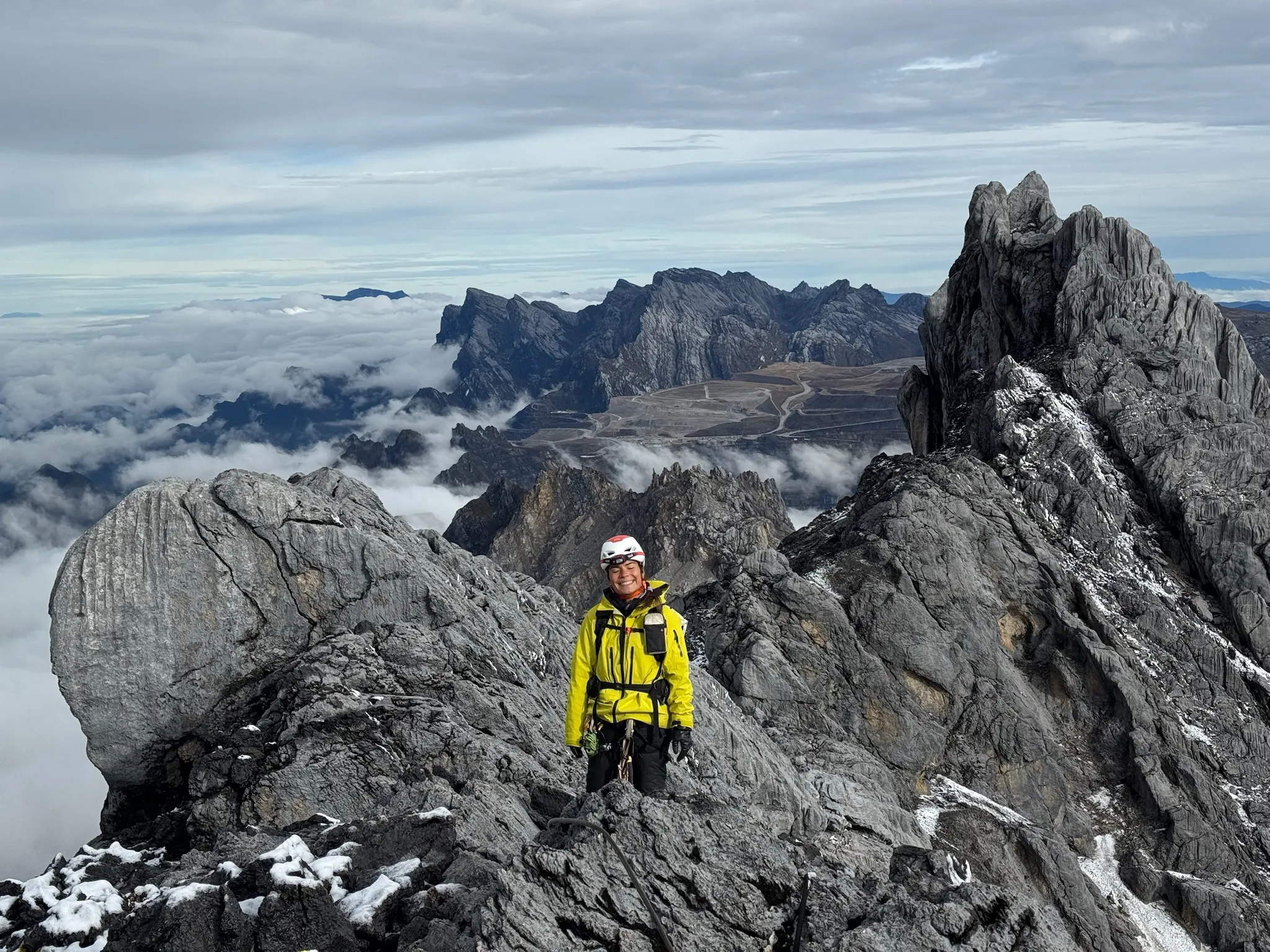
In August 2024, Vail’s Nicole Otake climbed Papua New Guinea’s Mount Giluwe, the highest volcano in Oceania.
Getting there required the kind of logistics that adventurous travelers love: “A guy picked us up at the airport, then handed us off to another guy and his son who connected us to someone else,” Otake said.
This story first appeared in The Outsider, the premium outdoor newsletter by Jason Blevins.
In it, he covers the industry from the inside out, plus the fun side of being outdoors in our beautiful state.
Eventually, Otake and her climbing partner were led to a few men on the side of a road in Papua New Guinea’s Western Highlands where they all began a two-day trek toward the mountain. The men were barefoot and carried handmade spears.
Giluwe rises 14,327 feet — not especially high by mountaineering standards — but the climb was muddy, wet and remote. Along the way, Otake saw enormous prehistoric-looking birds running through the highlands.
“It was like being back in time,” Otake said. “It was super remote and super cool.”
It was also the fourth stop on a checklist: climbing the Seven Volcanic Summits, the highest volcanoes on each continent.
Otake, 32, has so far summited six of the seven. All that remains is Mount Sidley in Antarctica, the most remote of the seven and by far the most expensive to reach. If Otake gets there, she will become the first American woman to complete the Seven Volcanic Summits.
Otake started climbing mountains because she liked the idea of a challenge she could quantify. She is analytical and she likes spreadsheets and lists. The Seven Volcanic Summits gave her all three — along with a reason to start learning how to climb increasingly big and remote mountains.
Then, the mountains started leading her somewhere she hadn’t expected. From one summit, she would look across a valley and see another peak — one that wasn’t on any list, wasn’t particularly well known and, in some cases, was rarely climbed.
“Now there are so many mountains that aren’t on any of these lists that are so much higher on my list,” she said.
That shift — from checking off summits to seeking out remote mountains for their own sake — has also changed the way Otake thinks about mountaineering. She has learned how expensive and complicated mountaineering can be, and how much knowledge it takes to get into the mountains without paying someone else to handle everything. She has also learned that the sport is still overwhelmingly male and that many aspiring climbers, particularly women, lack the mentorship and resources she wished she had.
So this year, after losing the remote leadership job that had helped finance her climbing, Otake started Ash to Altitude, a small logistics company designed to help people plan their own expeditions — without the luxury price tag.
“I really believe people need access to these mountains,” she said.
Learning the ropes, one summit at a time
Otake’s first big mountain — also one of the Seven Volcanic Summits — was Kilimanjaro, which she climbed in March 2023 in less than three days.
She had always been interested in volcanoes. Her father was born in Hawaii before it became a state, and because of that Otake grew up with a connection to the islands and the volcanoes that shape them. As she learned more about volcanoes around the world, she came across the Seven Volcanic Summits.
Learning that no American woman had completed the seven gave her new motivation.
“Someone will always be stronger or faster,” Otake said. “But you can’t take away the first of something.”
At first, the goal was simply to complete the list. But as Otake and her husband, Rocco, planned and executed the expeditions, they got hooked on going higher and farther. Rocco was also interested in climbing the traditional Seven Summits, the highest mountain on each continent, and the two began taking on bigger objectives together. In the process, Otake became the person handling the logistics.
“It lets my spreadsheet brain be happy,” she said.
The more mountains they climbed — like Denali and Mount Elbrus and Pico de Orizaba — the more the list became a gateway into alpine climbing. Each expedition taught them something about planning, logistics and what they were capable of taking on next. Ticking boxes became less and less important.
Read more Denver woman sues police, Flock Safety after being falsely accused of stealing package from porch
“Starting with a list has given us the skills and tools to become better mountaineers,” Otake said. “It was a good way to start because I wasn’t sure of anything else. But now there are so many mountains that aren’t on any of these lists that are so much more intriguing.”
Like Alpamayo in Peru, which she calls the most beautiful mountain in the world.
Even that experience, Otake said, made her want to look beyond the mountain she was climbing.
“But as we’re climbing that, it’s like, look across the valley and there’s Artesonraju, which is even more beautiful,” she said. “So now we’re going back next June.”
Easing the way for other women climbers
That curiosity has pushed Otake toward increasingly remote and self-supported objectives. She and Rocco have learned how to arrange their own transportation, permits, lodging, food and acclimatization rather than simply signing up for a commercial expedition and showing up at the trailhead.
Otake likes that part almost as much as the climbing.
She and Rocco live full time in a solar-powered van, spending much of the winter in the Vail Valley and leaving in the summer to climb. The van is minimalist: Otake says she owns one dress and one pair of heels, which both live crammed into a wheel well, while the couple’s climbing and skiing gear occupies the remaining space.
The setup suits a life organized around mountains. When she’s not climbing, Otake is usually planning the next climb — researching routes, comparing costs, figuring out transportation and finding people on the ground who can help them navigate places they have never been.
The process has given Otake a crash course in the barriers to mountaineering — not just the physical ones, but the financial and logistical ones, too. She has learned how much it costs to get to these places, how difficult it can be to know whom to trust and how much easier the process becomes if someone else has already figured it out.
The more time she spent in the mountains, the more Otake also noticed how difficult it can be for someone else to get started. Mountaineering is expensive. There is the gear, the international travel, the time required for training and acclimatization, and, for many mountains, thousands of dollars paid to an expedition company to arrange the logistics and guide the climb.
Otake had been fortunate. For four and a half years, she worked in leadership at Act Blue, a digital fundraising platform that builds open-access software for Democratic campaigns, progressive organizations, and 501(c)(3) organizations. The remote role allowed her to take extended time away for climbing. She bought her van and most of her equipment and learned how to organize increasingly complicated expeditions herself. “I was really lucky,” she said.
So, when Otake lost that job in May of 2025, she decided to try her hand at professionalizing something she already knew how to do.
In February, she started Ash to Altitude, a small expedition-planning company that helps climbers arrange their own trips. The idea is to work directly with local operators and strip away the overhead of a fully packaged expedition. Because Otake has already done so many expeditions herself, she knows how much they can cost — versus how much is often charged. She said she has seen companies charge about $7,000 for an Elbrus expedition that she can organize for roughly $3,000, including flights and a visa.
“It drives me crazy to see people exploit other people, especially to go to parts of the world where they can’t promote local pricing,” she says.
The business is still small — so far, many of her clients have come through friends and Instagram — but the idea extends beyond saving money. Otake wants to make the information and experience she has accumulated accessible to people who might not otherwise know how to get into the sport.
Most of the climbers she has encountered during her expeditions have been men. Otake never had a mountaineering mentor, and she has often found that equipment and clothing are designed with men in mind. She’s working toward a personal trainer certification, with the goal of eventually combining training with expedition planning, particularly for women.
“If I could do it for free, I would,” she said.
For now, there is still one peak left on Otake’s list. Reaching Mount Sidley in Antarctica can cost roughly $75,000 per person, putting it far outside the price range of most climbers — including Otake. She is looking for sponsors. But even as she works toward the seventh summit, the process has become more important than the list.
“Mountaineering is a sport that requires a lot of financial privilege — the gear is expensive, the travel, the acclimating is really expensive, so it’s a privilege to do it,” she said. “I’m really proud of how we’ve done it. It’s more than just tagging summits.”
Read more Boulder and oil companies take climate suit to a skeptical U.S. Supreme Court