 By admin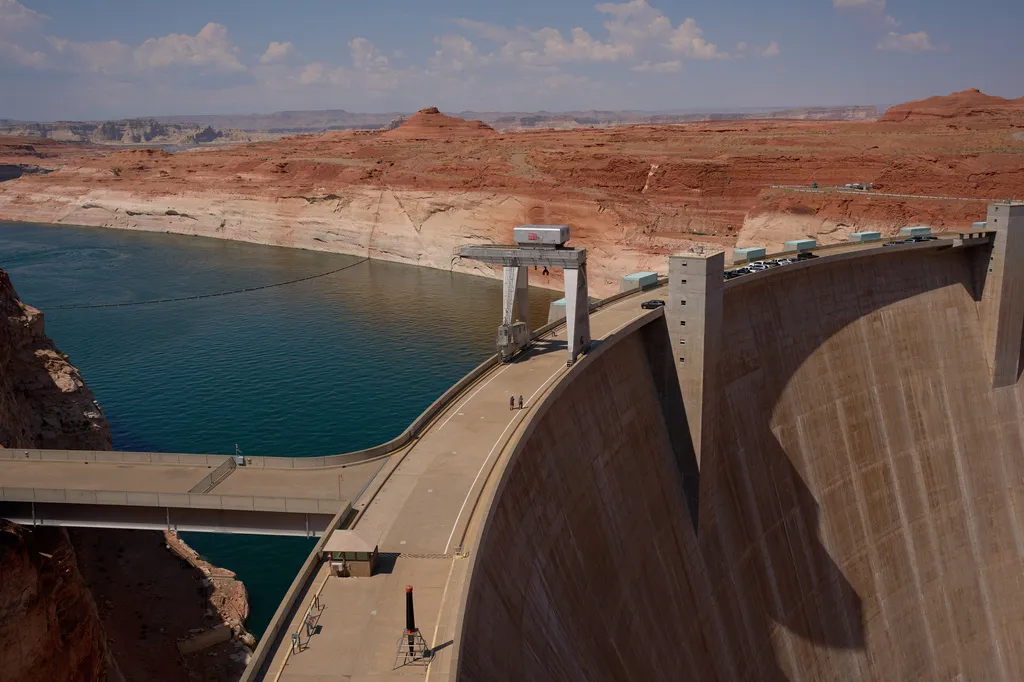
Nevada launched the Colorado River’s most significant lawsuit in decades in August. In the days after, river expert Anne Castle was still surprised. She wasn’t alone.
Read more Some Colorado houses won’t burn, if planned right
“I was surprised that it was Nevada that filed this lawsuit,” said Castle, a “recovering lawyer,” Colorado River policy expert and former federal water official based in Colorado. “Litigation was widely expected, but I think most people thought that it would come from Arizona first.”
Nevada’s lawsuit challenges new federal management rules announced in August that govern how immense reservoirs, like Lake Mead and Lake Powell, will store and release water for millions of people over the next 10 years. Those rules go into effect Oct. 1, unless the court decides to put them on ice beforehand. That’s unlikely, experts said: Water-related court cases typically take months or years to decide.
If Nevada wins, federal agencies might have to scrap the existing plan or redo parts of it. So far, Colorado and its three sister states in the Upper Colorado River Basin won’t be directly impacted by the lawsuit — but they should still be paying close attention.
“The Upper Basin states and the U.S. are going to say, ‘No, it’s all fine. We did it correctly. It complies with the law of the river,’” Castle said. “The Upper Basin states, in particular, are not going to want the court to decide that the law of the river requires something different.”
Under the Department of the Interior’s plan, the Upper Basin states — Colorado, New Mexico, Utah and Wyoming — do not have to make mandatory water cuts. They have mainly been called on to conserve water and help avoid crisis lows at Lake Powell, which was about 20% full as of September.
But the Nevada lawsuit says the federal government should have analyzed how the basin’s water system would function if mandatory conservation and water cuts were included. Without that, the analysis was insufficient, according to Nevada.
Lower Basin states — Arizona, California and Nevada — must cut their water use by 1.25 million acre-feet in both 2027 and 2028, while reaching additional conservation goals. They could be called on to cut their use by as much as 3 million acre-feet under each new two-year operating plan over the next decade.
One acre-foot roughly equals 326,000 gallons, or the amount of water needed by two to four households in a year.
The lawsuit calls on the U.S. District Court of Nevada to weigh in on requirements for Upper Basin states. The desert state also argues the federal government didn’t adequately analyze the impact of its post-2026 management plan on southern Nevada’s $180 billion economy, despite a legal requirement for the department to address those impacts.
Nevada could have its 300,000 acre-foot allocation of Colorado River water cut by up to 213,556 acre-feet in the basin’s driest years, the state said. Without enough analysis, the federal government should have to redo its management plan for the basin, Nevada argues.
This plan took over three years to develop in the first place. Basin states failed to negotiate a unified proposal, which left the final plan up to the feds to decide. That plan now impacts 30 tribal nations, seven basin states, industries, communities and environments across the West.
The post-2026 management plan stays in effect until the court rules differently, experts said. No hearing date had been set as of Monday, and the federal government has until the end of October to respond.
How does all of this impact Colorado?
The potential impacts will vary as the case progresses, but for now, Colorado communities, farmers, reservoir managers and water users will continue to follow the 10-year plan announced in August.
The state is developing a conservation program with funding from the federal government. And at times, the largest reservoir in Colorado, Blue Mesa near Gunnison, might need to send more water down to Lake Powell, on the Utah-Arizona border, to keep it from sinking too low. (This year, Blue Mesa’s own supply was too small to assist.)
Because Colorado is not named directly in Nevada’s lawsuit, it doesn’t have to be involved in the process. It has the option to file a motion to intervene or it can wait to see what the court decides. The Colorado Attorney General’s Office declined to respond Monday to questions about whether it plans to intervene.
It may want to get involved, Castle said. The final ruling could influence how Blue Mesa operates, weigh in on mandatory cuts in Upper Basin states or interpret the century-old Colorado River Compact — all of which would affect Colorado.
Read more How is Colorado Springs growing but using less water? Hint: The lawns are changing.
Blue Mesa’s operations impact local business owners, like marinas. The reservoir also generates hydropower, supports endangered fish species and provides water to farmers and ranchers in the Uncompahgre Valley, known for its sweet corn.
All of that is years down the road. In most cases, it’s business as usual for Coloradans. Communities will manage their drought restrictions in dry years. Conservation will still be a priority — the state will face a significant water supply gap if dry conditions continue. The state’s water cops, i.e., the State Engineer’s Office, will continue to cut off water users in dry years according to state water law, without needing to send mandatory deliveries downstream.
Growing cities and businesses will continue tapping water to expand and build. But that could become more expensive, said Gage Zobell, a natural resources attorney based in Salt Lake City with the international law firm Dorsey and Whitney.
The Colorado River Basin, which spans much of the Southwest and part of northern Mexico, has been living with an uncertain future for years. Logjammed negotiations raised questions about how water would be managed while decades of drought strained water supplies.
Individuals, real estate developers and industrial companies interested in using water want the most secure water rights available, Zobell said. Often, that means water rights that are old — the older the better — because they’re less affected in the basin’s driest years.
The cost of those rights was already rising before the Nevada lawsuit. This lawsuit is just going to exacerbate that issue. He’s already seen it happen in some deals.
“As we’ve looked at valuations, it is twice the value that we originally thought we were going to have to buy for the water,” said Zobell, who frequently helps oil and gas, mining, renewable energy and agricultural clients with water needs for new projects in the West.
That could be a change in tens of millions of dollars — the kind of money that can change the entire timeline for a new development.
“It’s outrageously high, and it’s thrown everybody in a loop,” he said.
Could there be more lawsuits in the future? Yes, and that’s bad.
The impacts of the new federal plan are still coming to light, and many groups in the basin might decide to join a lawsuit or file their own — especially as the Lower Basin states implement their new water cuts.
But one Lower Basin state, Arizona, has been making legal threats for months.
In May, Arizona officials said upstream states will be out of compliance with the 1922 Colorado River Compact — the foundational document for water-sharing in the basin — by Sept. 30. In August, Arizona officials said the new federal management plan did not do enough to analyze or address compact compliance issues.
The state is still assessing the water deliveries necessary for the Upper Basin states to meet their compact obligations, Arizona’s top Colorado River official, Tom Buschatzke, said in a statement Monday.
“Arizona is still evaluating when and if it will file suit over compact compliance,” Buschatzke said.
If Arizona decides to sue the upstream states, the lawsuit could go to the U.S. Supreme Court. If the downstream states won, Colorado and the Upper Basin would be forced to meet mandatory water-sharing requirements when water levels in the Colorado River fall too low.
A Supreme Court case that decides longlasting legal debates in the basin — that’s the “nuclear option,” experts said.
One side would win, one would lose. Both would have to deal with the decision made by justices outside of the basin, Castle said.
“There’s no appeal after that.”