 By admin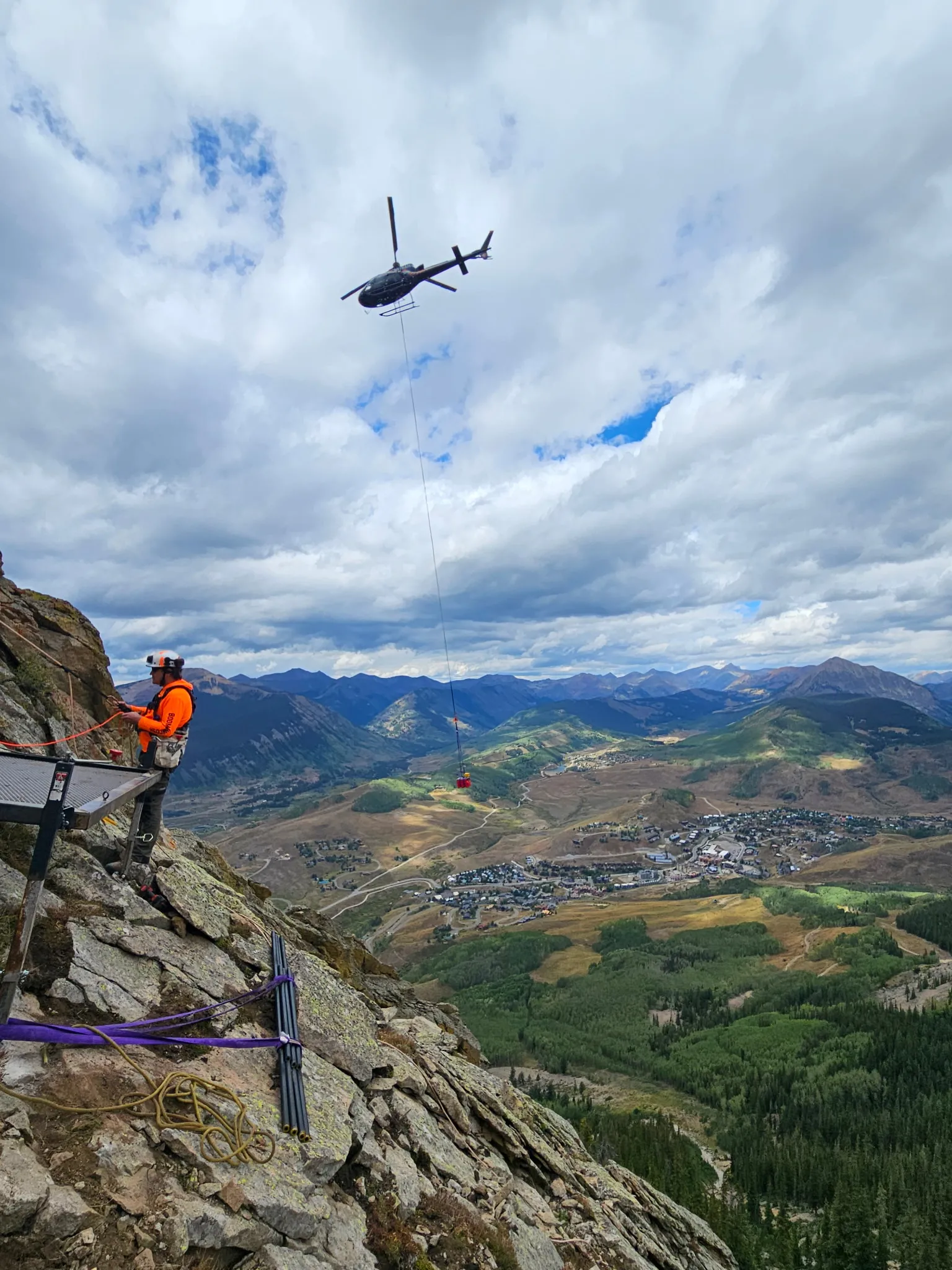
MOUNT CRESTED BUTTE — In the last 10 years, the process of bombing avalanche terrain above highways and ski slopes has evolved from World War II-era ammunition fired from howitzer cannons and bomb-dropping helicopters to remote-control systems that dribble bombs or ignite propane blasts from mountainside exploders with a push of a button.
Read more Denver Water can finish and fill Gross Reservoir, US appeals court rules
The next generation of remote-controlled avalanche mitigation in Colorado is underway at Crested Butte Mountain Resort.
The new Boom Whoosh system created by a Jackson, Wyoming, innovator promises safer, more efficient, less costly and more environmentally friendly avalanche mitigation. On Sept. 2, Eric Bressler and his team used Montrose-based A-Star helicopters to drop 32 loads for five permanent remote avalanche control systems on the resort. The installations include three hydrogen gas exploders in the Hall of Fame zone above the Banana Couloir on the frontside of the ski area and two more in the Tower 11 zone on the backside, marking one of the largest single investments in avalanche mitigation in the history of the 65-year-old ski area.
Hydrogen over propane
For years, ski areas and transportation departments have used the French Gazex and O’Bellx exploders for avalanche mitigation. The systems can use consistent compressed-gas explosions to trigger multiple slides before snow piles too deep and catastrophic avalanches bury roads and ski slopes. But those systems use propane, which can be tricky in cold temperatures because it does not easily flow uphill. The popular Swiss-based Wyssen Avalanche Control systems drop explosives from steel towers erected above hanging snowfields requiring helicopters to refill the slide-triggering bombs.
Bressler has spent years working on Wyssen and Gazex systems on Red Mountain and Loveland passes and he has high praise for those two companies.
“It’s hard for me to come up with any criticism of them,” said Bressler, who lives outside Jackson, Wyoming, and last year launched his Alpine Infrastructure company. “We based our service model on those companies.”
But as he trudged across avalanche slopes or rode helicopters to work on the remote systems, he could easily ponder improvements. It was on one of those high-risk jobs above U.S. Highway 550 on Red Mountain Pass in 2021 that he started thinking of possible upgrades.
“I thought if we could find a way to push gas uphill, we could remove the need for ongoing maintenance and support in almost every case,” Bressler said.
His new Alpine Infrastructure systems use a blend of hydrogen and oxygen to create avalanche-triggering explosions. He calls the system “Boom Whoosh,” as in the hydrogen-oxygen goes “boom” and the snow below goes “whoosh.”
The only byproduct of the explosions is water. And hydrogen gas easily flows in cold temperatures, meaning storage tanks can be located on roads well below the towers tucked into cliffs above hanging snowfields.
In 2022, Bressler grabbed an old lift tower from the recycling bin at Jackson Hole Mountain Resort in Wyoming and he took his first step toward creating Alpine Infrastructure. He designed an explosive system with valves and parts he ordered on Amazon. After testing in a parking lot, he installed the first models of the Boom Whoosh system at Jackson Hole Mountain Resort.
Davey Pitcher, the owner of Wolf Creek ski area, bought prototypes from Bressler a couple years ago but is still planning the installation. Last spring, Bressler installed the Boom Whoosh system at Vail Resorts’ Park City Mountain Resort in Utah, the largest ski area in the U.S. They are the first remote avalanche control systems designed and manufactured in the U.S.
And after the Crested Butte Mountain Resort install, he’s off to California’s Mammoth Mountain, where two ski patrollers were killed in avalanches in the last two seasons while they were mitigating steep terrain after large snowstorms.
The system at Mammoth will be the largest single-control remote avalanche mitigation system in the world, said Bressler.
Read more Colorado Broadband Office leader abruptly resigns
From 2 to 30 employees, all of them on-snow experts
Resorts often bring in outside consultants to work with Bressler’s team to help train patrollers on the use of remote-control avalanche mitigation systems. While the Bressler team is made up of experienced ski patrollers, it takes help to guide patrollers on how and when to use the new system to address individual needs in different locations.
“There are a lot of different tools for different terrain,” said Bressler, who worked with Vail Resorts and 6 Point Engineering out of Canada to help train Crested Butte Mountain Resort patrollers on operating and maintaining the new Boom Whoosh system.
Bressler also can customize his Boom Whoosh system to fit each resort’s — or each department of transportation’s — specific needs.
The Colorado Department of Transportation has 49 remote avalanche control systems across the state, all of them designed by European avalanche safety companies. The department is looking to add more, said Stacia Sellers, CDOT’s spokeswoman for major projects. The transportation department and the Colorado Avalanche Information Center monitor and control 278 of 522 avalanche paths above the state’s highways, using tools that include remote systems, cannons, manually thrown explosives and helicopters.
CDOT is aware of the Boom Whoosh systems and has worked closely with Bressler over the years, Sellers said.
“Reduced annual maintenance cost is a high priority,” she said. “Other considerations are access to the terrain, environmental and land management constraints, construction feasibility and performance metrics.”
Alpine Infrastructure’s business has grown sixfold every year for the last five years. It was just Bressler and a partner in 2022 and now he has 30 people on his team and is hiring more. Every one of his employees is from the ski resort industry. All but two of them — an avalanche forecaster and a ski guide — are former ski patrollers.
“The passion of my crew, it just humbles me,” he said. “They all have lost people in avalanches and they have this dedication and focus that matches my own passion. They are the best employees in every conceivable way. They are driven to improve safety on the mountain, for patrollers and for skiers. It’s truly next level.”
Bressler’s tinkering is not meant to be an overhaul of avalanche mitigation inside ski areas. Fatal inbounds avalanches are rare: less than one death for every 60 million skier visits, thanks largely to diligent work by ski patrollers who work to reduce the threat of catastrophic slides. examined 14 inbounds avalanches at U.S. ski areas that killed 17 people in the previous 19 years.
Bressler hopes that these systems can ease nerves when patrollers venture into avalanche terrain. Using these systems won’t eliminate the threat of avalanches, but a flurry of explosions by the Boom Whoosh towers can reduce risks by blasting remotely before patrollers slide into the steeps to test stability and see if the terrain is ready for skiers.
“What they do is way dangerous and it’s way scary. There is nothing I can build to make their job perfectly safe with no hazards, but I can help take away the killers,” Bressler said. “They put a lot of pressure on themselves to open terrain and maybe I can help them go out there and not feel all the weight of that pressure, you know.”
Vail Resorts is quick to say this program is not about replacing patrollers as much as easing their workload and reducing exposure and risk in dangerous terrain. The company is using a combination of Boom Whoosh and Wyssen systems at its Whistler Blackcomb ski area in British Columbia and Wyssen designed new remote avalanche control installations at Breckenridge ski area.
“There will be no negative impact on patrollers,” said Crested Butte Mountain Resort spokeswoman Katie Lyons. “This kind of work will really help us with a safer and more efficient way to manage avalanche terrain.”
Read more It’s National Voter Registration Day. Here’s how to register — and vote — in Colorado.