 By admin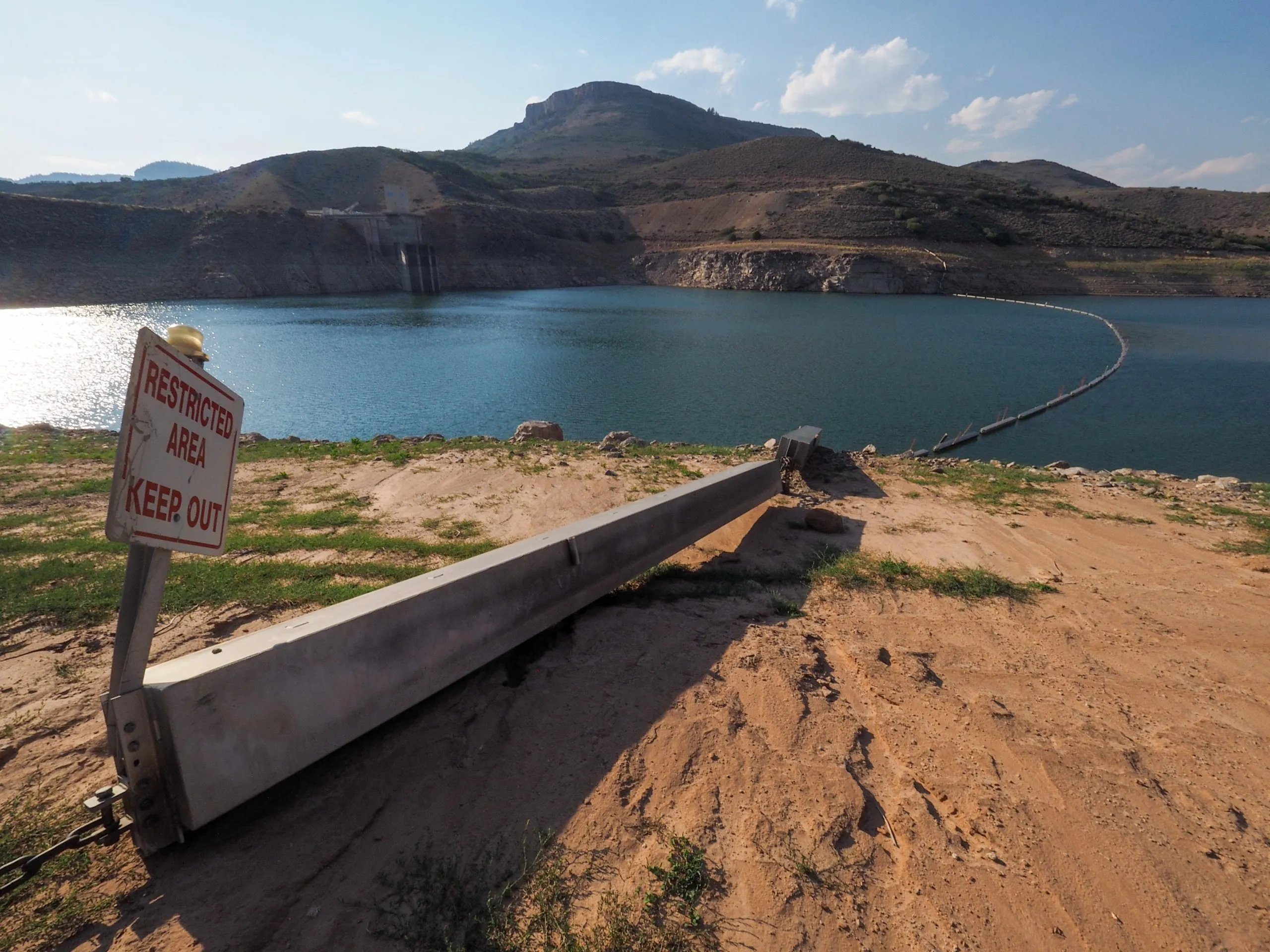
Officials in the Upper Colorado River Basin plan to continue draining Flaming Gorge in Wyoming to protect Lake Powell, one of the basin’s largest reservoirs.
The Colorado River Basin, which extends from Colorado to California and northern Mexico, uses a network of reservoirs to store vital water supplies for cities, farms, recreation, the environment and millions of people. But the basin’s overall storage has dropped to a third of its capacity, officials said during an Upper Colorado River Basin meeting Monday.
Lake Powell holds about 22% of its total capacity. Since April, the Bureau of Reclamation has released about 450,000 acre-feet of water to help boost storage in Lake Powell. Colorado and other Upper Basin state officials agreed Monday that those releases should continue through April.
“I know none of us like to be in the hydrologic conditions that we’re seeing,” said New Mexico’s representative Commissioner Tanya Trujillo. “But (we) appreciate Reclamation’s work and the good job that you do in communicating these results not only to us as commissioners but also to the public.”
Each year, water from parts of Colorado, New Mexico, Utah and Wyoming flows into Lake Powell, which then releases it downstream to millions of people in Arizona, California, Nevada and Mexico.
But after a record-poor winter, those flows shrank to a drip this year — and the immense reservoir on the Utah-Arizona border was already at historical lows after over two decades of drought.
Powell isn’t the only reservoir with low supplies. Blue Mesa, a federal reservoir and the largest in Colorado, held 20% of its capacity as of Sept. 8. Navajo Reservoir, on the Colorado-New Mexico border, held just under half of its capacity. Both were too low to send water to Powell, leaving Flaming Gorge as the only option available for emergency releases.
Colorado River officials plan to release another 550,000 acre-feet of water from Flaming Gorge by April for a total of 1 million acre-feet.
One acre-foot, about 325,851 gallons of water, equals roughly the water use of two to four households each year.
The goal is to keep the reservoir’s water above a critical elevation, 3,510 feet above sea level, as Glen Canyon Dam continues to release between 6 million and 7 million acre-feet of water per year over the next two years for millions of people downstream.
If the water level in Lake Powell drops much lower, then the dam’s electricity generation capabilities would fizzle and then stop, reducing affordable and reliable hydropower supplies for communities across the West. Below that, the dam might not be able to release water at all.
These additional releases should keep Powell’s water level above critical elevations, according to forecasts. But recovery needs to be a priority for Flaming Gorge, which straddles the Wyoming-Utah border, after the releases are over.
Flaming Gorge cannot refill until there is more snowmelt from the Rocky Mountains. The reservoir might need time to fully recover depending on the winter snowpack, and lower water levels could also impact local businesses and tourism at the reservoir.
The federal government called on Upper Basin states to continue these releases under the new Colorado River guidelines that go into effect Oct. 1. Upper Basin officials are drafting an agreement for future emergency releases, officials said during the meeting.
But the emergency releases from Flaming Gorge are a short-term fix. Even if the coming winter brings an average amount of snow, like in 2025, Lake Powell and its sister reservoir Lake Mead would be mostly depleted, according to a June report from Colorado River experts. It would be “an outcome with devastating consequences.”
If this winter brings above-average precipitation, the reservoirs would recover slightly but could soon return to the same dire water levels.
This summer, the Colorado River Basin dealt with extremely tight water supplies. In Colorado, communities are seeing water cuts that impact some of the oldest and most senior water rights holders in the basin. In other states, reservoirs are less than a quarter full, the snowpack was the lowest on record, and Colorado River supplies were cut by 50%.
“Folks came together and worked with each other to make ends meet in a year like this year,” Commissioner Becky Mitchell of Colorado said. “We’ve almost gotten through this year. We’re hoping next year is better, but we can’t count on that. We need to be prepared for whatever comes, and I believe that we are in Colorado.”
Read more Trump-tied super PAC has already spent about $1.5M defending Gabe Evans, Jeff Crank in Colorado