 By admin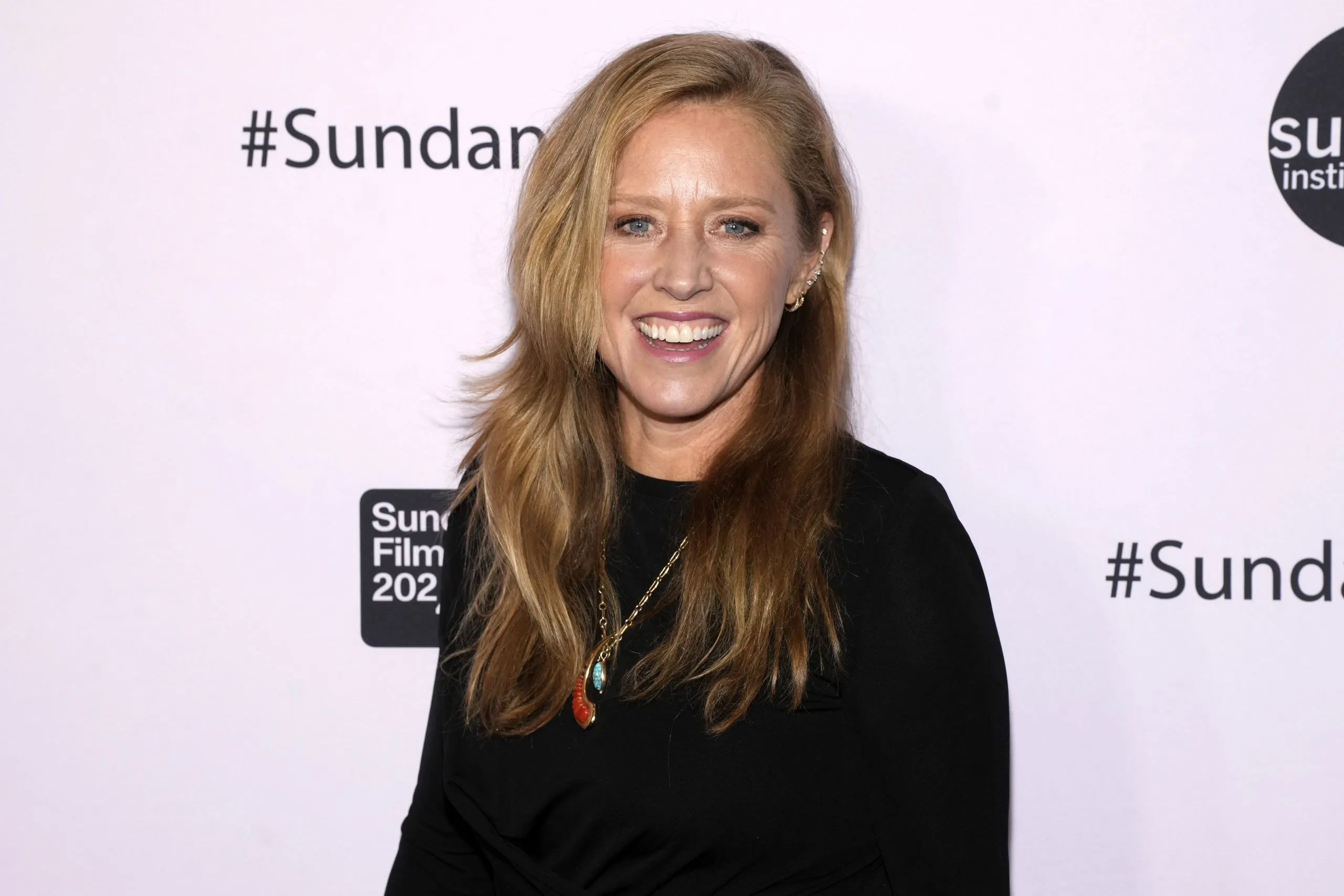
Despite his blockbuster successes and movie star status, Robert Redford didn’t like Hollywood very much. It’s sort of a twisted joke, then, that the Sundance Film Festival, which Redford founded in 1984, has since become one of the most star-studded, see-and-be-seen festivals that the industry has to offer.
It wasn’t always like that, as Redford’s daughter Amy recounted to The Colorado Sun. At one point early in the festival’s history they had to stand outside of movie theaters with tickets in hand and convince people to come inside. As the festival evolves, expands and moves into its new home of Boulder for the next 10 years, organizers are figuring out how to stay true to its founder’s vision and continue to focus on the artists’ experience.
On Tuesday, a panel of writers, directors and producers who have participated in Sundance will tell their “Mostly True Stories From the Sundance Film Festival.” We caught up with panelist Amy Redford ahead of the event to talk about what the festival means for filmmakers and how they are looking to young creators on college campuses to figure out what happens next.
The Colorado Sun: We are talking in light of a panel that you’re going to participate in on Tuesday called “Mostly True Stories from the Sundance Film Festival.” So I thought we’d start with some of the hardest stories to fact check, our own childhood memories. What do you remember about the first, or some of the earliest, Sundance film festivals that you attended?
Amy Redford: I remember very, very early days when we had to actually stand out on the street on Main Street in Park City and hand people tickets, and try to convince people to come into the theater. Something about that I think was really exciting and fun and new.
There wasn’t a lot of new content that was available to people, so it was exciting for our filmmakers, and it was exciting for our audiences. You realize also some people just needed to come in from the cold. So they’re like, ‘sure, do you mind if I take a nap?’ And then suddenly they’d be in front of a life-changing film.
Sun: You brought a film called “The Guitar,” which you directed and coproduced, to Sundance in 2008. Do you remember when the festival shifted from something that you were slinging tickets on the sidewalk for, trying to convince people to come in, to something that you wanted to participate in as an artist?
Redford: The first film that I had at Sundance was actually as an actress. It was called “Cry, Funny, Happy.” We basically shot it from like midnight to 3 a.m. over a couple of months while all of us were working and doing other stuff. It was a really important experience for me because I realized what it feels like to be there as a creator, as somebody that believed in a story, got behind it and then realized that it had an audience. It’s an important way to keep going. Being a creator isn’t always easy, and so you know it helps provide the energy and the stamina that you need.
Sun: Let’s linger on that for a second because there are a lot of festivals that bill themselves as filmmakers’ festivals, or festivals that focus on the creators’ experience behind the movies, so what is something that you think Sundance does well? Or, what is baked into the infrastructure that promotes filmmakers and promotes the creatives in a way that isn’t isolating, other than just bringing an audience in?
Redford: The programmers are incredibly intentional about the spectrum of films, and I think they want to make sure that there is a balance and a diversity of not only the stories but the storytellers. The way that the organization tries to communicate with film teams in advance to understand who they are, understand where they’re at with their films, understand their expectations and fears — it really matters. It really matters because we want filmmakers to come away with a positive experience. It’s not just all about the sale.
It’s a strange landscape right now when it comes to distribution. So we want them to feel like they imprinted on Sundance as much as Sundance imprinted on them. We have a lot of people that could be doing a lot of other stuff with their brilliance and time, and they remain a part of our team because they know that at the heart we do value the creators and we value protecting them.
Sun: Is there anything about the experience of bringing your film to Sundance that you would share with Colorado’s crop of filmmakers and movie industry professionals? They now have Sundance in their backyard. How can they really take advantage of that?
Redford: I’m experiencing a little bit of envy to this new crop of creators because when I first started out, there was a much more narrow gate. There was a higher barrier for entry in terms of who gets to make what, and that was for not only women filmmakers, but nonbinary filmmakers, and people that felt like they have to pass these very rarefied tests in order to be acknowledged. By virtue of technology, by virtue of the democratization of viewing — everything from YouTube to video to short form — if you have something to say, you have a vehicle to say it.
The thing that remains the same is understanding how to refine your voice, and how to be able to sell it across to audiences that aren’t expecting it — that’s sort of the magic, right? Part of the experience is sitting in an audience and observing what they’re understanding (about your film) and why is a great way to learn about yourself as a creator.
Read more Are the 2 tallest buildings in Colorado Springs in foreclosure?
The filmmakers that are on the Oscar stage are a wonderful part of our legacy and our story. But really, at the heart of it is that person who’s sitting down at their computer today, trying to hammer out a story that really means something to them.
Sun: So for those folks, who maybe have something in the works or want to soon have something in the works, how can they take advantage of the Sundance infrastructure while they’re developing their own creative careers?
Redford: I would be a very different creator if I hadn’t sat in the audiences and listened to the Q&As.
I mean, being able to understand why people made the choices that they made. How they overcame obstacles. It’s a way to feel not so alone. I think you can steal from the toolboxes of these people that are telling stories that are going to be on the screens.
There isn’t one way to be a director, right? And knowing that you can bear witness to people’s process is a way for you to give yourself permission to keep going.
I think so many creators go to each other’s films during the festival for that exact reason, to learn to not feel so alone, to know that they have their own permission to keep going.
The panels that happen are not only talking about the creative process, but culture, meeting this moment, understanding that sometimes you are not making yourself available to other points of view. It’s really important for storytelling to do that. To continue to challenge your beliefs and to continue to question them, and to be in front of people that have different life experiences. It’s a very distilled and intentional way to do that.
Sun: One of the ironies of Sundance moving to Boulder is that your father, Robert Redford, supposedly pitched the idea of a film festival to then-Colorado governor (Dick Lamm) and the University of Colorado about a dozen years before Sundance officially launched in Utah. You also spent some time at CU Boulder and in Colorado. As far as you know, what did Boulder mean to your father, and how are you feeling about the move right now?
Redford: There’s been a lot of really important ways in which Colorado’s imprinted on us, and hopefully we’ve taken away some of the lessons of how important it is to infuse your work with stewardship.
The natural landscape of Colorado is an important one to preserve and protect and acknowledge. Part of the visceral experience of coming to Sundance Film Festival is coming out of the cold. When you’re faced with natural law it has a humbling effect, whether you like it or not, and it’s an important part of the experience.
I am incredibly excited to avail ourselves of the student community. We need to hear from the next generation. We need to hear what we’re getting right, what we’re getting wrong. We need to hear what they want to talk about. The proximity of that student body to this work is going to really be a new chapter for us, and a really important one, as a lot of these students are inheriting a world that many of us are confused by. We need to understand how to be in service at this moment.
I’m also excited to continue to get to know Boulder as an adult, as a full-fledged parent. It’s exciting to think that we are the beneficiaries of the generosity of the CU the way that they’ve gone and renovated the Macky theater so that the viewing experience is what it needs to be for our filmmakers, and that when we walk away during the other months of the year, the student body will have an elevated experience. It feels good to think that maybe our imprint left something better than we found it.
The community of Boulder has been incredibly generous, and we’ve been really humbled to see not only what we’re going to cocreate, but existed before we got there, and to enhance and uplift all of the work that’s happened before we arrived.
Read more Jared Polis, Joe Neguse ask feds to stop wild horse helicopter roundups in Colorado