 By admin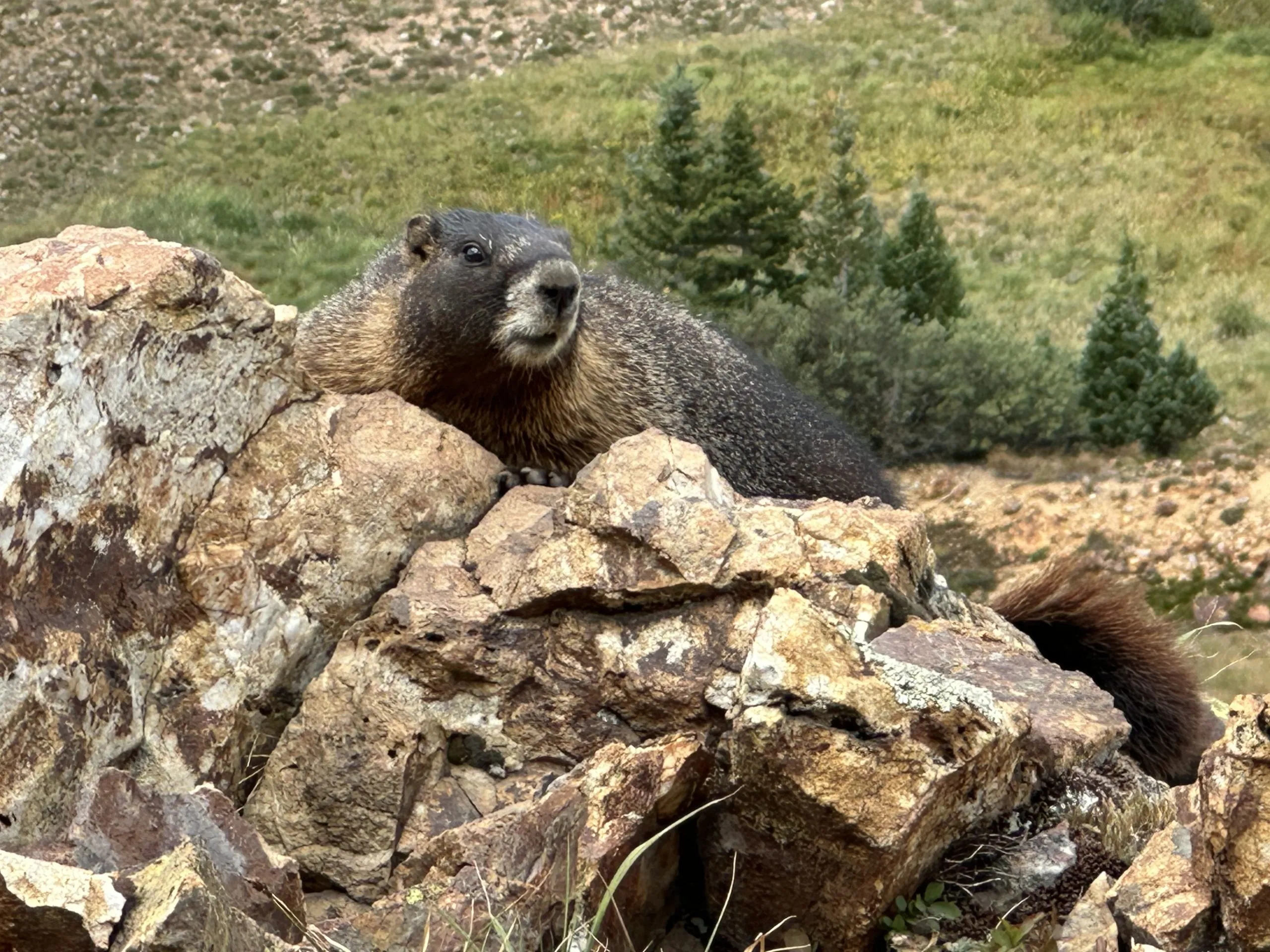
GOTHIC — Colorado has spent much of this summer talking about bears that aren’t getting enough to eat. On Monday, the state gets to celebrate an animal that has made eating its entire personality.
Read more Nothing in Tina Peters’ parole stops her from working in elections again
Starting Monday, yellow-bellied marmots will get their own version of the wildly popular Fat Bear Week, the annual online tournament in which people vote for their favorite Alaskan brown bears bulking up at Brooks Falls ahead of winter.
Welcome to Fat Marmot Week.
The premise is simple: Meet eight of Colorado’s chunkiest alpine residents and vote for the marmot you like best.
The light-hearted competition serves as both a celebration of these tubby, toothy high-country mammals and a call to action to protect the science that helps us understand them.
For more than 65 years, scientists with the Marmot Project at the Rocky Mountain Biological Laboratory in Gothic have been following generations of yellow-bellied marmots, creating one of the world’s longest-running studies of individually marked mammals. Along the way, the animals have helped researchers understand everything from social behavior to the ways a changing climate is reshaping life in Colorado’s high country.
This year, both the marmots and the scientists studying them have found themselves in a precarious position.
But first, what even is a marmot?
Anyone who has spent much time above treeline or wandering through Colorado’s alpine and subalpine country has probably encountered one: a chunky creature that looks vaguely like a beaver crossed with a house cat, perched on a rock, sunning itself, munching on vegetation or issuing a sharp whistle to warn its pals of danger.
Colorado’s marmots are yellow-bellied marmots, one of six species of marmot found in North America. They are the largest member of the squirrel family.
They are also the largest of the true hibernators.
Bears, contrary to popular belief, aren’t considered “true” hibernators. They enter a state of torpor — a period of dramatically reduced metabolism and activity — but their body temperature doesn’t drop nearly as much as that of true hibernators, allowing them to wake relatively quickly if disturbed. Marmots, meanwhile, sleep hard all winter. They snuggle into burrows sometime in October and spend six or seven months underground. When they wake up in April or May, their sole purpose is turning as much vegetation as possible — marmots are vegans! — into enough fat to survive the next winter’s slumber.
On a warm August afternoon in Gothic, one marmot lounged on a rock near the Rocky Mountain Biological Laboratory, appearing entirely unbothered by the two humans who had stopped to take its picture. It looked up, registered the attention and then went back to doing what appeared to be absolutely nothing — at least until it was time to eat again.
So why have scientists been studying them for 64 years?
The Rocky Mountain Biological Laboratory, better known as RMBL, has been a fixture in Gothic since 1928. Perched at about 9,500 feet in the Elk Mountains above the town of Crested Butte, the independent nonprofit field station hosts scientists and students studying everything from wildflowers and pollinators to climate change, wildlife and watersheds.
And marmots.
Since 1962, researchers have followed individually marked yellow-bellied marmots around Gothic from birth to death, recording their behavior, survival and social lives. The Marmot Project is now the world’s second-longest-running study of individually marked mammals, behind only Jane Goodall’s famous chimpanzee research.
The project is led by Dan Blumstein, a UCLA professor of ecology and evolutionary biology, and Julien Martin, a biology professor at the University of Ottawa.
The researchers are now more than 10 generations into the lives of the animals they study, and their work has created a rare kind of long-term dataset. While a study lasting a few years might capture one version of the environment — a deep, snowy winter or a hot, dry summer — a study lasting more than six decades can show scientists how animals respond as conditions change.
The Marmot Project researchers consider yellow-bellied marmots to be a model species. The animals are social and highly seasonal. Their entire lives are tied to the timing of snow, emergence, reproduction, plant growth and winter. Watching the same population for long enough, researchers can see what environmental change does to it over generations.
But continuing to study them for another 64 years is far from guaranteed.
The marmots have money troubles
Earlier this summer, faced with the prospect of losing funding for the decades-long research project, the Marmot Project scientists launched OnlyMarms, a PG-rated OnlyFans account featuring, yes, marmots. Fat Marmot Week is part of the same effort to introduce more people to the animals and the science surrounding them — and, hopefully, raise enough money to keep the project going.
The experiment has worked, at least in part.
According to Blumstein, OnlyMarms has brought in about $6,000 in donations, while more than $20,000 has been donated directly to UCLA. The project has also received donations through RMBL.
Then there is the memecoin. A cryptocurrency called $OnlyMarms has generated about $100,000 in transaction fees for the project. Researchers are still working through how to transfer the money into a university fund, but if they can get it into a UCLA or University of Ottawa account, Blumstein said, it could secure the project’s immediate future.
“If we can do that, we’ll be able to continue this for sure,” he said.
The researchers also have one more year of partial support from a grant from a nonprofit organization. The money will cover one quarter of a graduate student’s support and some of that student’s summer expenses.
But keeping a 65-year research project alive requires something more sustainable than a burst of internet attention.
The Marmot Project needs between $225,000 and $300,000 to fully support a Ph.D. student for three years, Blumstein said. The students spend about five months each year in the field and, crucially, help train the next generation of researchers.
Read more Standardized test results make Colorado schools look bad. There’s more to the story.
According to Blumstein, the project has always cobbled together funding from multiple sources. Its immediate goal is to raise enough money to recruit a new doctoral student every two years and ensure that there is always someone in Gothic continuing the work.
In that sense, OnlyMarms is both a success story and, as Blumstein put it, an absurd demonstration of how precarious science funding can be.
“It’s exasperating to have to go to OnlyFans to raise money for basic long-term ecological research,” he said. “But it has helped.”
The bigger success, he said, may be the attention.
“The publicity has been priceless,” Blumstein said. “More people recognize the value of long-term ecological research and basic research in general. It’s not just about marmots. It’s about the value of basic research.”
Blumstein compares basic research to the part of an iceberg below the waterline. Commercial applications may be the visible tip, he said, but they depend on the much larger body of research beneath the surface.
“The kind of basic research that has made the U.S. rich, educated and the scientific leaders of the world,” he said, is the research that still needs support.
And the knowledge gained from 65 years of watching marmots in a tiny Colorado mountain town is precisely the kind of thing Blumstein worries could be lost.
Even the marmots had a rough winter
The long-running marmot study is another window into how a changing climate is reshaping life in Colorado’s high country.
Marmots aren’t in imminent danger of extinction. In many ways, longer summers and shorter winters have even given them more time to eat. Researchers have documented an increase in marmot body mass due to the changing climatic conditions.
In other words, they’re getting fatter.
And while a chunky marmot might do well in Fat Marmot Week, the extra heft doesn’t solve all of its problems.
Last winter, Colorado’s historically poor snowpack was brutal for the marmots near Gothic. The animals hibernate underground, where snow acts as an insulating blanket over their burrows. But snow arrived late and was shallower and less widespread than normal, leaving the ground — and the animals beneath it — more exposed to the cold.
Researchers saw the largest die-off of marmots in the history of the project.
“The marmots need the snow as a layer of insulation as they hibernate in their burrows, so without this many of them just froze to death,” Martin said.
It is a particularly stark example of why researchers have spent more than six decades keeping tabs on what might otherwise seem like an oversized alpine squirrel.
One bad winter can be a bad winter. But after watching generations of animals experience different snow conditions, temperatures and growing seasons, scientists can begin to understand what those changes mean for the population — and for the broader high-alpine ecosystem the marmots inhabit.
So, yes, vote for the fattest one
Fat Marmot Week is, at its core, a celebration of an animal doing exactly what evolution designed it to do. Throughout the summer, yellow-bellied marmots feed almost constantly on grasses and wildflowers, piling on the fat that will sustain them through roughly six months underground.
“It’s fun to root for the chunkiest marmot, but behind the fun and games is a deathly serious competition against nature to pile on fat to survive the long, cold winter,” Blumstein said.
“And these days, with less predictable weather and wild fluctuations in snowfall, survival is not guaranteed.”
Fat Marmot Week is fun. But it is also a reminder of why scientists have spent 65 years watching these animals — and why keeping that record going matters. In a rapidly changing environment, the marmots are more than contestants in a fatness competition. They are data points in one of the longest-running records of how wildlife responds to a changing world.
Marmots, Blumstein said, offer scientists a window into the health of high-alpine ecosystems. For everyone else, at least this week, they offer something slightly more important: an excuse to spend a few minutes contemplating which Colorado rodent has done the most impressive job of turning an entire summer’s worth of grasses and wildflowers into glorious winter insulation.
Voting opens Aug. 24, with the final round on Aug. 28 and the chunky champion crowned Aug. 29.