 By admin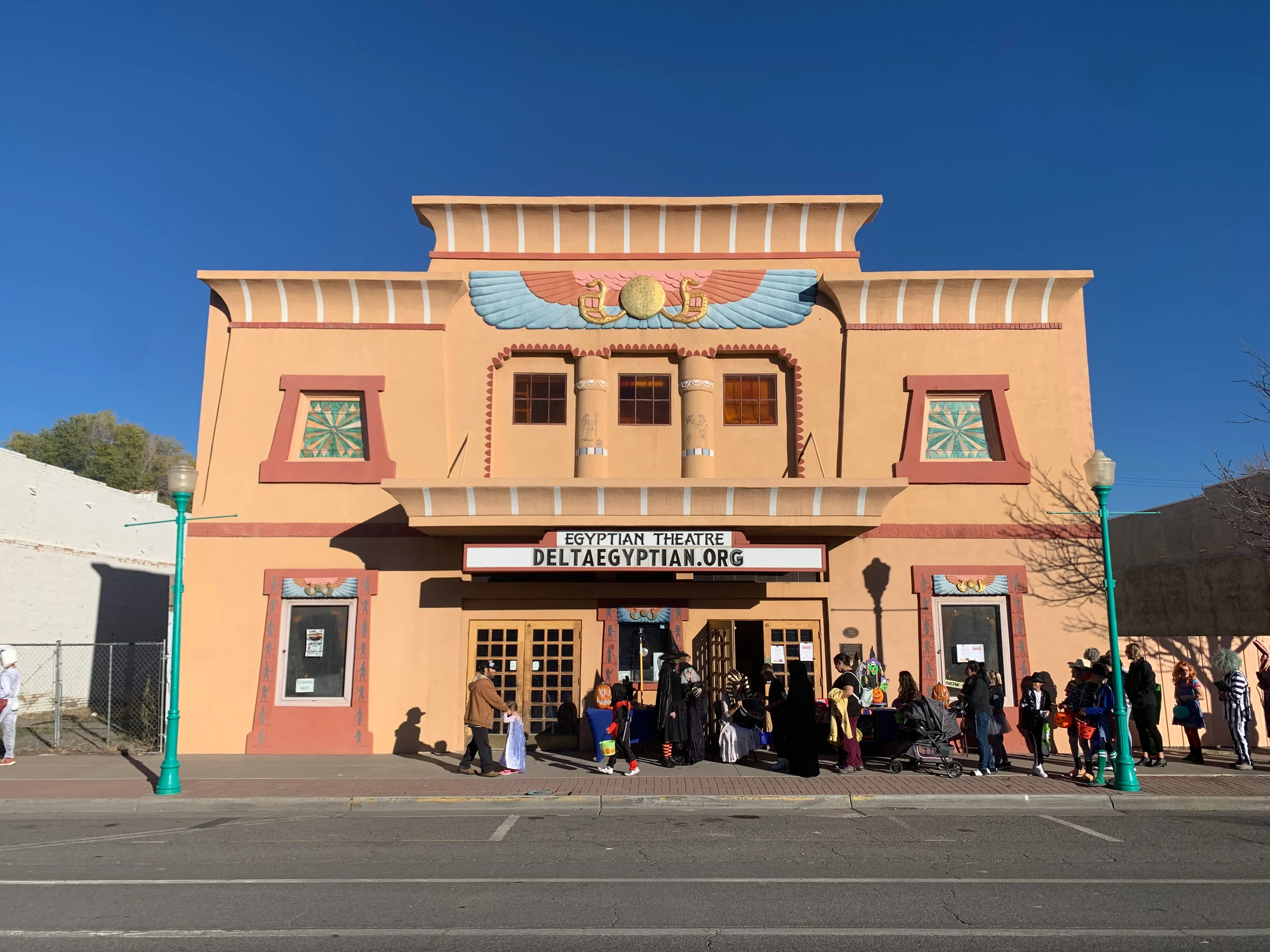
In the middle of “The Devil Wears Prada 2” at the Egyptian Theatre in Delta, the whole screen turned pink. People lingered, wondering if it was a weird stylistic choice by the filmmaker, then eventually filed out for their refunds.
Read more Victor Marx’s rise exposes Colorado GOP infighting
“Then the existential crisis began,” said Bryan Wade, manager at The Egyptian. The projector was broken and, he’d later learn, completely unfixable. “Without a projector, we’re not a theater.”
The nearly 100-year-old theater is one of a handful of remaining Egyptian Theaters in the country, built during a rush of Egyptian Revival architecture in the 1920s. (One of the other remaining theaters, in Park City, Utah, has been a landmark venue during past Sundance Film Festivals.)
Upcoming film festivals
The Delta Egyptian Film Festival
- Date: Sept. 26
- Location: Delta Egyptian Theater, 452 Main St., Delta
- What to expect: A focus on Western Slope filmmakers, including a feature film shot in the Delta Egyptian and a student filmmaker showcase.
Aspen FilmFest
- Date: Sept. 26-Oct. 4
- Location: Aspen Isis Theater, 406 E. Hopkins Ave., Aspen
- What to expect: Films from all over the world and post-show talks with filmmakers.
The theater is more than just a Main Street oddity that attracts a tourist or two. “Delta’s a little tiny town, and so much of the community kind of lives and dies with the health of Main Street,” Wade said. “So having a theater, we’re not only attracting business to ourselves but also to nearby restaurants and small businesses.”
When the theater put out a plea to help buy a new projector, residents and the local Alpine Bank delivered. Two months later the brand new, $60,000 projector splashed “The Odyssey” onto the theater’s single screen.
As a thank you for the town’s support, Wade decided to throw the inaugural Delta Egyptian Film Festival, joining the list of more than 100 film festivals in Colorado.
As Sundance pulls focus to Boulder, festivals all over Colorado stand to benefit. Cait McCluskie, programs and operations director for the Breckenridge Film Festival, said she’s on weekly calls with people who want to start their own. McCluskie leads the Colorado Film and Television Festival Coalition, a newly formed industry group for organizations to talk shop. The coalition includes representatives from established entities like Sundance and Aspen Film, as well as startups, like Wade from Delta.
There’s also money to be made. Tacked onto the $34 million tax credit that the state passed to lure Sundance in 2025 is an annual $500,000 pool to distribute among existing Colorado film festivals. The application for the first round of that credit opened Friday.
Joining forces
The Film Festival Coalition, run by the Office of Film, TV and Media, was born out of “a small scheduling snafu” in 2023, McCluskie said.
Breck happened to be on the same weekend as the Crested Butte Film Festival, and McCluskie lamented to deputy film commissioner Arielle Brachfeld that she wished there was a group for festival organizers to coordinate.
“I said, ‘hey we love this, we’d like to put some firepower behind this,’” Brachfeld recalled. “Would you want to run it?”
McCluskie ran with it.
The group started meeting in November and has evolved well beyond scheduling — they now host webinars about festival accessibility, developing new audiences and, most recently, how to apply for the new tax credit.
Read more Proposed changes to rules that protect historic sites ignite pushback in Colorado
“It’s the insight that takes time to learn, right? All the things we did wrong that we wish we would have had knowledge in the beginning,” said Lindsey Lupow, finance and events director for Aspen Film, which will host the 47th Aspen FilmFest at the end of September.
But the state coalition is not just for newbies. Lupow attended a recent session to figure out how Aspen Film — which also hosts its Shortsfest every spring — can take advantage of the new tax credit, too. Running a festival in Aspen has its challenges, she said. It’s expensive to fly there, for one, and expensive to stay there.
“Whether you run a film festival as big as Sundance or as small as the Yellow Barn, there are similar things that every festival is dealing with. It’s just a matter of scale,” said Jeff Levine, head of audience development and experience for Sundance.
Working out the kinks
Wade won’t be applying for the tax credit this year, since the Delta Egyptian festival is budgeted to cost less than $10,000.
The minimum award is $10,000, with tiers depending on a festival’s operating expenses — those that spend $100,000 to $250,000 can apply for up to $25,000 in tax credits, all the way up to $75,000 for those with operating budgets greater than $750,000. For festivals with less than $100,000 in expenses, “it might not be worth your time and investment … getting a CPA and going through the review process and all of that,” said Marisa Carreon, tax credit programs analyst for the state’s Office of Economic Development and International Trade.
Besides, if Wade can keep the first festival under budget, then he plans to host an ’80s film series in October “where I just show one trashy, overambitious, super campy ’80s movie once a week,” he said.
At the other end of the spectrum, Aspen Film, which spent around $300,000 on its two festivals, and over $1 million in programming overall according to its 2025 tax return, is still evaluating whether the cost and time to apply for the credits are worth it. (At the July information session it was unclear whether an organization could apply twice for two separate festivals.)
So while the Office of Film, TV and Media works out the kinks of this new credit — how to apply for two festivals, is this the right application window, what to do with smaller and brand new festivals — the coalition is, for now, one of the best places for event organizers to swap tips and work through challenges.
In Delta, Wade is calling on his Western Slope contacts to pack out their first festival, with hopes of forming a commission and growing it in the coming years. But for this first time around, he’s just focusing on thanking the community for their support with the new projector.
“So many people rallied, we were able to get something that’ll last until at least the next generation,” he said. “Then it’ll be their problem.”
Read more Invasive, insatiable mudsnails hit Carter Lake as Larimer County braces for more