 By admin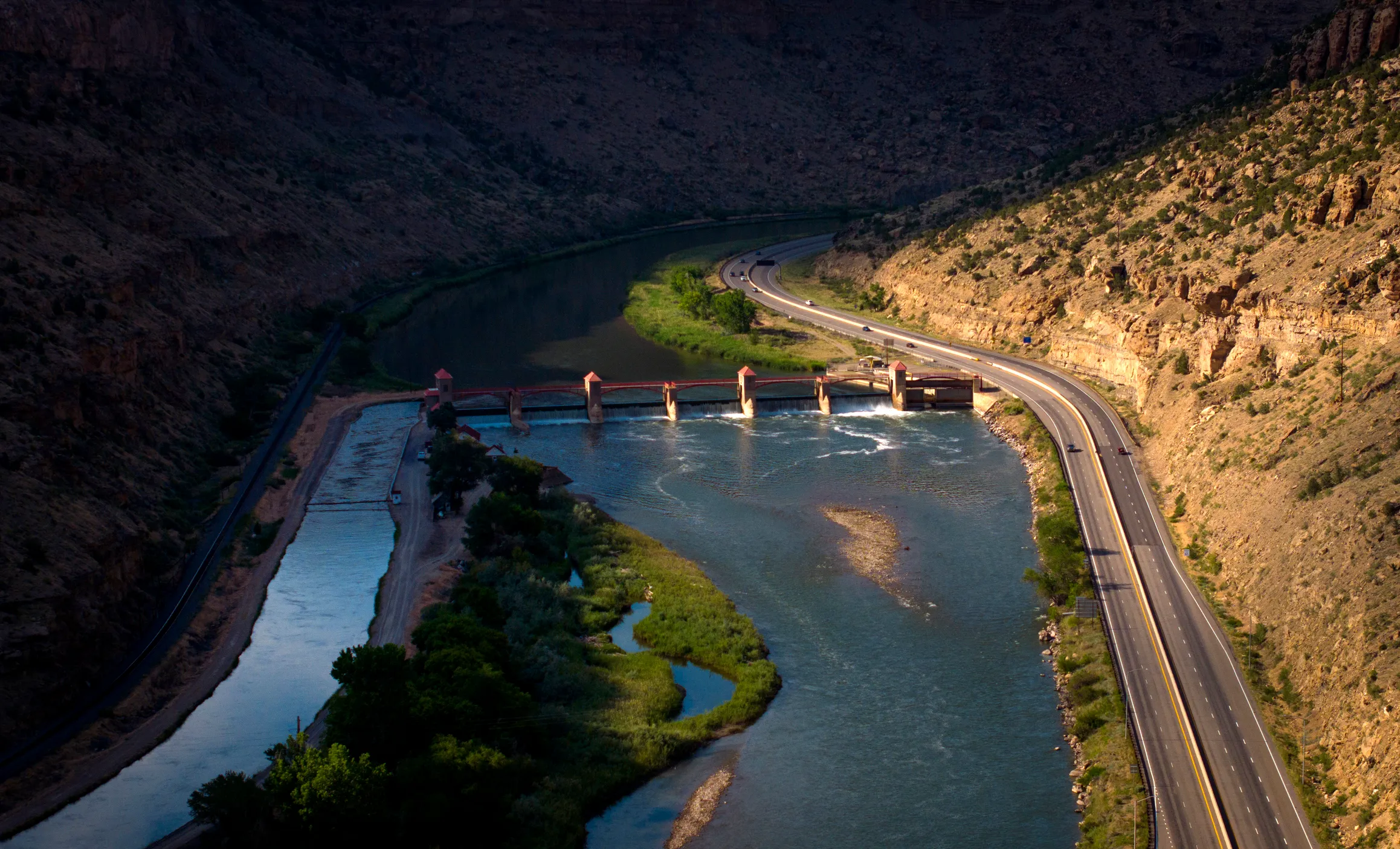
The Colorado River near Palisade briefly dipped to its lowest point in at least 10 years Wednesday morning as officials struggled to balance water deliveries and demands with shrinking rivers and streams.
Read more Glenwood Springs turns to zoning to fight ICE
The river’s flow dropped to 42.9 cubic feet per second in the early morning hours before rebounding to around 88 cfs by the afternoon. Typically, when water managers mention flows that small, they’re talking about creeks and streams, not the mighty Colorado River that serves as the lifeblood and economic engine of the West.
The low flows are straining supplies for farmers, reservoir operators and endangered fish from the mountains to the Utah-Colorado border.
“My key word has been dire. Bleak. It’s record-setting. We’ve never seen anything like this,” said Dan Crabtree, superintendent of the Palisade Irrigation District.
When he visited Glenwood Springs this week, he noted the exposed rocks far below the normal waterline. The water was so low, it would be possible to cross the river on foot in places he’d normally never consider crossing.
In the Grand Junction area, side channels are drying up, Crabtree said. Shelves of shale are exposed, fish habitat is deteriorating, water temperatures are rising. Before recent rains, there was so much moss and algae in the water, it was plugging up parts of the irrigation district’s system. Head up to the Grand Mesa, and reservoirs look close to drying up.
The river’s flow in August is normally around 1,200 cfs, according to the Colorado Sun’s analysis of U.S. Geological Survey data from 1991 to 2025.
The only other periods with similarly low flows were August 2002 and April 2013, according to the USGS data.
Why is this happening? In part because of drought.
The winter snowpack was the lowest since 1987 and it started melting off a month early because of a heat wave in March. The river’s headwaters are in extreme and exceptional drought, the worst of four drought tiers tracked by the U.S. Drought Monitor.
It’s normal for the amount of water flowing down Colorado’s rivers and streams to start dwindling in the late summer after spring runoff is exhausted. Farmers and ranchers are about halfway through the summer irrigation season, households are sprinkling their lawns and water managers are increasingly tapping reservoirs.
But those late season low flows are happening a month early this year, Crabtree said.
Upstream water diversions are another contributing factor.
Farmers, fruit growers and other water users in Mesa County have some of the oldest, and therefore most secure, water rights in the state. When the river’s flows drop, as in dry years, they have the legal right to ask the state to turn off upstream rights to ensure they get their water.
One of these major senior rights is nicknamed the Cameo call, which takes water out of the Colorado River at a red-roofed roller dam upstream of Palisade and sends it through canals, tunnels and ditches for crops and hydropower generation.
Read more Colorado regulators take swipe at Xcel Energy’s claims that increases aren’t that impactful
Even with these powerful water rights, farmers in the Grand Valley are facing water restrictions, according to the Grand Valley Water Users Association. They’re working to grow fruits, vegetables, alfalfa and other crops using a slice of their normal supply, about 1 cfs of water per 40 acres.
And the water users association isn’t even tapping the maximum amount of water allowed under its water rights. The goal is to divert 1450 cfs, about 500 cfs lower than the max, according to the association’s website.
Then there are the upstream reservoirs, which also play a role in how water flows down the Colorado River.
Because of the poor snowpack, some of those reservoirs, like Green Mountain, don’t have as much water to send west as in past years.
The state agencies, reservoir managers and irrigation districts are working together to try to elevate the river’s flows, particularly through a 15-mile stretch that is critical habitat for endangered fish species, according to the state Division of Water Resources.
Colorado plays a key role in fish recovery programs that try to restore populations of threatened and endangered species, like the humpback chub, Colorado pikeminnow, razorback sucker and bonytail.
When water levels drop, fish are overstressed by higher temperatures and less dissolved oxygen in the water. Sediment suspended in the water settles between rocks, filling in hiding places for fish.
The U.S. Fish and Wildlife Service is making releases from both Ruedi Reservoir and Granby Reservoir with a goal to keep about 68 cfs in the 15-mile reach, the division said.
“The past few days have been challenging for all water users, with unexpected declines in natural flow resulting in the low flow,” division staff said in an email to The Colorado Sun.
Low flows also force fishing closures, which affect recreation, tourism, local businesses and the state’s economies.
Colorado still has about two months to go before the end of the irrigation season and water year on Sept. 30. Without more summer storms, the river will keep dropping, Crabtree said.
Read more Gunnison County sheriff vows to end cooperation and communication with ICE