 By admin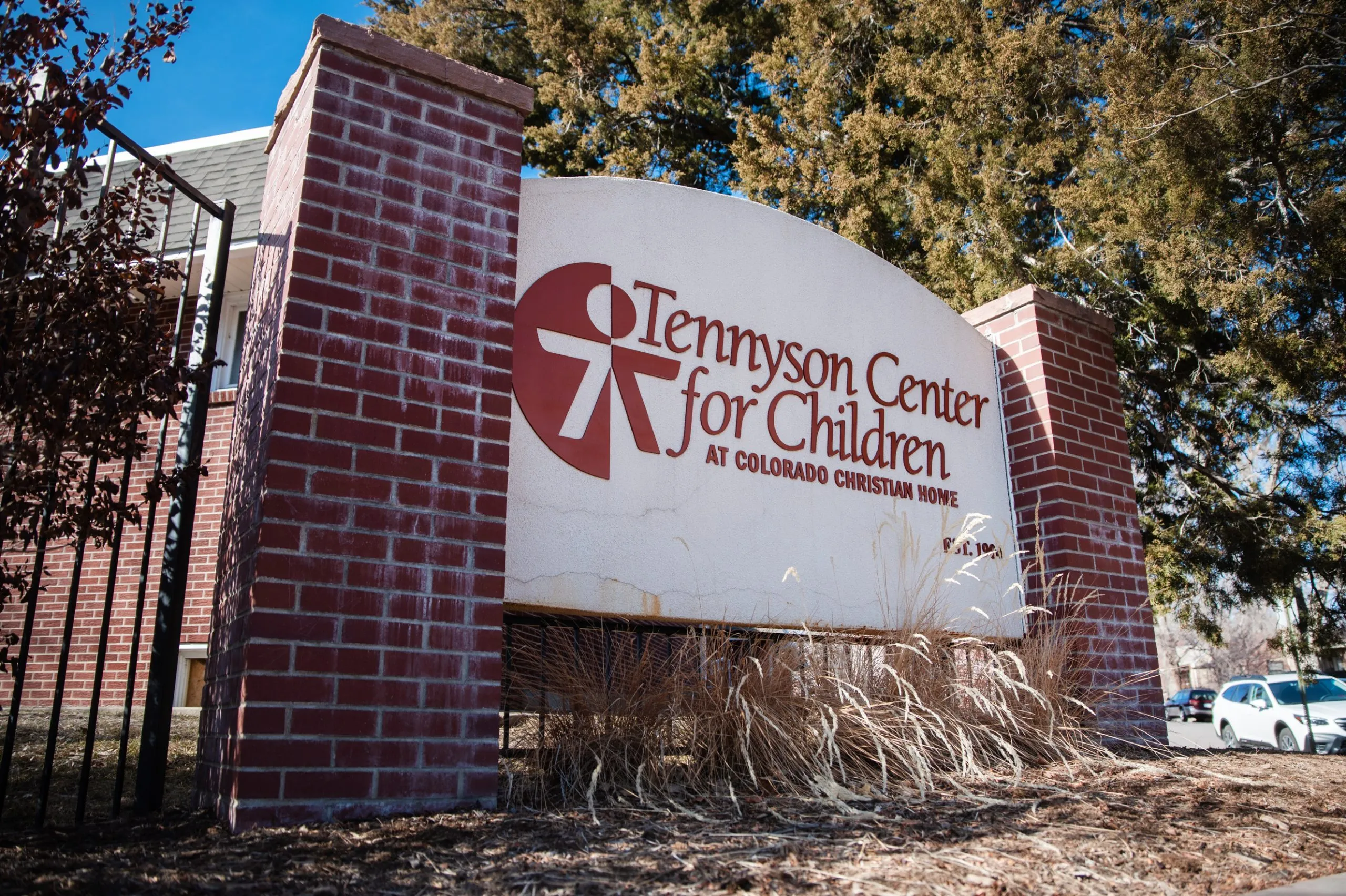
Tennyson Center for Children is shutting down its residential treatment program because of a staffing shortage, and after staff injuries and a former employee’s alleged sexual relationship with one of the teenagers at the center, The Colorado Sun has learned.
The remaining handful of children and teens in the residential center will move to other facilities or group homes by the end of the month. Tennyson will continue operating its day treatment, school and in-home family support programs that serve about 1,000 families, its leadership said.
The closure is due to the “broader workforce challenges” at residential treatment programs for young people in Colorado that made it clear that “staffing would become unsustainable,” Tennyson’s president and CEO Mindy Watrous said via email after declining to give an interview.
She said the “difficult decision” to close the residential program was not related to the allegation that a former staff member in the residential program was having sex with a 15-year-old boy living at Tennyson.
It’s the second time in five years that Tennyson has closed its residential program, last time in 2021 after a 12-year-old boy ran away from the Denver center and died after he was struck by a car. The center reopened its residential program in 2024.
When leadership learned of the alleged sexual relationship in November, they immediately reported it to law enforcement and the Colorado Department of Human Services, which has oversight of residential treatment centers for children in foster care and with severe behavioral health issues, Watrous said. Tennyson was not found at fault by state child welfare officials, according to the Colorado Association of Family and Children’s Agencies, which includes Tennyson.
“We cannot discuss details, but we can share that the staff member was immediately removed from campus and we are cooperating fully with the investigation,” Watrous said. “The safety and well-being of the young people in Tennyson’s care and of our providers are our top priorities.”
She said the center has “consistently met or exceeded staffing ratios” required by state law, but two former employees told The Sun that the residential program was so short staffed that kids are lacking adequate supervision. Employees were frequently injured in attempts to physically restrain teens who were acting out violently, and leadership was offering overtime pay to cover shifts for employees who had quit or couldn’t work due to injury, they said.
Tennyson said it would not discuss staff’s “personal health information” but said “many of the injuries were not related to client care.”
Katherine Taylor-Burroughs, 32, was charged in December with four counts of sexual assault of a child by a person in a position of trust and defined as a “pattern of abuse,” a felony. A 15-year-old boy told detectives he had sex with Taylor-Burroughs, a youth treatment counselor at Tennyson, four times in the center’s basement, according to an arrest affidavit The Sun received from the Denver District Attorney’s Office. The boy and Taylor-Burroughs also had “phone sex” and sent messages via Snapchat, he told detectives.
Denver Police found and reviewed 271 text messages between the teen and the youth counselor before the two switched to communicating on Snapchat, a messaging app in which messages delete after they are sent.
The teen eventually told a gym teacher about the situation, which led to informing the police. Taylor-Burroughs’ attorney did not return a request for comment.
Urgent need for workers in youth treatment centers
Becky Miller Updike, director of the Colorado Association of Family and Children’s Agencies, which represents youth residential centers, said the state child welfare division determined that Tennyson was not in the wrong and that the alleged sexual assaults were a “super unfortunate circumstance.”
She said she was hopeful that Tennyson would be able to reopen its residential program in the future, as the state is so short on treatment beds that children and teens are stuck in hospitals and even county child welfare offices because there are no available spots in residential programs. Tennyson’s residential program has dwindled to just six children and teens as it nears closure, but its capacity is 16.
“We are to the point now where more closures are going to lead to kids being served out of state or not getting services at all,” she said. “Those are two poor choices.”
While children’s mental and behavioral health issues have grown in intensity, funding has been shrinking for the residential centers, one of the last resorts for care when children are not safe living at home or in foster homes. In the recently approved state budget, Medicaid providers were dealt a 2% rate cut, which for residential centers, means 2% less on the daily rate for caring for children.
“We are extremely underfunded,” Updike said. “That trickles down to workforce. If you can make the same thing you would make working at Starbucks or Target, it’s not a big decision which one you are going to pick.”
Tennyson CEO Watrous said residential treatment centers feel “ongoing pressure” to recruit highly qualified staff and that Colorado “urgently needs additional workforce and resource support.”
Read more Denver runway fatality reveals a weakness in airport security
“This issue is not unique to Tennyson,” she wrote. “Colorado continues to face a critical shortage of in-state residential treatment options for youth with acute mental health needs. As a result, children are often on long waitlists and too many young people continue cycling through emergency rooms and crisis settings without access to the long-term stabilization and treatment they need.”
Tennyson works with young people who are in the foster care system and those who are still living with their parents but need therapy and support to stay there.
“Never seen anything like it”
Anna Belle Pfau worked at Tennyson for about six weeks before resigning in April because of the chaos, staff injuries and her growing concerns that it was dangerous for youth and staff, she said in an interview.
Her first weekend on the job, Pfau was the supervisor on duty for the two residential cottages, each with just one staff member on duty when they should have had two, she said. “The police had to be called that night because one youth assaulted another youth,” she said. “That was the first red flag. I’ve never seen anything like it.”
Pfau, who has worked in youth treatment services for 15 years, said staff were often injured while attempting “protective restraints” to physically hold a young person who is acting out violently. “These teenagers injure us,” she said. “You should have a couple of people working together to do these protective restraints, but they don’t.”
In a staff meeting before she quit, leadership told employees that more than half of the staff had been injured, she said. Children at Tennyson run away from campus almost daily, despite state policy changes to prevent this, she said.
Pfau said she was not the “type of person” to talk poorly about a former employer but that “I can’t let children suffer.”
Children and teens in the residential program have severe intellectual and behavioral issues and need round-the-clock supervision, Pfau said. The young people in the program no longer live with their parents because of their behavioral issues.
Tennyson is short enough on staff that it was offering $40 per hour on weekdays and $50 per hour on weekends. Employees typically make around $25 per hour, said Pfau, who shared messages from Tennyson managers asking for shift volunteers. “Things are falling apart fast,” she said. “There is not enough supervision to prevent future extremely traumatic events like abuse or deaths again.”
K.W., who worked at Tennyson as an art teacher for 19 months and left last year, said she was hit with a roll of duct tape that a child threw at her, leaving her bruised, and was chased around a classroom by a child holding a metal pole sticking out of an easel. K.W., who didn’t want her full name used because she fears it will affect her future job prospects, was often left alone with students without any other staff, she said. One day, when unruly students took her walkie-talkie, she eventually had to leave them alone to go find help.
“The understaffing, I cannot stress enough, has been the biggest issue,” she said. Tennyson fired her after she tried to organize an employee union, she said.
Current employees in the residential program did not respond to requests for comment.
State says talking about Tennyson violates privacy laws
The state Office of Children, Aging and Community Services, in response to a public records request from The Sun, released Tennyson’s latest licensing inspection report, which had no staffing ratio violations and was completed before the alleged sexual assault.
The May 2025 report listed 16 issues that included violations of quality standards for 24-hour childcare, mainly related to documentation of staff training and family notification. Some employees had not received trauma-informed care training or restraint refresher training, and some children or their families had not received proper notice of psychotropic drug prescriptions or policies, according to their files.
In response to a question about whether the sexual assault allegation triggered an inspection or licensing review, human services department spokesperson Julie Popp would not provide any detail, citing privacy laws that she said prohibit state human services officials from discussing “clients, staff or details from oversight reports or investigations into incidents at a specific site.”
“If an initial look uncovers a potential issue, we follow a standard process to initiate and conduct a formal review,” she said.
Without releasing any details, she said the state agency “regularly engages with and reviews practices” with Tennyson to “ensure youth receive appropriate, high-quality care.”
Read more What’s Happening: A virtual artist talk about the women of escaramurza